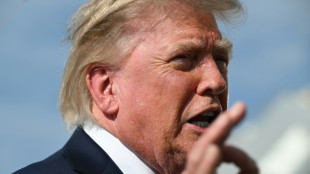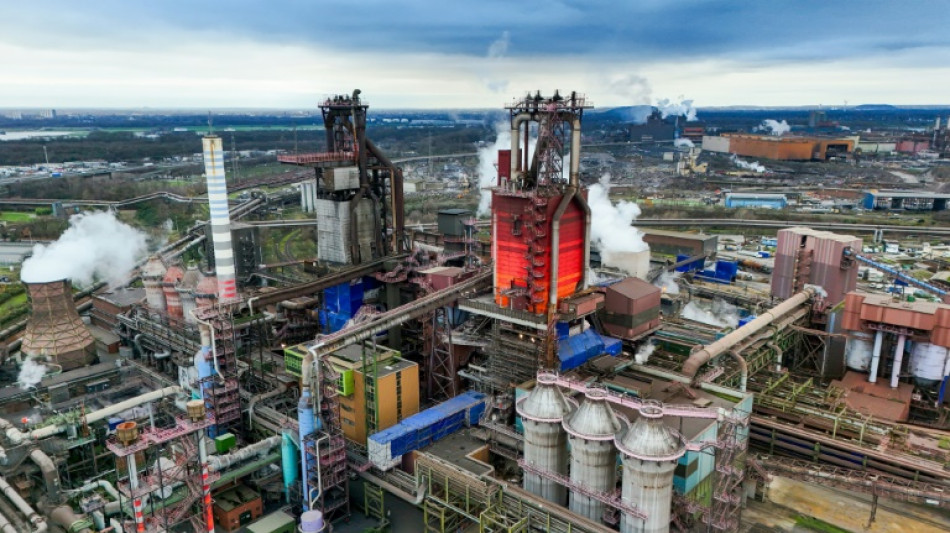
Trump tariffs weigh on Germany as institutes cut forecasts / Photo: © AFP

 Padikkal, Gill half-centuries take India to 187-3 at tea
 Cummins hails 'sharp' Australia as they get back to winning ways

 Bangladesh eye more Australia Tests to hit next level

 Thousands expected at Sweden climate demo as election looms

 Starc heroics put Australia on brink of victory over Bangladesh

 Austrian mountain town finds niche in AI boom

 Messi scores but Miami slump continues with loss to Toronto

 Sydney marathon unveils medal with wrong stadium

 Macron hosts Saudi's MBS for visit ranging from esports to Mideast
 Australia in control with 146-run first innings lead over Bangladesh

 World No. 3 Pegula beats defending champ Swiatek to reach Cincy final

 Wyndham Clark surges clear at BMW Championship

 Maresca says Man City must fill Rodri void after Barca switch

 Canada retaliates as trade war with US escalates

 Fils dominates Cobolli to book Cincinnati final

 Spurs lacked fight in dismal defeat at Brentford says De Zerbi

 Inter thrash Monza to launch Serie A title defence

 Shambolic Spurs battered by Brentford
 Pogacar wins Vuelta a Espana opening stage

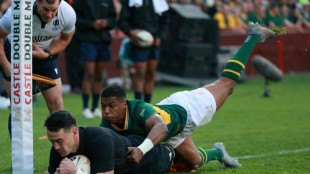 Clinical New Zealand shock wasteful South Africa in first Test

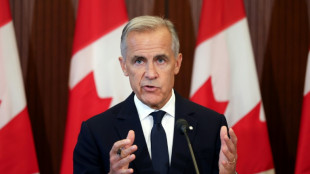 Canada hits back with new tariffs after trade talks with US fail

 Swedish police identify 17-year-old girl as victim in school sword attack

 Carrick keeps calm despite Man Utd misery, Sage beaten in first game as Palace boss

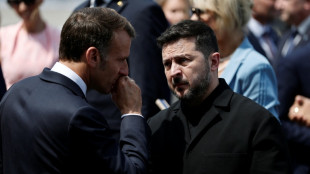 France to deliver interceptor missiles to Ukraine after new Russian strikes

 Serena Williams and Alcaraz unite in US Open mixed doubles
Leading economic institutes Thursday slashed their 2025 growth forecast for Germany to near stagnation, warning Europe's struggling top economy will face extra pain from US President Donald Trump's tariff blitz.
The six think-tanks, in their latest joint forecast, now predict GDP growth of just 0.1 percent for 2025, down from the 0.8 percent expansion they forecast in September.
For 2026 they forecast growth of 1.3 percent, unchanged from September.
"The geopolitical tensions and the protectionist trade policy of the USA are exacerbating the already tense economic situation in Germany," said Torsten Schmidt, head of research at the RWI-Leibniz Institute for Economic Research.
The downgrade comes the day after the French and Italian governments cut their growth forecasts for the year, citing new barriers to trade, while Spain warned that its growth would suffer, without giving a figure.
Trump's tariffs on aluminium, steel and vehicle imports that came into effect in March and April would likely reduce Germany's economic growth by 0.1 percentage points each for 2025 and 2026, the institutes calculated.
Additional "reciprocal" tariffs announced by the United States on April 2 could double the hit, the institutes said, though they warned that it was difficult to quantify the effect.
Those tariffs were paused for most countries on Wednesday.
The United States was Germany's top trading partner last year and a major market for its exports, ranging from cars to machinery and chemicals.
Adding to its problems, Germany faces a range of deep-seated structural issues including a shortage of skilled workers, increased competition from China and stifling taxes and bureaucracy, the institutes warned.
"These cannot be solved by simply increasing government spending, and make reforms to boost potential output all the more urgent," they said in a statement.
The German government's latest official forecast, released in January, estimates the economy will grow by 0.3 percent for the year. It will present a new forecast on April 24.
- Grim reading for Merz -
The figures make grim reading for Germany's chancellor-in-waiting, Friedrich Merz, who on Wednesday presented a coalition agreement between his centre-right CDU/CSU and the leftist SPD, paving the way for him to take power next month.
A key challenge for the incoming government is reviving Germany's economy, which has shrunk for the past two years due to a manufacturing slump and weak demand in key markets, as well as rising competition from China.
"China is competing with us on the global markets for products where we believed -- for many, many decades -- we were the only ones who could make them so well," said Timo Wollmershaeuser, head of the Ifo institute, one of the think-tanks which produce the forecasts.
Even before taking office, Merz has taken some steps, including by pushing through parliament changes to Germany's so-called "debt brake", which restricts government borrowing and has been criticised for holding back much-needed investment.
The move allows potentially unlimited government borrowing for defence. He also won parliamentary approval for a 500-billion-euro ($552-billion) fund to spend on renovating Germany's creaking infrastructure in the coming years.
Many economists hope the additional investment will help get Germany's economy back on its feet, and the think-tanks calculated it would boost growth by 0.5 percentage points over the next year, assuming an extra 24 billion euros in government spending.
But the coalition's plans also faced criticism, with economists saying the government was dodging the task of tough structural reforms that be costly in the short term but boost growth over the longer term.
"The coalition agreement between the CDU/CSU and SPD is a compromise that largely maintains the status quo," said Marcel Fratzscher, head of the German Economic Institute for Economic Research (DIW).
"The CDU/CSU and SPD have not yet recognised the urgency of the current crisis situation and remain unambitious in many areas."
A.Zbinden--VB