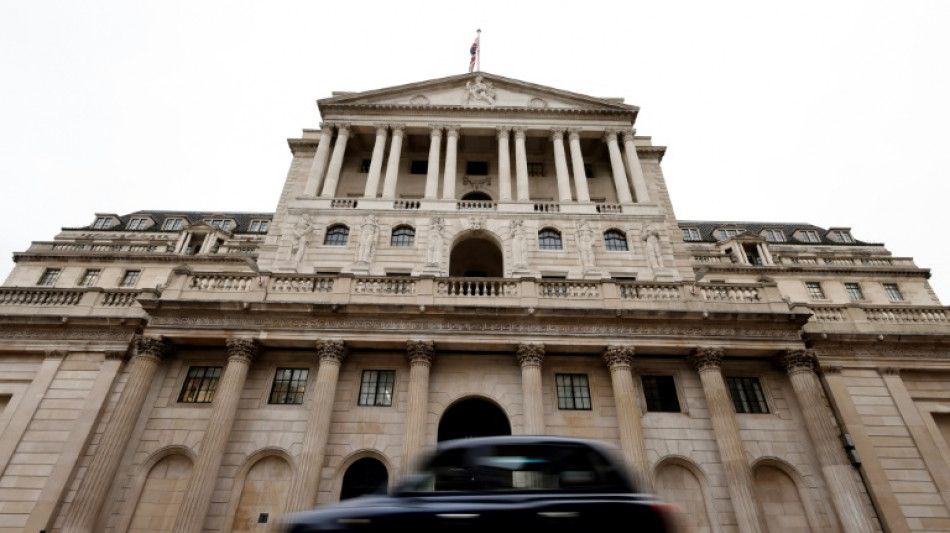
UK banks no longer 'too big to fail': BoE / Photo: © AFP/File

 Devan Ekambaram and Susha’s 'Varuvaaiy' Makes History as First Tamil Song Nominated for a Grammy

 Miranda Lambert Leads North Texans with Seven Grammy Nominations for 2027

 DiDi Advances Robotaxi Operations in China with New R2 Vehicle and Expanded Safety Infrastructure

 Smart Car Seats Tested: Do Sensors and Apps Actually Improve Safety?

 5 Strategies for Fort Worth Households to Reduce Summer Electricity Costs
 Central Bank of Malta Links Energy Subsidies to Middle East Conflict and Price Volatility
Britain's biggest banks are no longer "too big to fail" in any future financial shocks, with shareholders rather than taxpayers ready to bear the cost, the Bank of England said Friday.
Following a major review of eight lenders -- including Barclays, HSBC, Lloyds and NatWest -- the BoE concluded "that if a major UK bank failed today it could do so safely: remaining open and continuing to provide vital banking services to the economy.
"Shareholders and investors, not taxpayers, will be first in line to bear the costs, overcoming the 'too big to fail' problem," the central bank added.
Following the financial global crisis more than a decade ago, the UK taxpayer pumped £137 billion ($171 billion) into the country's banks, while also being able to benefit from significant BoE support.
The government also took control of Royal Bank of Scotland -- rebranded as NatWest ahead of its recent return to the private sector.
Despite the bailouts, "the disruption to the financial system contributed to the UK and global recession that followed. We cannot forget these lessons", the BoE added Friday.
The central bank was publishing its first assessment of the eight major UK banks' preparations for resolution under the Resolvability Assessment Framework.
RAF "is a core part of the UK's response to the global financial crisis, and demonstrates how the UK has overcome the problem of 'too big to fail'", said Dave Ramsden, deputy governor for markets and banking at the BoE.
"The UK authorities have developed a resolution regime that successfully reduces risks to depositors and the financial system and better protects the UK's public funds."
The other four banks assessed were Nationwide, Santander UK, Standard Chartered and Virgin Money UK.
C.Meier--BTB