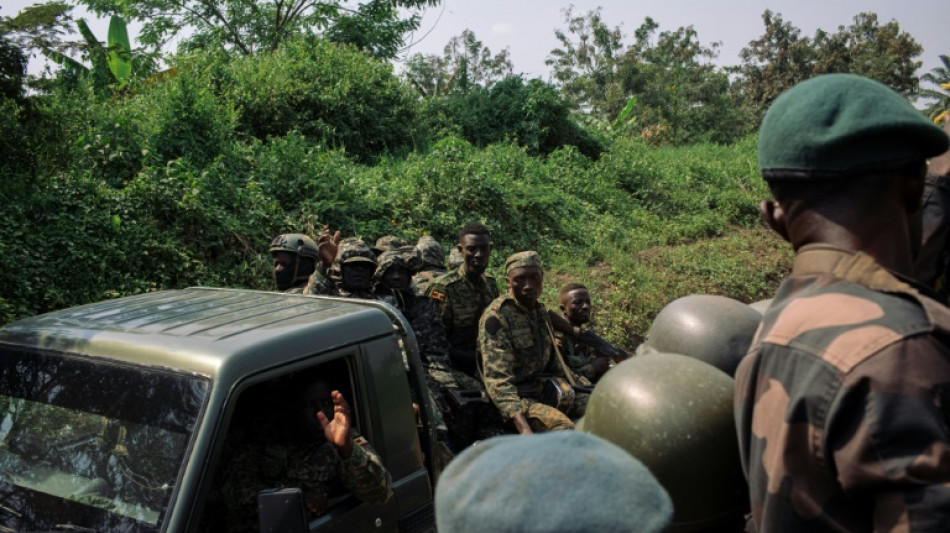
Uganda: the quiet power in the eastern DRC conflict / Photo: © AFP/File

 Fave or flop? A guide to gauging video game success
 Williams-Alcaraz fall in US Open mixed quarter-finals

 Mark Carney, the former central banker who said 'no' to Trump
 Segner out of South Africa tour as New Zealand injuries pile up
 Meta knew teen safety tools were ineffective, witnesses testify
 Williams and Alcaraz win opener at US Open mixed doubles
 Man Utd's Fernandes crowned PFA player of the year
 Dolly Parton: quotes on life, love and music

 Brazil fines TikTok $30 mn in 'powerful signal' over child safety
 Cameroon's Baleba joins as Man Utd boost midfield options
 US country music legend Dolly Parton dies at 80
 Kolisi fit to captain South Africa against New Zealand
 Volkswagen workers boo boss during speech on job cuts
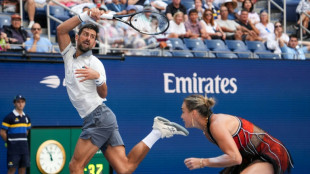 Djokovic, Sabalenka tumble out of US Open mixed doubles
 CIA director Ratcliffe visits Moscow: US media
 Trump threatens to rename Lake Ontario as 'Lake America'
 'Here to win': Xavi vows to restore pride to Dutch football
 Canada unveils counter tariffs of 15% to 50% on US goods
 Spain moves to speed up return of migrants stranded in Ceuta
 At least a quarter of NFL players may get brain disease: study
 Iranians queue for petrol after US announces new sanctions
 Blockchain Infrastructure Firm tZERO Integrates with Sui for Institutional-Grade Digital Asset Securities
 Oil down as traders weigh US sanctions threat against Iran
 Canada to unveil response to Trump's steep tariffs
 Curling attracts curious Romans under Colosseum's shadow
Uganda's role in eastern DR Congo has largely gone under the radar during recent violence but its complex approach aims to secure long-standing security and economic interests in the mineral-rich area, experts say.
Backed by Rwanda, the M23 armed group has swept through the east of the Democratic Republic of Congo, taking two regional capitals.
It is the latest escalation in an area that has long been victim of a patchwork of armed actors scrambling for dominance over the region's vast resources of coltan, gold, tin and tungsten.
Numerous countries have been drawn in over the years, including peacekeepers from southern and eastern Africa trying to support the flailing Congolese military, and Burundian forces protecting their border.
Uganda has played a particularly complex role.
In 2021, it launched Operation Shujaa, deploying troops with the DRC's consent to Ituri and North Kivu provinces -- ostensibly to clear the area of the Allied Democratic Forces, a Ugandan militia with links to the Islamic State jihadist group.
But it has gone a step further in recent weeks, increasing its presence nearly in tandem with the M23's advances further south.
Last month, Uganda said it had "taken control" of security in the Ituri provincial capital, Bunia.
"Uganda's attitude remains ambiguous," Kristof Titeca, an East Africa expert at the University of Antwerp, told AFP.
"It is difficult to know how its attitude towards Kinshasa, Kigali and the M23 will evolve."
- 'Buffer zone' -
Uganda is primarily concerned with security but also has economic interests, experts say.
It wants "a buffer zone" to protect itself from the Islamist militia and the general chaos emanating out of eastern DRC, a diplomat specialising in the Great Lakes region told AFP on condition of anonymity.
But it also wants to ensure "a bigger market for Uganda and for Ugandan products", said Phillip Apuuli Kasaija, a politics professor at Makerere University in Kampala.
He said Uganda was making vast sums by taking Congolese gold that was then "labelled... and exported as Ugandan".
"For the last three years, Uganda's gold exports have gone through the roof," he said.
Uganda-based refiners have denied dealing in smuggled gold and the government last year tightened gold trading regulations, saying it wanted to curb smuggling.
In January, Ugandan army spokesman Felix Kulayigye openly called for more roads -- the "veins of business" -- in eastern Congo.
The border is also the site of a massive oil exploration project in Lake Albert between Uganda, the French firm TotalEnergies and the China National Offshore Oil Corporation.
Envy of Uganda's economic advances in the DRC may even have spurred Rwanda's support for the M23, with it feeling marginalised and "seeing its interests threatened", according to a research paper by groups linked to New York University last year.
- Politics is personal -
Ugandan President Yoweri Museveni, in power since 1986, has spent years building a complex web of personal relationships with neighbours to project his country's status as a regional power and his own as an elder statesman.
He intervened in two Congo wars, in 1996-1997 and 1998-2003, and during last decade's civil war in South Sudan, where his army says it has again deployed special forces in recent days.
A former rebel fighter himself, Museveni's feelings towards the M23 are unclear.
In 2024, UN experts claimed Ugandan intelligence had provided "active support" to the M23, including rear operating bases on its territory.
The Great Lakes diplomat said there was "ethnic sympathy" between Museveni's Bahima community and the Tutsis who make up the majority of the M23.
There is also Museveni's "mentor-like, big-brother" relationship with Rwandan President Paul Kagame, who fought with the future Ugandan leader during the bush wars of the 1980s, the diplomat said.
Even if that relationship has proven combative over the years, Museveni's son, the unpredictable army chief Muhoozi Kainerugaba, is a bombastically vocal supporter of Kagame, and has referred to the M23 as "brothers".
Although Museveni deployed troops to the DRC with the consent of President Felix Tshisekedi, the Congolese leader could hardly refuse, according to the diplomat.
And Museveni made it clear in February that Ugandan soldiers would not fight M23: "Our presence in Congo, therefore, has nothing to do with fighting the M23 rebels."
As the diplomat noted: "Tshisekedi is not fooled, he knows that the 'old man' can easily play a double game."
G.Haefliger--VB