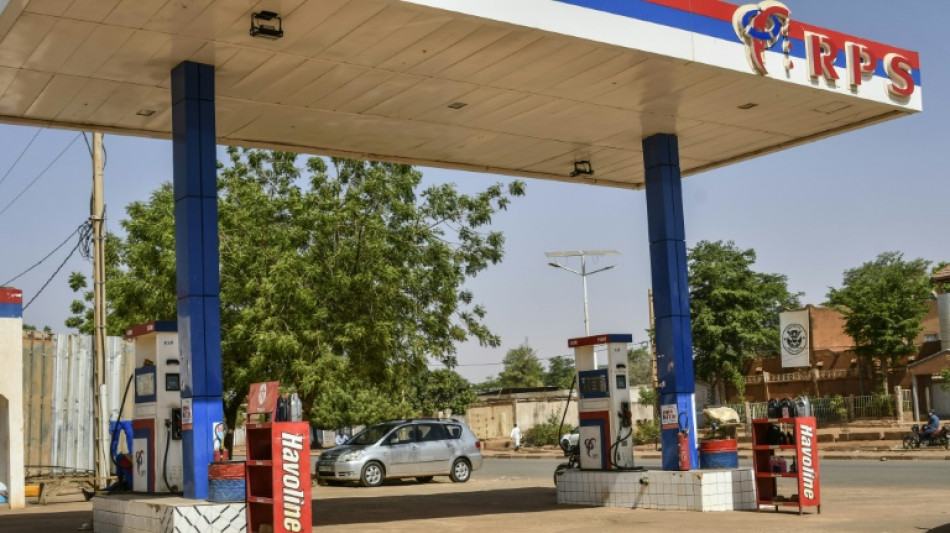
Major fuel shortage hits black gold producer Niger / Photo: © AFP

 UEFA set to withdraw FIFA boycott threat ahead of Champions League draw
 Sumo moves to beat Japan summer heat as temperatures rise
 'Be more honest': Markets crave clarity from cryptic Fed chair

 Climate change leaves its mark on America's largest reservoir
 CIA director warned Russia not to attack NATO members: US media
 Search for missing after Nepal-Tibet floods kills at least 160
 Meta, US states agree $18 bn settlement in landmark teen safety case

 What scientists know so far about Nepal's deadly floods

 US general visits Colombia to discuss war on drugs

 Meta settlement puts social media industry on notice: 'There will be more'
 NFL owners approve record Seahawks sale

 Nigerian armed groups net nearly $6 mn in ransoms: study

 Savio scores on debut as Spurs advance in League Cup

 Mbappe hits treble as Real Madrid thrash Real Sociedad

 At Dollywood, superfans honor the late singer and local hero

 Stocks mixed as oil drops, US inflation stays high

 Bolivia's Paz appoints new economy minister amid bailout talks

 US designates UK-based Palestine Action as foreign 'terrorist group'
 'Rocky Horror Picture Show' star Tim Curry dead at 80
 American Moll wins women's pole vault at Zurich city event

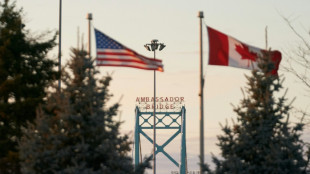 As Canada takes on US tariffs, what's behind the David and Goliath fight?

 UEFA 'likely' to drop threat to boycott FIFA tournaments: source

 US disrupts platforms allegedly used by Chinese hackers

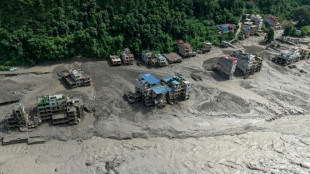 The foreign tourists missing in Nepal's flash floods

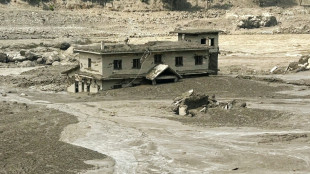 Hundreds missing after Nepal-Tibet flood kills 98
Petrol station attendant Amadou Sani gesticulated to approaching motorists in Niamey to keep going because the garage had no more fuel.
Niger has been grappling since the start of the month with an unprecedented shortage of the most widely used petrol in the west African country.
"Our tanks have been dry for three days. No-one can say when we'll be resupplied," grumbled Mohamed, manager of another petrol station on the capital's outskirts.
"You see that taxi over there? The driver went around town and finally ran out of fuel here," the manager, who did not want to give his full name, told AFP.
Exasperated Nigeriens can often be seen under the blazing sun pushing their motorbikes or walking through the streets carrying an empty can.
Niger -- which produces oil but refines only a small amount of it -- has suffered fuel shortages in the past but not to the current extent.
The Soraz refinery in Zinder is the only one in the country.
It "can no longer satisfy domestic demand", which has surged for more than a year now, the state-owned Nigerien Company for Oil Products (Sonidep) said on Saturday.
The reason is principally down to the drying up of the flourishing black market supplied from neighbouring Nigeria, a major global producer.
Two years ago, prices tripled after Nigerian President Bola Tinubu ended costly fuel subsidies.
The fuel that came into Niger illegally from Nigeria represented up to half of the market.
It supplied the large regions near the border between the two countries, Sonidep commercial director Maazou Oumani Aboubacar said.
- Relying on domestic production -
The shortage hit some of Niger's towns first before reaching the capital, Niamey, where many petrol stations now have nothing to sell.
At the few garages in the city centre that still had fuel on Sunday, motorists and motorbike riders waited patiently and the roads were quieter than normal.
"I'm hoping to get two litres of petrol to do some very urgent shopping," Moussa Saidou said.
Sitting astride his motorbike, mason Issa Mahamadou made no attempt to hide his anger. "I want to visit my work sites but I've no more fuel," he fumed.
With the decline in the black market "all the country's (fuel) consumption now rests on domestic production", Sonidep's Oumani Aboubacar said.
Since 2011, Niger has produced around 20,000 barrels of refined petrol and diesel a day.
It stopped exports last year.
The country's refinery only provides Sonidep with "25 tanker trucks of petrol a day" when the daily national requirement is up to twice that, according to Oumani Aboubacar.
To make up the shortfall "we've been importing for a year, mainly from Nigeria", he said.
The company has "considerable stocks" of petrol at Lome port in Togo. They should be delivered to Niamey in the coming days under military escort through jihadist-hit eastern Burkina Faso, he added.
Domestic consumption has been boosted by a cut in fuel prices introduced by the military regime that seized power in Niger in 2023.
The country also exports crude oil via a pipeline linking Agadem in northeastern Niger to the port of Seme-Kpodji in Benin -- although they were disrupted for several months by a spat between the Nigerien junta and Benin.
L.Meier--VB