Greenland's Inuits rediscover their national pride / Photo: © AFP

 Once a top export, prized Kashmir carpet fades
 Search for 1,000 missing after deadly Nepal-Tibet floods
 Park So-yeon first woman to play for eSports powerhouse South Korea
 Yayoi Kusama: Japan's kaleidoscopic, troubled 'polka dot queen'
 Euro champ Hunt 'on her toes' against world's best in Zurich 100m
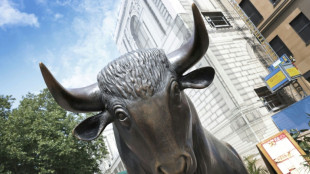 Asian chip firms lifted by Nvidia forecast but broader markets struggle
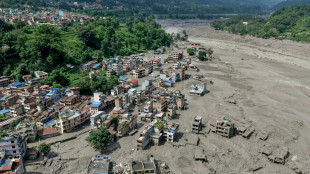 Search for missing after Nepal-Tibet floods kill 165
 Qantas says profits slump as fuel costs surge
 Lofty bond yields, Bessent's intervention pose challenge to Fed's Warsh
 The foreigners missing in Nepal's flash floods
 Bond yields are surging: Here's why that could spell trouble
 Fed's Cook rejects Trump mortgage fraud claims
 Police probe 'assault allegations' after Carse's nightclub incident
 How we might hear new Dolly Parton music in the future
 Nvidia doubles revenue, forecasts even more AI spending

 Canada renews push to boycott US products
 Savio scores on debut as Spurs set-up League Cup tie with Liverpool
 Brazil sues Discord over child safety measures, demands $100 mln in damages

 Alberta NDP Urges Smith to Postpone Separation Vote Amid Trade War

 Fenerbahce stun Lyon in Champions League as AEK crush Levski
 Why Global Finance Still Relies on Wall Street Despite Diversification Trends
 Bethlehem Father Seeks Aid for Special Needs Children Amid Health Crisis
 LIV Golf to lay off majority of staff
 How narwhal 'scientists' track Arctic warming
 Iran says US sanctions will achieve nothing
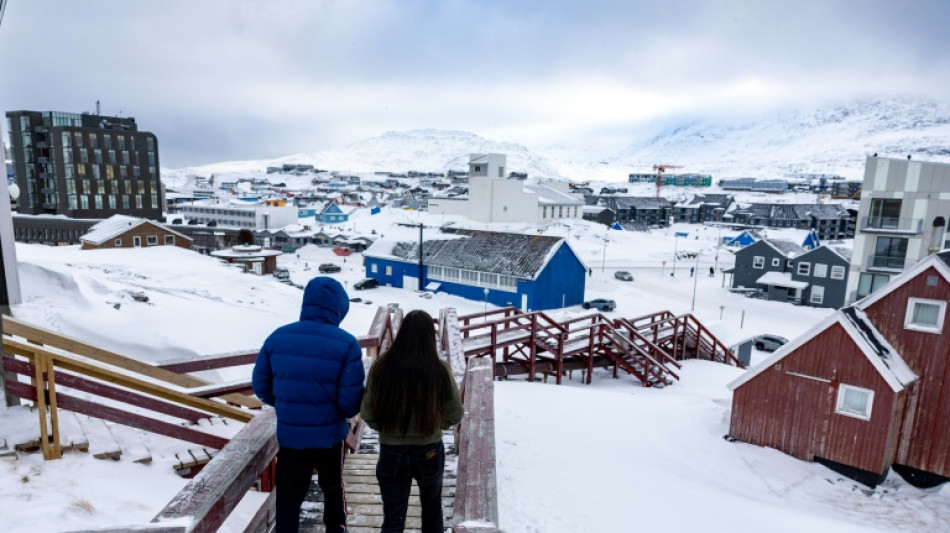
With her colourful Inuit earrings and tattoos on prominent display, Ujammiugaq Engell, like many Greenlanders, flaunts her rediscovered cultural identity, which US President Donald Trump's expansionist ambitions have only spurred further.
"I'm a whole lot of person. I carry my Greenlandic and Danish sides with pride," said the smiling 30-some-year-old, the daughter of a mixed Danish and Greenlandic couple.
After moving to Copenhagen for university, she returned to live in Nuuk, the capital of the vast Arctic island, where she now works as a museum curator.
As Greenland's former colonial power, Denmark pursued assimilation policies that included de facto bans on the Inuit language and traditional tattoos, forced sterilisations and the removal of children from their families to be placed in Danish homes.
The policies left Greenlanders bitter and cast a dark shadow over Denmark's national conscience.
As Greenland gradually regained autonomy in the second half of the 20th century, its population, still made up of almost 90 percent Inuits today, began to rediscover their long-stifled traditions.
Engell's dark hair is piled high on her head in a bun, showcasing long beaded earrings that land beneath her collarbone.
Just below her right elbow, two parallel lines of dots encircle her forearm, symbolising holes to let the spirits move freely, she said.
"All women used to wear (tattoos) and then they disappeared with colonial history and Christianity taking over," the historian by training told AFP.
"They were gone for a long time and then about 10 years ago they started making their way back into our culture."
- Neither Danes nor Americans -
Independence is backed by all of Greenland's main political parties, with the question of when to achieve it dominating the run-up to the island's legislative elections on Tuesday.
Trump's repeated remarks that he wants to get his hands on Greenland -- first made during his previous term in office -- have only served to boost Greenlanders' national pride.
"I think it plays very much into the way that we are starting to understand our own importance and our own national identity," said Engell.
Ebbe Volquardsen, a cultural history professor at the University of Greenland, said he had observed a "mental decolonisation" taking place among Greenlanders.
Volquardsen defined that as a "process where you try to become aware of colonial patterns of thought that you have internalised in your thinking and your way of looking at yourself and your own culture".
Once identified those patterns could then be unlearned, he said.
So Greenlanders have begun "to value cultural techniques that have been discredited by the colonial power and by the Church on a very practical basis, like handicrafts and drum dancing and kayaking," he told AFP.
In Nuuk, many locals say they see their future as neither Danes nor Americans, but Greenlanders.
"We have to fight for our culture, because Denmark took it away from us," said Liv Aurora Jensen, a candidate for the green-left Inuit Ataqatigiit (IA), one of the two parties that make up the outgoing government coalition.
Nowadays, "we have to think like Danes, we have to dress like Danes, and we have to eat like Danes. And I want our culture back".
- Brain drain -
Greenland today is a land of emigration. Over the past three decades, 300 to 400 more people have left the territory each year than have arrived.
That is expected to shrink the population from 57,000 currently to fewer than 50,000 around the year 2040, according to Greenland's statistics agency.
Whether the renewed debate on independence will reverse the trend is uncertain.
But the exiles represent a loss of skilled workers who could otherwise have contributed to the building of an independent state.
Many exiles are often students going abroad for higher education, mostly to Denmark. Many never come back.
With her architecture diploma freshly earned from Denmark's University of Aarhus, Sika Filemonsen said she would return to Nuuk this summer.
"Growing up in Greenland, we were always told to get an education so that we could contribute to society -- that people with an education are exactly what the country needs, especially Greenlanders," she said.
"That motivation has been a big part of why I wanted to pursue an education: to be able to help shape the country and play a role in its future."
D.Bachmann--VB