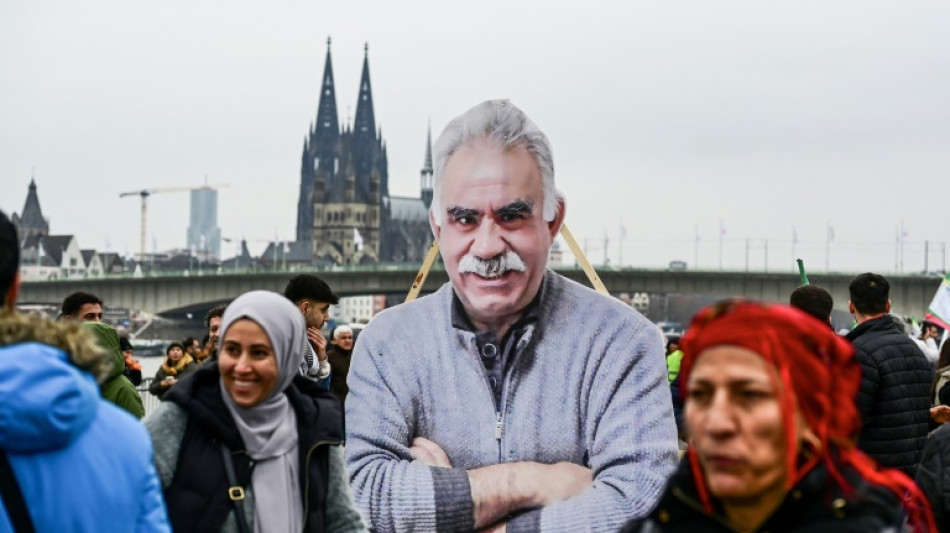
Ocalan: Kurdish PKK founder who urged his fighters to disarm / Photo: © AFP/File

 Germany could miss climate goal in 2026 for first time: think tank
 New flood risks impede Nepal, Tibet rescue

 Kolbe back as Springboks change two for All Blacks Test
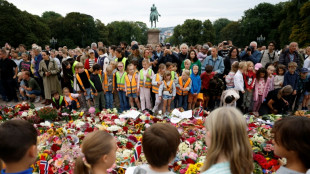 Europe's monarchs, world leaders mourn Norway's King Harald
 Jamie Vardy channel to broadcast Bundesliga games
 STARCARES Completes Basketball Court Revamp in the Philippines, Benefiting Nearly 20,000 People
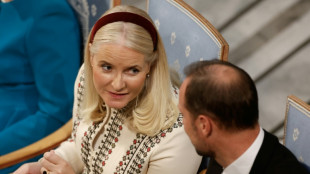 Norway's new Queen Mette-Marit, a fairytale beset by woe
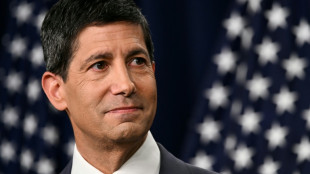
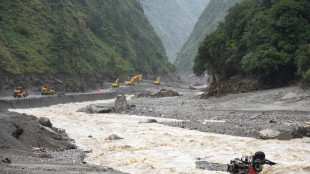 Nepal orders rescuers to safety as overflow brings new flood risks
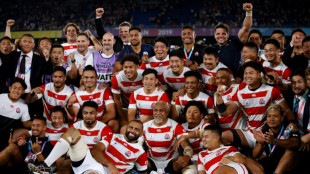
 Norway's King Harald V, unifying force who weathered family storms
 Australia's McKeown vows to reclaim backstroke world records
 Boston Legacy FC Delays White Stadium Debut to 2028

 Cancer fears stalk Kosovo's coal heartland
 Gladys Knight to Reduce Tour Schedule Amid Health Concerns
 Galápagos Coral Fossils Reveal Global Warming Intensifies El Niño Cycles

 Springboks 'old guard' seek revenge over All Blacks
 'Find your own room': Japan says can't handle added Asian Games numbers
 Fresh flood warnings for disaster-hit Nepal and Tibet, 1,400 still missing
 Most Asian stocks advance as attention turns to Warsh speech
 US mother's child murder trial puts spotlight on postpartum psychosis
 'End of an era': Players lament decline of the disc at Gamescom
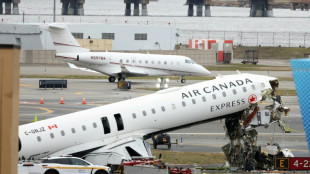 Air traffic controllers left early before deadly NY crash: report
 Golf media firm loses Callaway, PGA Tour deals over violent ad
 US to push economic pressure on Iran at G20 finance talks
 Kiss rotates Wallabies forwards for Argentina Test
 Guns, drugs and car chases: GTA 6 preview lands on Netflix after leaks
Abdullah Ocalan, the jailed founder of the militant Kurdistan Workers Party (PKK), is an icon to many Kurds, but a "terrorist" to many within wider Turkish society.
In a historic call on Thursday, Ocalan called for his PKK to be dissolved and its fighters to lay down their arms in a major step towards ending the decades-long conflict with the Turkish state.
Now 75, Ocalan has been held in solitary confinement since 1999 on Imrali prison island near Istanbul.
But since October, when Turkey tentatively moved to reset ties with the PKK, Ocalan has been visited three times by lawmakers from the pro-Kurdish opposition DEM party.
For most Turks, Ocalan is public enemy number one for his role in leading the PKK.
In 1978, he founded the group which six years later began an insurgency demanding independence and, more recently, broader autonomy in Turkey's mostly Kurdish southeast. Tens of thousands of people have died.
A Marxist-inspired group, it is blacklisted as a "terrorist" organisation by Turkey, the United States, the European Union and many other Western countries.
- An olive branch -
Attitudes began shifting in October when MHP leader Devlet Bahceli, a close ally of President Recep Tayyip Erdogan, offered Ocalan an olive branch if he would publicly renounce terror.
The next day, the former guerrilla who embodies the decades-long Kurdish rebellion, received his first family visit in four years.
He sent back a message saying he alone could shift the Kurdish question "from an arena of conflict and violence to one of law and politics" later offering assurances he was "ready to take the necessary steps and make the call".
Ankara's bid to reopen dialogue came just weeks before Syrian rebels overthrew Bashar al-Assad, upending the regional balance of power and once again thrusting Turkey's complex relationship with the Kurds into the spotlight.
- From village life to militancy -
Ocalan was born on April 4, 1949, one of six siblings in a mixed Turkish-Kurdish peasant family in Omerli, a village in Turkey's southeast.
His mother tongue is Turkish.
He became a left-wing activist while studying politics at university in Ankara, and was first jailed in 1972.
He set up the PKK six years later, then spent years on the run, launching the movement's armed struggle in 1984.
Taking refuge in Syria, he led the fight from there, causing friction between Damascus and Ankara.
Forced out in 1998, he moved from Russia to Italy to Greece in search of a haven, ending up at the Greek consulate in Kenya, where US agents got wind of his presence and tipped off Turkey.
He was arrested on February 15, 1999 after being lured into a vehicle in a Hollywood-style operation by Turkish security forces.
Sentenced to death, he escaped the gallows when Turkey started abolishing capital punishment in 2002, living out the rest of his days in isolation on Imrali prison island in the Sea of Marmara near Istanbul.
For many Kurds, he is a hero whom they refer to as "Apo" (uncle). But Turks often call him "bebek katili" (baby killer) for his ruthless tactics, including the bombing of civilian targets.
- Jailed but still leading -
With Ocalan's arrest, Ankara thought it had decapitated the PKK. But even from his cell he continued to lead, ordering a ceasefire that lasted from 1999 until 2004.
In 2005, he ordered followers to renounce the idea of an independent Kurdish state and campaign for autonomy in their respective countries.
Tentative moves to resolve Turkey's "Kurdish problem" began in 2008, and several years later, Ocalan became involved in the first unofficial peace talks when Erdogan was prime minister.
Led by then spy chief Hakan Fidan -- who is now foreign minister -- the talks raised Kurdish hopes for a solution with their future within Turkey's borders.
But the effort collapsed in July 2015, sparking one of the deadliest chapters in the conflict.
The government has defended its de facto silencing of Ocalan, saying he failed to convince the PKK of the need for peace.
Seen as the world's largest stateless people, Kurds were left without a country when the Ottoman Empire collapsed after World War I.
Although most live in Turkey, where they make up around a fifth of the population, the Kurds are also spread across Syria, Iraq and Iran.
Turkey's wide-scale use of combat drones has pushed most Kurdish fighters into northern Syria and Iraq, where Ankara has continued its raids.
S.Gantenbein--VB