-
 US judge weighing Trump's White House ban on media outlets
-
Russian strikes kill seven in Ukraine, Zelensky vows winter campaign

-
 At UN, OpenAI's Altman calls 'for extreme care' in AI
-
Venezuelan shot by ICE needs urgent medical care, mother tells AFP
-
 Hamilton gives thumbs up to Gulf GPs despite Iran conflict
-
Zelensky says Putin using fighters from 47 countries in Ukraine war

-
 Leclerc admits going 'too far' in Hamilton shunt in Italy
-
Klopp calls on Germany to 'rise above ourselves' as new era begins
-
 Row engulfs Dolly Parton's estate as manager accuses nephew of making threats
-
Russian strikes kill seven in Ukraine as Russia vows no 'pause' to war

-
 Mandela Digital Extends Early Access Programme to 11 February 2027 Following Strong Response
-
ArcPoint Expands Globally with Institutional Intelligence Platform for Modern Investors

-
 US seeks 11th Presidents Cup win in a row over global foes
-
Ronaldo focussing on 'present' ahead of Wales test

-
 McDonald's to boost franchisees as inflation weighs on consumers
-
Outgoing UN chief makes final climate push at New York summit
-
 Trump invites Putin to G20 summit in Miami
-
Grief and pain flow at hearing for Canadian suicide poison vendor

-
 Archaelogical 'breakthrough' could confirm origins of Paris
-
Ireland boss Hallgrimsson says timing of Israel remarks 'not clever'

-
 ILO financial crisis takes centre stage in leadership race
-
Weinstein resentenced to 15 years in prison for 2006 sex assault

-
 Stocks dip, oil soars despite Trump hailing "productive" Iran talks
-
Fendi brings disco bling, Italian style, to Milan Fashion Week

-
 China's Xi to get rare airport welcome from Trump
-
French court confirms rape trial for PSG and Morocco star Hakimi

-
 Turkey reassures investors over investment fund crisis
-
President tells Trump that Iran will never 'bend at the knee'
-
 Saka says England still have 'scar' from World Cup semi-final loss
-
أليكس بودي والبروفيسور الدكتور شتيفان هاوبت يتفقان على التعاون من أجل مجموعة فنية أسطورية في رومانيا
-
 アレックス・ボディ氏とシュテファン・ハウプト教授、ルーマニアの伝説的な美術コレクションをめぐり提携に合意
-
U2 at 50: Irish rockers reveal anniversary album

-
 亞歷克斯·博迪與史蒂芬·豪普特教授就羅馬尼亞傳奇藝術收藏達成合作協議
-
Алекс Боді та проф. д-р Стефан Гаупт домовилися про співпрацю щодо легендарної колекції мистецтва в Румунії
-
 Алекс Боди и проф. д-р Стефан Хаупт договорились о сотрудничестве в рамках легендарной коллекции произведений искусства в Румынии
-
Alex Bodi și prof. dr. Stefan Haupt încheie un acord de cooperare pentru o colecție de artă legendară în România
-
 French foreign minister says Palestinians 'must' hold polls
-
Alex Bodi and Prof. Dr Stefan Haupt agree to collaborate on a legendary art collection in Romania
-
 Fresh Russian strikes on Ukraine's infrastructure kill seven
-
Stocks dip, oil rises as traders eye chances of Iran deal
-
 Eriksen to return to Denmark after parting ways with Wolfsburg
-
Israel squeezing UN Palestinian refugee agency ahead of polls: chief
-
 Brad Pitt says working with dog co-star was 'really moving'
-
Dutch to resume Eurovision with new broadcaster

-
 Golan will remain Syrian, vows President al-Sharaa at UN
-
Man Utd losses jump despite record revenues
-
 Blueberry Strengthens MENA Presence with CMA Category 5 License and Dubai Office Launch
-
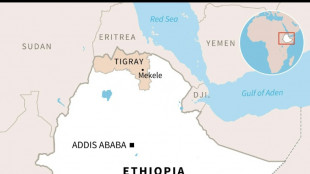
Ethiopia's Tigray rebels seize airports, clash with govt forces
-
 Russia probes bear attacks, as official says town under 'siege'
-
China prodigy wins third Games gold as North Korea weightlifters roar

Global plastic use and waste on track to triple by 2060
A world severely blighted by plastic pollution is on track to see the use of plastics nearly triple in less than four decades, according to findings released Friday.
Annual production of fossil-fuel-based plastics are set to top 1.2 billion tonnes by 2060 and waste to exceed one billion tonnes, according to the Organisation for Economic Co-operation and Development (OECD).
Even with aggressive action to cut demand and improve efficiencies, plastic production would almost double in less than 40 years, the 38-nation body projects in a report.
Such globally coordinated policies, however, could hugely boost the share of future plastic waste that is recycled, from 12 to 40 percent.
There is increasing international alarm over volume and omnipresence of plastics pollution, and its impact.
Infiltrating the most remote and otherwise pristine regions of the planet, microplastics have been discovered inside fish in the deepest recesses of the ocean and locked inside Arctic ice.
The debris is estimated to cause the deaths of more than a million seabirds and over 100,000 marine mammals each year.
"Plastic pollution is one of the great environmental challenges of the 21st century, causing wide-ranging damage to ecosystems and human health," OECD chief Mathias Cormann said.
Since the 1950s, roughly 8.3 billion tonnes of plastic have been produced with more than 60 percent of that tossed into landfills, burned or dumped directly into rivers and oceans.
Some 460 million tonnes of plastics were used in 2019, twice as much as 20 years earlier.
The amount of plastic waste has also nearly doubled, exceeding 350 million tonnes, with less than 10 percent of it recycled.
- Plastics and CO2 -
On current trends, the use of plastics is projected to roughly double in North America, Europe, and East Asia. In other emerging and developing countries, it is expected to grow three- to five-fold, and more than six-fold in sub-Saharan Africa.
The new report contrasts a business-as-usual trajectory with the benefits of more ambitious global policies of reduced plastic use and pollution.
Driven by economic growth and an expanding population, plastics production is set to increase under either scenario, the OECD warns.
Where policies can make a huge difference is in the handling of waste.
Currently, nearly 100 million tonnes of plastic waste is either mismanaged or allowed to leak into the environment, a figure set to double by 2060.
"Co-ordinated and ambitious global efforts can almost eliminate plastic pollution by 2060," the report concludes.
It could also curtail the amount of planet-warming greenhouse gases projected to seep into the atmosphere.
Currently, the full life-cycle of primary plastics -- from production to disintegration -- contributes about two billion tonnes of CO2 or its equivalent in other gases, roughly three percent of human-caused carbon pollution.
Without targeted policy action, that figure will likely double by 2060, the OECD warns.
Earlier this year, the United Nations set in motion a process to develop an internationally binding treaty to limit plastic pollution.
N.Fournier--BTB