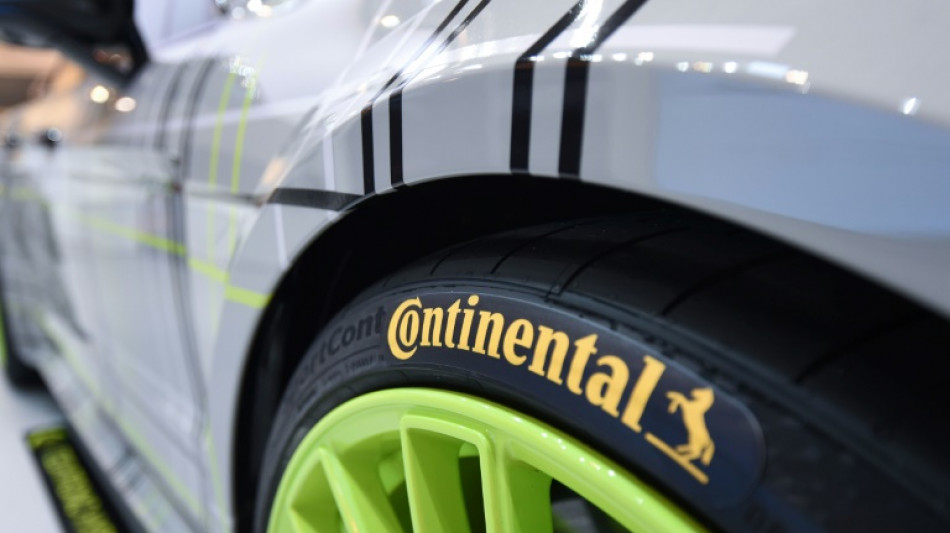
German auto supplier Continental to cut 3,000 more jobs / Photo: © AFP/File

 South Korea Launches Probe into NewJeans Contract Controversy

 Helen Rees Reflects on Four Decades of South Africa's HIV Journey

 Foreign Investors Return to Indian Equities with ₹84,290 Crore Inflow

 Interactive Map Reveals 1,000 Unsolved Murders Across UK

 AA Reveals Fastest Method to Defog Car Windscreen in Winter
German auto supplier Continental said Tuesday it will cut a further 3,000 jobs by the end of 2026, the latest sign of weakness for the country's auto sector.
The job reductions will be in research and development, it said, adding that less than half of the cuts will be in Germany.
Continental said the cuts would "to a large extent" take place via natural turnover, such as from retirement.
"We are continuously improving our competitive strengths in the interest of our sustainable market success," said Philipp von Hirschheydt, head of the automotive division at Continental.
Continental had already announced plans last February to cut 7,150 jobs by 2025.
The firm employs about 200,000 people worldwide with about 31,000 of those in research and development.
It has also announced it will spin off its automotive components business.
The news comes amid testing times for the European car industry, which is struggling with fierce Chinese competition and the shift to electric vehicles.
Sports car maker Porsche announced 1,900 layoffs last week, citing weak demand for its electric cars, and Volkswagen last December reached an agreement with unions to cut 35,000 jobs across its German locations by 2030.
BMW and Stellantis, which owns brands such as Fiat and Jeep, warned investors last year that their performance for 2025 would fall short of expectations, citing weak demand in China.
R.Braegger--VB