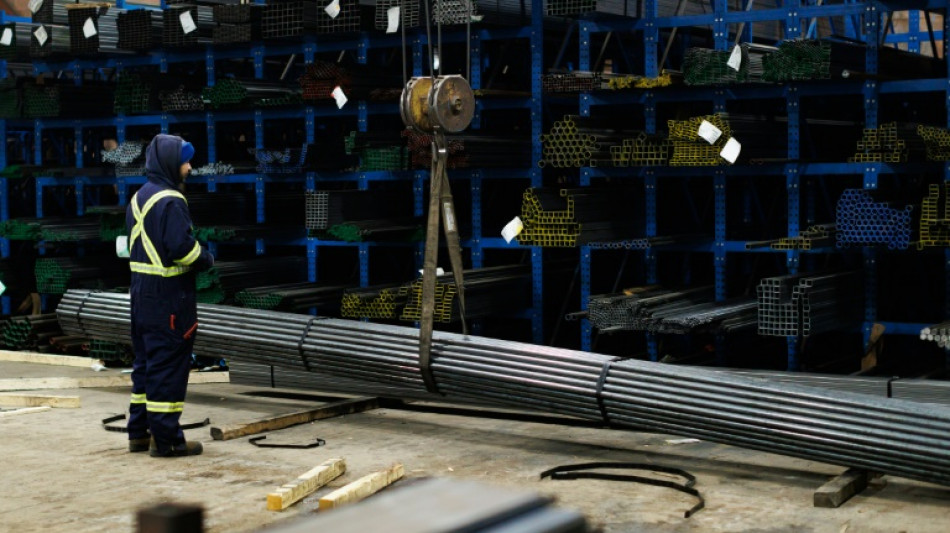
Canadian steel firms face turmoil after US 'stab in the back' / Photo: © AFP

 Afghan people should 'not be abandoned': top Red Cross official

 Six defining moments of Lionel Messi's Argentina career

 Trump blasts US backlash against data centers

 It 'hurts' says Messi of decision to retire from international football

 Benzema ends brief stint with Al Hilal in Saudi league

 Djokovic's Grand Slam future uncertain after brutal US Open defeat

 Turkey says regional defence pact not against any country

 US vows to keep economic pressure on Iran as G20 finance talks begin

 Shein valued at $26.3 bn in Hong Kong market debut
 Crude prices rise above $90 per barrel on US-Iran strikes

 Liverpool sign Barcola from PSG for reported £124 million

 Putin, Xi, Iran's Pezeshkian in Kyrgyzstan for summit

 Fully Permitted Tanzanian Gold Project Clears Path to Construction as Financing, EPCM Fall in Place (LVGLF)

 EdWealth Announces MoneyBench Benchmark Comparing AI Money Answers From Ed, ChatGPT and Gemini

 Root says new balls behind batsmen's struggles in England
 Swollen rivers, washed-out roads hamper Nepal rescue effort

 In France's north, winegrowers bet on a warmer future

 Deadly virus stalks South Africa's sardines

 South Korea women's football body probes 'period' insult

 Transitional Fashion Essentials for Autumn: Key Pieces from M&S and Joe Browns

 China's Xi and Iran's Pezeshkian in Kyrgyzstan, Putin expected

 Rescuers hunt for missing after deadly N.Cyprus ferry accident
 Ethiopia's Abiy could consolidate power as 'executive president'
 Crude prices rise on US-Iran strikes, equities mixed after Warsh remarks

 South Korea court gives Unification Church leader 2 years prison
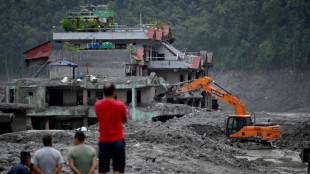
When Shale Tobe heard President Donald Trump planned to impose tariffs on Canadian steel, a product that has supported his family for decades, he was in New York on holiday, "spending money down in the US."
"I'll have second thoughts about that" now, he told AFP on the warehouse floor of North York Iron, a family-owned steel distribution business in Toronto started by his great-uncle more than 60 years ago.
Trump's latest tariff order has sparked fresh anger among Canadians, including business owners like Tobe who deal with US counterparts on a near-daily basis.
"They're like brothers to us," he said of US steel firms.
"Things have been running smoothly, going back and forth across the borders for decades... We're being stabbed in the back a bit, I feel."
Trump's pronouncements on US-Canada trade have veered in several directions.
He has promised a blanket 25 percent tariff on all Canadian imports -- measures the president says are necessary to force action on migrant crossings and the drug fentanyl, even if neither is a significant issue at the northern border -- but also complained about trade deficits.
His separate 25 percent tariffs on worldwide steel and aluminum imports are due to take effect next month.
If the metal duties come into force, Canada will be hit harder than any other nation, said Fraser Johnson, a supply-chain expert at Western University's Ivey Business School.
"It's going to be very disruptive," he told AFP, noting that about 90 percent of Canada's steel and aluminum exports go to the United States.
Beyond damage to Canadian steel and aluminum manufacturers, US customers will also suffer a swift and enduring hit, Johnson said.
"The burden will be felt almost immediately because the US does not have the domestic capacity to be able to support its entire needs," he added, suggesting it could take "decades" for US suppliers to fully adjust to a loss of sourcing from Canada.
- Waiting on retaliation -
Prime Minister Justin Trudeau has condemned any US tariffs on Canadian steel and aluminum as "entirely unjustified" and promised a "firm" response, but Ottawa has not yet announced retaliatory measures.
"We're not looking to go ahead of the United States," Finance Minister Dominic LeBlanc said Wednesday during a visit to Washington.
Canada is "certainly not going to do anything before the Americans make their ultimate decision, and what the Americans have said to us privately and what they've said publicly is that we have a number of weeks to work together."
Trudeau, who leaves office next month, has stressed Canadian trade policy in the volatile Trump era must prioritize averting US tariffs while positioning Canada for a fundamentally altered relationship with its southern neighbor over the long term.
Canadian business leaders and politicians have urged the removal of restrictions preventing trade between provinces, to boost domestic economic activity, while expanding trade with foreign markets.
Johnson, the supply-chain expert, agreed that encouraging Canadian businesses to sell more to each other was essential, regardless of what happens in the United States.
But he stressed that when it comes to metal exports, pivoting to foreign markets is "easy to say from an armchair perspective, but difficult to be able to implement."
- 'Sickening' -
For Tobe, it's too early to assess the impacts of a metals trade war on his business.
One of his top sellers is a steel beam, which he buys from a supplier in Georgia.
The beams aren't available in Canada, so he would expect Ottawa to include an exemption for the product in any retaliation package, as they did during Trump's first term.
His company no longer exports directly to the US but his customers do, so the ripple effects of a tariff battle across the industry could eventually sting.
Beyond the family business, the softly spoken 61-year-old told AFP he has been particularly impacted by threats from Trump and his allies suggesting the United States should annex Canada.
"It was almost sickening to me, hearing that," Tobe said.
"We have to fight fire with fire... We have to get away from our dependence on the US. It's not safe anymore."
S.Spengler--VB