Swollen rivers, washed-out roads hamper Nepal rescue effort / Photo: © AFP

 UK singer-songwriter Raye wins Mercury Prize for second album

 Antonelli needs ‘perfect weekend’ to realise title dream

 Reclaiming the walls in a former Salvadoran gang hotspot

 Musk wants to merge SpaceX and Tesla: Here's what to know

 Musk's wants to merge SpaceX and Tesla: Here's what to know

 Hashimoto sweeps to gymnastics world all-around title

 Super Bowl MVP Walker returns to Seattle with unbeaten Chiefs

 Red Bull advisor Marko slams Horner memoir as 'collection of untruths'

 France reports first human Shamonda virus case, says no health risk

 Rekindled Gucci desirability fails to light flame under Kering sales

 Thousands rally as Serbia heads to pivotal poll

 Marathon star Aga banned six years for doping and misleading investigation

 USA to host women's football Club World Cup in 2028 - FIFA

 Finland grants licence for world's first nuclear waste repository

 'Old-fashioned' South Africa thump Australia to level Test series

 No more taking out the trash at your Airbnb

 Swiss supreme court upholds Guatemala ex-police chief sentence

 UN climate disaster fund moves to provide $20 mn aid for Nepal

 Africa faces 'complex' Ebola outbreak after spread to Nigeria: WHO
 American detained in Russia arrives in US: lawyer

 Pentagon, Lockheed announce deal for 850 F-35 jets over 10 years

 French authorities seek to ban or curb fresh protests

 Nearly all coral reefs risk collapse in 50 years: IUCN

 Foden can be one of Premier League's best again, says Maresca

 'Solution from the heavens': Indonesians pray for rain as fires burn

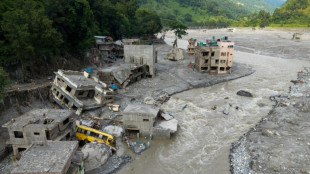
Nepali rescue teams battled difficult terrain, an unpredictable river and treacherous marshland on Monday, the sixth day in their search for survivors and victims of devastating floods.
The catastrophic flooding has killed more than 900 people, while the number of people unaccounted for has also risen, reaching more than 4,793 on Monday.
"There are too many challenges," said E. Hawadi, a police officer coordinating rescue efforts in the badly affected Nuwakot district.
"There are no roads, they have all been washed away, and many areas are just not accessible," he told AFP.
Floodwaters remained high in some areas. Elsewhere, the ground had turned into slushy mud, slowing movement and complicating operations.
"It is very difficult for my men. The area is still flooded, and elsewhere it is all marshland," Hawadi said.
Entire communities have been swept away, leaving families homeless in heavy rain or sheltering in temporary facilities.
Unidentified bodies are being buried in mass graves after DNA sampling.
- 'Deep and steep' -
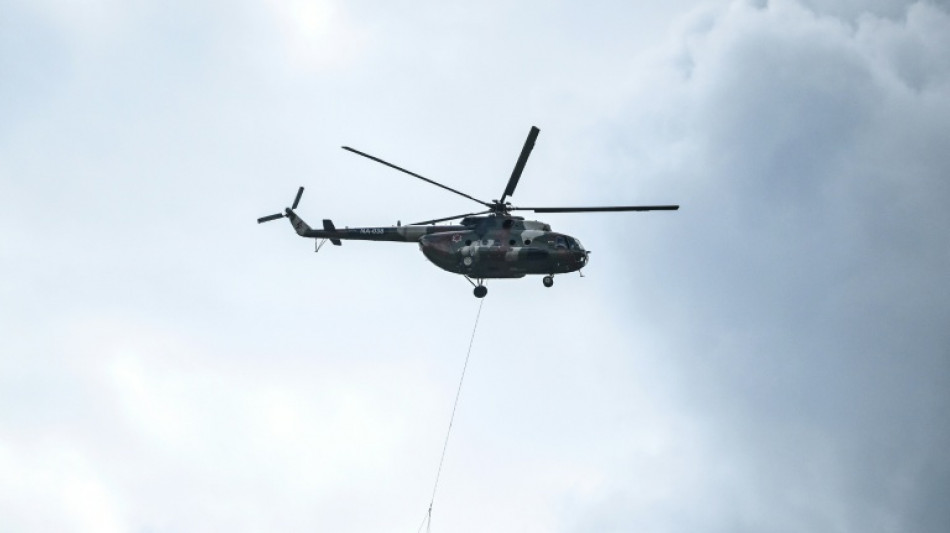
The difficult conditions in Nepal's remote settlements have forced rescuers to depend heavily on helicopters, often the only viable means of reaching stranded communities.
"Once my men are dropped, they have to roam over large distances to conduct search and rescue," Hawadi said.
"But the helicopters have to return because there are not enough of them."
With supplies stretched and teams dispersed across a sprawling disaster zone, authorities have continued to bring reinforcements into Bidur, a small town on the banks of Trishuli River, which has become the main hub for rescue operations.
Foreign ministry spokesman Lok Bahadur Poudel Chhetri, appealing for international support, including specialist teams and kit to "locate people who may be buried under debris", said the mountain geography was adding to the challenge.
"This is the Himalayas... We have to be very careful when starting any rescue operation or relief operation," he told reporters on Monday.
"The gorges are very deep and steep, so that's the difficulty."
- 'Severely disrupted access' -
The International Federation of Red Cross and Red Crescent estimated that around 93,000 people may have been affected by the floods, and that "many homes have been destroyed or severely damaged".
More than 40 bridges have been damaged or destroyed.
India and China are sending prefabricated Bailey bridges that can be assembled quickly without heavy equipment.
Prime Minister Balendra Shah said that the task was "challenging due to adverse weather, difficult terrain, and ongoing risks".
"Damage to roads, bridges, settlements, and critical infrastructure has severely disrupted access to affected communities, creating significant challenges for relief operations," the UN World Food Programme said, which is shipping in 2.4 tonnes of high-energy biscuits for families with nowhere to cook.
Back in Bidur, Hawadi said rescue teams were struggling with a lack of adequate equipment, including flotation devices needed to operate safely in floodwaters.
The swollen river, already responsible for widespread destruction, continued to change course, forcing rescuers to constantly reassess their plans.
"For example, an area that was dry yesterday is completely flooded today," Hawadi said.
That unpredictability has made night-time operations impossible in many areas, despite pressure to accelerate the search.
"It is unpredictable," he said. "Floods can come at any time."
C.Kreuzer--VB