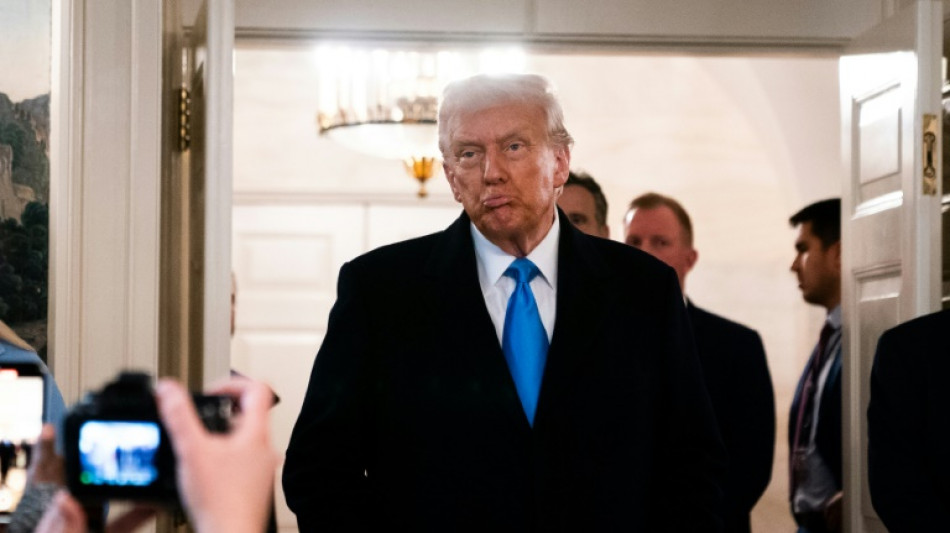
US consumer inflation unexpectedly up, Trump blames Biden / Photo: © AFP

 India's Wholesale Inflation Jumps to 12.29% as Fuel Costs Surge

 Japan's Economy Edges Into Contraction as Costly Oil Weighs on Demand

 Colin Farrell and Emma Fogarty on Friendship, Disability, and 'The Slightest Touch'

 Knicks Coach Mike Brown Unfazed by Josh Hart's Offensive Struggles
 River Medway Reveals Financial Struggles Before 'Drag Race' Windfall

US consumer inflation unexpectedly accelerated last month, data showed Wednesday, in a moment of potential political peril for President Donald Trump, who quickly blamed the uptick on his predecessor Joe Biden.
The consumer price index (CPI) edged up to 3.0 percent in January from a year ago, rising slightly from 2.9 percent a month earlier, the Labor Department said in a statement.
This was slightly above the median forecast of 2.8 percent predicted by economists surveyed by Dow Jones Newswires and The Wall Street Journal.
"Overall, this is not a great read," EY chief economist Gregory Daco told AFP.
The cost of eggs and gasoline prices jumped last month, along with several other politically potent price points.
Any sustained uptick in inflation could cause a political headache for Trump who campaigned on a pledge to tackle inflation and the cost of living.
"BIDEN INFLATION UP!" Trump wrote in a post on his Truth Social account shortly after the data was published, seeking to blame his Democratic predecessor for the CPI increase.
The January CPI data is an estimate of the price level for the whole month, including the 12 days Trump was in office.
In an earlier message, Trump also called for interest rates to be lowered, adding they would "go hand in hand" with his plans to impose tariffs on major US trading partners -- despite many economists arguing that both measures would boost inflation.
"Any administration is always going to be looking for lower interest rates, as they tend to be growth stimulative," Daco told AFP.
"The paradox is that the policies that are being promoted by the administration tend to have an inflationary lean, and therefore would favor the Fed maintaining a higher-for-longer stance, which goes very much in the opposite direction of this desire for lower rates," he added.
The January inflation data will likely fuel calls for the Federal Reserve -- the independent US central bank -- to hold its key lending rate at between 4.25 and 4.50 percent as it waits for prices to ease.
The Fed has a long-term inflation target of two percent, measured against a different inflation gauge, and aims to hit it primarily by raising and lowering short-term lending rates.
These actions influence the cost of borrowing for consumers and businesses alike.
Another worrying data point for the Fed in the data published Wednesday was the acceleration in inflation excluding volatile food and energy costs, which rose by 3.3 percent from a year earlier.
On a monthly basis, inflation increased by 0.5 percent in January, and by 0.4 percent excluding food and energy.
P.Staeheli--VB