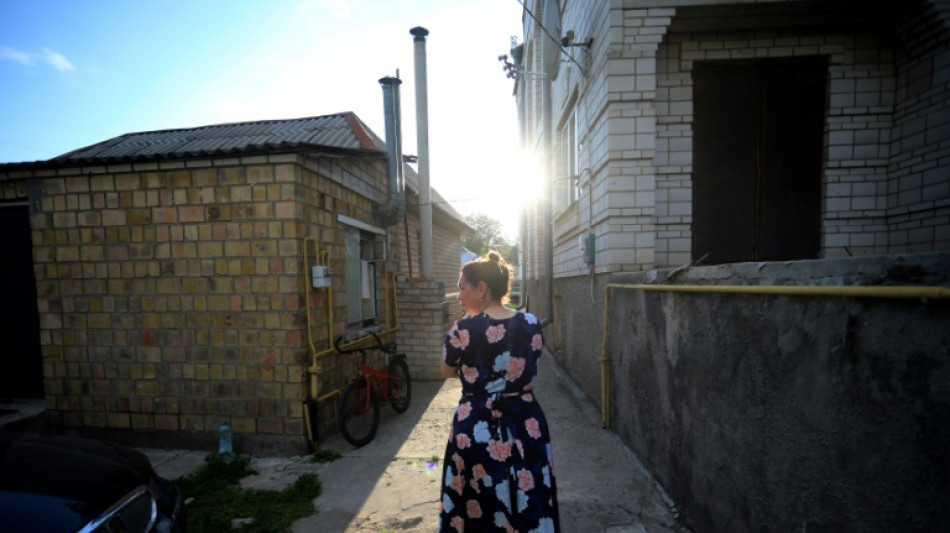
For Ukraine's Roma, discrimination adds to agonies of war / Photo: © AFP

 Klopp calls on Germany to 'rise above ourselves' as new era begins

 Russian strikes kill seven in Ukraine as Russia vows no 'pause' to war

 ArcPoint Expands Globally with Institutional Intelligence Platform for Modern Investors

 Ronaldo focussing on 'present' ahead of Wales test

 Outgoing UN chief makes final climate push at New York summit
 Grief and pain flow at hearing for Canadian suicide poison vendor

 Ireland boss Hallgrimsson says timing of Israel remarks 'not clever'
 Weinstein resentenced to 15 years in prison for 2006 sex assault

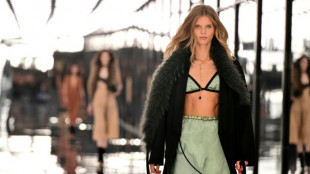 Fendi brings disco bling, Italian style, to Milan Fashion Week

 French court confirms rape trial for PSG and Morocco star Hakimi

 President tells Trump that Iran will never 'bend at the knee'

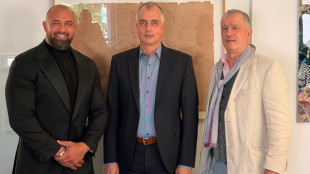 أليكس بودي والبروفيسور الدكتور شتيفان هاوبت يتفقان على التعاون من أجل مجموعة فنية أسطورية في رومانيا
 U2 at 50: Irish rockers reveal anniversary album
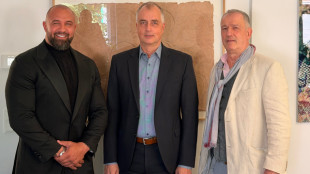
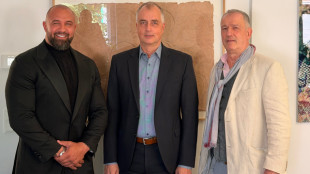 Алекс Боді та проф. д-р Стефан Гаупт домовилися про співпрацю щодо легендарної колекції мистецтва в Румунії
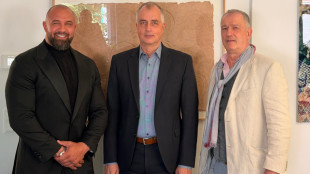
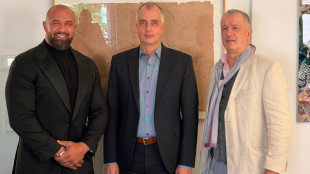 Alex Bodi și prof. dr. Stefan Haupt încheie un acord de cooperare pentru o colecție de artă legendară în România
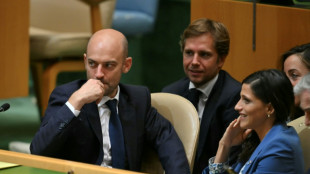
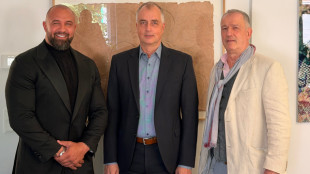 Alex Bodi and Prof. Dr Stefan Haupt agree to collaborate on a legendary art collection in Romania
 Stocks dip, oil rises as traders eye chances of Iran deal
 Israel squeezing UN Palestinian refugee agency ahead of polls: chief
 Dutch to resume Eurovision with new broadcaster
 Man Utd losses jump despite record revenues

 Ethiopia's Tigray rebels seize airports, clash with govt forces
 China prodigy wins third Games gold as North Korea weightlifters roar

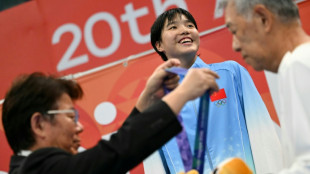 China's Yu, 13, wins third Asian Games gold but has 'some regrets'
 Oil falls, stocks steady as Trump hails 'good' Iran talks
 UK sets up unit to combat disinformation from Russia, AI

Forced to flee fighting, Lyudmyla was assured the authorities would rehouse her in a town in western Ukraine. But when she arrived, they took one look at her and turned her away.
"On the phone, it was OK. We agreed on the room. But when I arrived, they saw my dark skin and refused to give me shelter," she said.
A member of the Roma minority, this 59-year-old -- who prefers not to give her family name -- is by her own admission "a success story", being one of the few members of her community to have had an education.
And the same is true of her daughter, Ilona, who is a lawyer.
Together, they refused to be turned away, threatening to file a complaint, and only after a full day of haggling obtained the keys to the room where they spent one month along with Ilona's mother-in-law and three children.
"If I hadn't been educated, we would have had to sleep on the street or in the railway station," explained Lyudmyla, who has now returned to her home in Trebukhiv just to the west of Kyiv after Russian troops pulled back from the area to focus on southern and eastern Ukraine.
Like her, many of Ukraine's Roma population say they have struggled to access shelter and the aid that has poured in to the country since the Russians invaded on February 24.
- Rare complaints -
Census figures suggest there are some 50,000 Roma people in Ukraine, but rights groups say the figure is closer to 400,000.
"The biggest problem is housing: People don't want to host Roma families," says Julian Kondur of Chiricli, an international Ukraine-based charity that supports Roma women.
Like in many countries, long-held prejudices about the Roma people have fuelled a fear of them, he says.
On Wednesday, Human Rights Watch accused neighbouring Moldova of "deliberately housing most Roma refugees separately from others fleeing the war in Ukraine", denouncing the move as "unequal and discriminatory treatment".
Through its hotline, Chiricli has collected many testimonies about what happened during evacuations.
"A bus was about to leave (the northeastern city of) Kharkiv and the driver said 'no' to a Roma family," says Kondur, citing just one example.
"Sometimes, Roma themselves are so used to discrimination that they accept it as normal" and rarely complain, he says.
Lyudmyla initially told AFP she did not experience any discrimination, before then relating her experience.
Though she struggled to find shelter in western Ukraine, during the first two weeks of the war, Lyudmyla had offered refuge to around 50 other Roma in her basement.
Dressed in a long flowery dress, she recalled the fear and winter chill of those early days.
"Ten kilometres from here, there were Russian tanks and very heavy explosions. It was really scary," she said.
And it was so cold that one of her grandchildren became seriously ill.
- 'We're suffering too' -
Aside from the lack of solidarity shown towards their community, the Roma have also struggled to access certain types of aid because they do not have the right papers.
To avoid repression under the Soviet regime, the Roma did not register with the local authorities, and many do not have identity documents, birth certificates or passports to prove citizenship.
"At the time, there was a saying: If you don't have a passport, you don't have problems," Kondur says.
Since Ukraine became independent in 1991, many Roma people have moved to register, but around 30,000 still have not, putting them at a further disadvantage in wartime.
"Inevitably, you need to have identity documents to get food packages, to get financial support both from the government and the UN," he explains.
For all these reasons, Roma tend "to find help within their own community", says Valentina Zolotarenko, who works as a mediator to help her people access public services.
"On television, you see only Ukrainians, but we're suffering too," says the 59-year-old, who was born in Russia.
But "despite the bombs, I prefer being a Ukrainian Roma than a Russian one," she adds.
"It's far worse there for my community."
E.Schubert--BTB