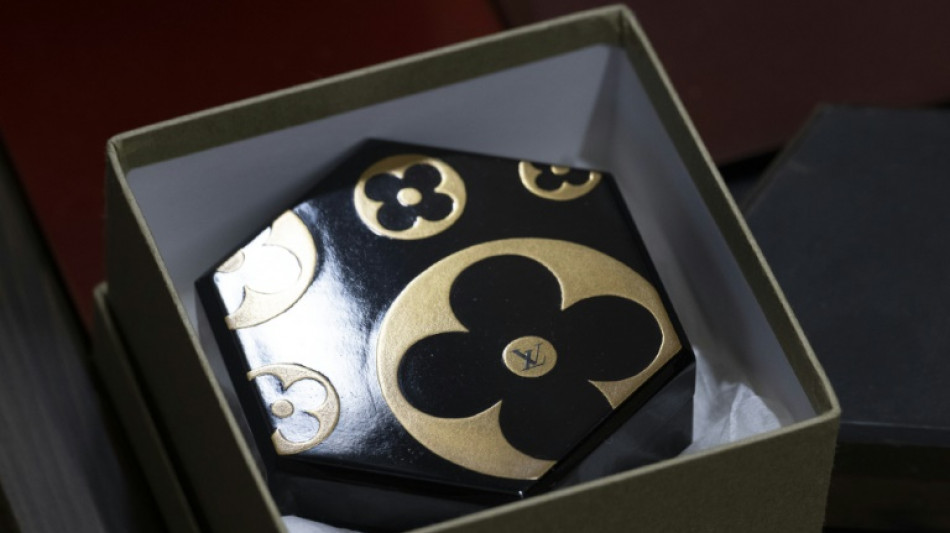
Japan's Wajima craftmakers see hope in disaster-hit region / Photo: © AFP

 Rangers captain Shankland sidelined for up to four months

 NY failed to disclose what it knew on 'toxic air' after 9/11

 What we learned from 'lacerating' four-hour Musk documentary

 UK, France, Canada to ban imports from Israeli settlements

 Pakistan's drastic squad upheaval 'news' to skipper Babar Azam

 Hurricane Lowell lashes Hawaii's western islands

 Argentina files lawsuit against oil firms operating off Falklands

 Root wants Pietersen to pull no punches on England return

 Spain declassifies intelligence reports into Ceuta migrant rush

 Octrado introduces its proprietary trading offering: "Your Skill. Our Capital"

 Mac Allister 'very sad' at lack of new Liverpool deal

 Barca star Yamal says will not beg for Ballon d'Or

 Houthis report Saudi reprisals after oil sites set ablaze in wave of strikes

 Could gas prices return to 2022 highs on US-Iran war?

 Totti turns down Italy and Roma to join basketball club
 South Africa economy shrinks ahead of local elections

 CapTLX Expands Institutional-Oriented Platform for Access to U.S. Capital Markets

 UK's Prince George starts at Eton College
 French far right keeps guarded silence over AfD Germany triumph

 Russia-Ukraine talks possible this month, Zelensky says, as Moscow pounds Kyiv

 Turkish Airlines will be new Liverpool shirt sponsor in £300 mn deal

 On London's Brick Lane, a data centre sparks local battle

 Nepal flood death toll rises as rescuers scour tunnels
 France's Mistral sees value soar with 3 bn euro cash infusion
 Nepal glacier saw exceptional heat before collapse caused deadly floods: researcher

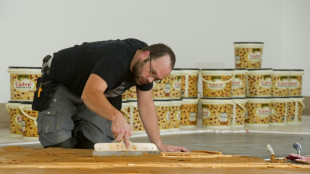
Lacquerware maker Takaho Shoji hunches over his desk in the disaster-hit city of Wajima in central Japan, applying another layer of coating to a dark, wooden box.
One brushstroke at a time, the 53-year-old is determined to bring life back to his remote community after a devastating New Year's Day earthquake, followed by severe floods.
"I need to do whatever I can to move forward with the reconstruction, and to continue this tradition and pass it on to the next generations," said the soft-spoken father of two.
"We have to work harder together, otherwise the local lacquerware industry will fade."
Wajima, a coastal city with a population of just over 20,000, is a nationally celebrated centre for fine lacquerware.
Products made there are known as Wajima-nuri, and a basic soup bowl can command a price of $150 or more.
This year brought death and suffering to the city and its surrounding communities at the tip of the Noto Peninsula.
As families prepared for their New Year's Day dinners, a terrifying 7.5-magnitude jolt accompanied by powerful aftershocks destroyed houses and businesses.
Sweeping fires, a tsunami and landslides engulfed the region and forced most residents and their visiting relatives to flee to evacuation shelters.
Then, as they tried to rebuild their lives, torrential rain flooded the city in September, destroying more homes.
The disasters also shattered the network of roughly 700 artisans and workers in Wajima's lacquerware industry, which has been losing workers like other fine crafts.
Damage to the city has been so extensive that municipal officials are not even certain how many craftspeople are still active.
- 'Warmth and wellbeing' -
Wajima-nuri is known for its durability and delicate designs and is often used in tableware like bowls and chopsticks.
With its understated elegance, the technique is also used to create high-end furniture and home decor.
More than 100 steps are involved in the production of Wajima-nuri. The tasks are distributed among specialised artisans, some focusing on lacquer coating and others on carving and shaping.
Among the city's lacquerware professionals trying to restore the network of artisans is Taiichi Kirimoto, the seventh-generation proprietor of a Wajima-nuri studio.
He and his wife now live at his company's gallery space after they lost their house, but he has wasted little time in moving forward.
He worked with renowned architect Shigeru Ban to build temporary work spaces made with cardboard materials, and he has travelled around the country promoting his studio's work and providing places of work for artisans.
"Lacquerware provides a sense of comfort and warmth and wellbeing to people. Perhaps this is different from modern convenience," said Kirimoto, who has worked with top brands including Louis Vuitton.
"I absolutely do not see a choice to leave this city or to move to another profession."
- Uncertain future -
Among Kirimoto's staff artisans is Shoji, a specialist in coating.
An avid angler, Shoji was alone at a local port late afternoon when the earthquake struck, knocking him onto his back.
Sea water roared and receded fast, exposing the seabed before rushing back as a tsunami.
With landslides blocking the roads home, he decided to spend the night in his car on higher ground.
The next day, he was reunited with his family but his house was unsafe to live in. They moved into an evacuation shelter and he began helping others in his community.
Shoji encouraged others to stay in the city after the quake.
But after the September floods, he questioned whether it was the right decision.
"That's what worries me the most -- when you lose people, it devastates the community," he said.
Shoji still believes the Wajima-nuri tradition, a source of local pride, can bring energy back to his home city in its time of dire distress.
He is testing new methods, inspired by the centuries-old tradition, to bring lacquerware into the modern era.
"Our future is uncertain. But I want to do something to move things forward," he said.
W.Huber--VB