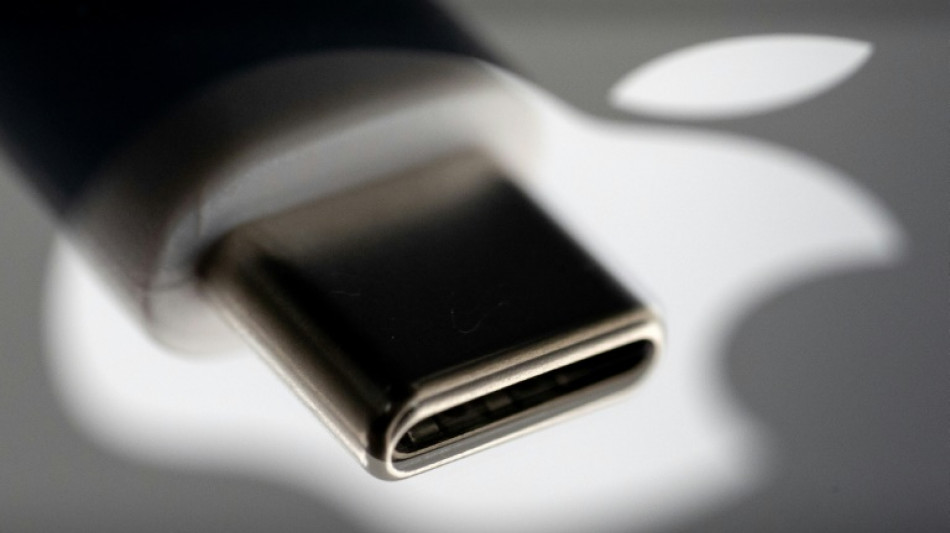
EU universal charger rules come into force / Photo: © AFP/File

 5 Strategies for Fort Worth Households to Reduce Summer Electricity Costs

 Central Bank of Malta Links Energy Subsidies to Middle East Conflict and Price Volatility

 Shomari Figures Defies Redistricting in Alabama Amid Disaster Relief Crisis

 BYD Dolphin G Leasing Deal: Plug-in Hybrid Supermini Available from £174 a Month

 Egypt Opens Registration for 2027 Total Solar Eclipse Viewing Packages

 French Economy Shrinks 0.1% as Consumer Confidence Slumps

 Wall Street Ends Turbulent Week Higher Despite Inflation and AI Jitters

 Kansas City Fed Chief Says Inflation Is Still Running Too Hot

 Asian Markets Slide as AI Concerns Hit Chip Stocks

 Tom Brady’s Viral Reaction to Deebo Samuel’s Trick-Play Touchdown

 Canada Expands Asian Trade Push as US Negotiations Resume

 US Jobless Claims Rise to 200,000 but Layoffs Remain Historically Low

 Italy Raises 2026 Growth View but Warns Energy Will Keep Inflation High

 Euro-Area Growth Slows to 0.4% While Employment Stalls

 US Wholesale Inflation Eases Monthly but Hits a Four-Year Annual High

 India's Wholesale Inflation Jumps to 12.29% as Fuel Costs Surge

 Japan's Economy Edges Into Contraction as Costly Oil Weighs on Demand
EU rules requiring all new smartphones, tablets and cameras to use the same charger came into force on Saturday, in a change Brussels said will cut costs and waste.
Manufacturers are now obliged to fit devices sold in the 27-nation bloc with a USB-C, the port chosen by the European Union as the common standard for charging electronic tools.
"Starting today, all new mobile phones, tablets, digital cameras, headphones, speakers, keyboards and many other electronics sold in the EU will have to be equipped with a USB Type-C charging port," the EU Parliament wrote on social media X.
The EU has said the single charger rule will simplify the life of Europeans and slash costs for consumers.
By allowing consumers to purchase a new device without a new charger, it will also reduce the mountain of obsolete chargers, the bloc has argued.
The law was first approved in 2022 following a tussle with US tech giant Apple. It allowed companies until December 28 this year to adapt.
Makers of laptops will have extra time, from early 2026, to also follow suit.
Most devices already use these cables, but Apple was more than a little reluctant.
The firm said in 2021 that such regulation "stifles innovation", but by September last year it had begun shipping phones with the new port.
Makers of electronic consumer items in Europe had agreed on a single charging norm from dozens on the market a decade ago under a voluntary agreement with the European Commission.
But Apple, the world's biggest seller of smartphones, refused to abide by it and ditch its Lightning ports.
Other manufacturers kept their alternative cables going, meaning there were about half a dozen types knocking around, creating a jumble of cables for consumers.
USB-C ports can charge at up to 100 Watts, transfer data up to 40 gigabits per second, and can serve to hook up to external displays.
At the time of its approval, the commission said the law was expected to save at least 200 million euros ($208 million) per year and cut more than a thousand tonnes of EU electronic waste every year.
"It's time for THE charger," the European Commission wrote on X on Saturday.
"It means better-charging technology, reduced e-waste, and less fuss to find the chargers you need."
T.Egger--VB
