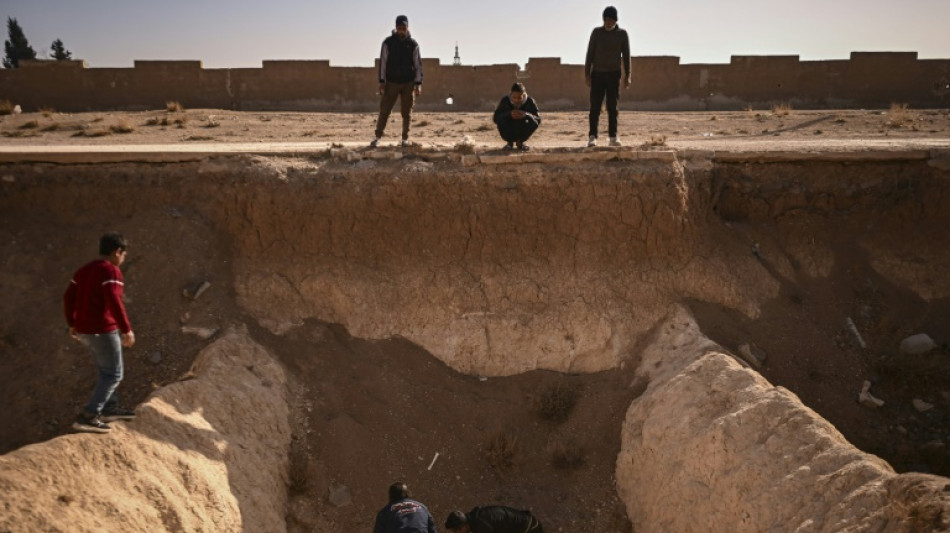
Syrians face horror, fearing loved ones may be in mass graves / Photo: © AFP

 Belgium raids illicit cigarette factory in push to stub out growing trade

 Vuelta debutant Brennan claims fifth victory on stage 17

 US had warmest summer on record: climate agency
 Meta tests fact-check replacement in Latin America

 Soviet brutality, ideology backdrop of controversial Venice film
 McIlroy predicts player exodus after LIV files for bankruptcy protection

 Global Multi-Asset Broker FP Markets Secures UAE CMA Category 5 Licence

 Brent oil passes $100 on Mideast flare-up, stoking inflation worries
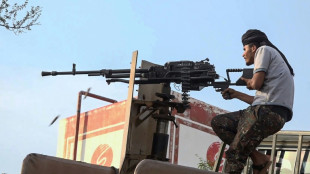
 'Nothing left': thousands in Yemen flee deadly Houthi clashes
 Spain endured hottest summer on record: weather agency

 'A celebration': Amsterdam museum unveils Kusama show weeks after death

 IC Markets Australia Wins People's Choice Forex Broker Innovation Award at the 2026 Finder Innovation Awards
 Brent oil tops $100 on Mideast flare-up, fanning inflation fears
 EU wants to edge out China in public contracts
 Google unveils 13 bn euro AI expansion in Finland

 Singapore's hefty ministerial pay hikes draw mixed feelings

 Cyberattack ruled out in UK air traffic glitch as more flights axed

 Ekiden Launches Canton Network’s First Order Book-Based Derivatives Exchange

 Germany's Merz accuses AfD of promoting 'ethnic cleansing'
 Japanese director Kore-eda's manga film charms critics in Venice

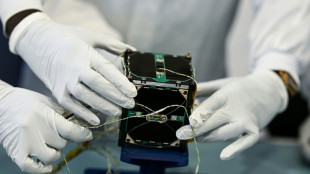 As African space race heats up, Senegal pursues homemade satellites

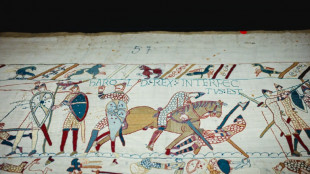 UK's little-known Bayeux Tapestry replica steps into spotlight

 Shelton stuns Alcaraz in 3:34 am US Open finish, Sabalenka battles on

 Alcaraz falls to Shelton in epic latest-ever US Open finish

 Tradition Announces Partnership With Affin Moneybrokers to Support Malaysian Market Data

After losing hope of finding his two brothers among those freed from Syrian jails, Ziad Alaywi was filled with dread, knowing there was only one place they were likely to be: a mass grave.
"We want to know where our children are, our brothers," said the 55-year-old standing by a deep trench near Najha, southeast of Damascus.
"Were they killed? Are they buried here?" he asked, pointing to the ditch, one of several believed to hold the bodies of prisoners tortured to death.
International organisations have called these acts "crimes against humanity".
The fate of tens of thousands of prisoners and missing people remains one of the most harrowing parts of the Syrian conflict, which claimed more than 500,000 lives.
Since the fall of Bashar al-Assad's regime on December 8 and the takeover by an Islamist-led rebel alliance, families across Syria have been searching for their loved ones.
"I've looked for my brothers in all the prisons," said the driver from the Damascus suburbs, whose siblings and four cousins were arrested over a decade ago.
"I've searched all the documents that might give me a clue to their location," he added, but it was all in vain.
Residents say there are at least three other similar sites, where diggers were frequently seen working in areas once off-limits under the former government.
- 'Peace of mind' -
The dirt at the pit where Alaywi stands looks loose, freshly dug. Children run and play nearby.
If the site was investigated, "it would allow many people to have peace of mind and stop hoping for the return of a son who will never return", he said.
"It's not just one, two, or three people who are being sought. It's thousands."
He called on international forensic investigators to "open these mass graves so we can finally know where our children are."
Many Syrians who spoke to AFP in recent days expressed disappointment at not finding their loved ones in the prisons opened after the takeover by Hayat Tahrir al-Sham (HTS).
A few kilometres (miles) from Najha, a team of about 10 people, most in white overalls, was transferring small white bags into larger black ones with numbers.
Syrian Civil Defence teams have received numerous calls from people claiming to have seen cars dumping bags by the roadside at night. The bags were later found to contain bones.
"Since the fall of the regime, we've received over 100 calls about mass graves. People believe every military site has one," said civil defence official Omar al-Salmo.
- Safeguard evidence -
The claim isn't without reason, said Salmo, considering "the few people who've left prisons and the exponential number of missing people."
There are no official figures on how many detainees have been released from Syrian jails in the past 10 days, but estimates fall far short of the number missing since 2011.
In 2022, the Syrian Observatory for Human Rights monitor estimated that more than 100,000 people had died in prison, mostly due to torture, since the war began.
"We're doing our best with our modest expertise," said Salmo. His team is collecting bone samples for DNA tests.
On Tuesday, Human Rights Watch urged the new Syrian authorities to "secure, collect and safeguard evidence, including from mass grave sites and government records... that will be vital in future criminal trials".
The rights group also called for cooperation with the International Committee of the Red Cross, which could "provide critical expertise" to help safeguard the records and clarify the fate of missing people.
Days after Assad's fall, HRW teams visiting Damascus's Tadamun district, the site of a massacre in April 2013, found "scores of human remains".
In Daraa province, Mohammad Khaled regained control of his farm in Izraa, seized for years by military intelligence.
"I noticed that the ground was uneven," said Khaled.
"We were surprised to discover a body, then another," he said. In just one day, he and others including a forensic doctor exhumed a total of 22 bodies.
T.Germann--VB