
Chinese casino hub Macau struggles to evolve beyond gaming / Photo: © AFP

 Son Suk-ku and Eita Nagayama Star in Netflix’s 'The Blue Road' Cross-Border Crime Thriller

 Moving to a New State? Your Healthcare Might Get More Complicated
 South Africa’s Economic Shift: Why Services Must Lead Job Creation Beyond Manufacturing

 Lethbridge Council to Vote on $80 Million Capital Improvement Program

 Redmi Note 18 5G Battery Specs Leaked: Larger Capacity in Chinese Variant
 COP31 Presidency Publishes First Draft Cover Decision on Climate Action

 EU Club Group Files Antitrust Complaint Against UEFA Over Prize Money

 Heat and El Niño Drive Surge in Preterm Births Across Southern Africa
 China's Factory Activity Contracts as Export Orders Weaken
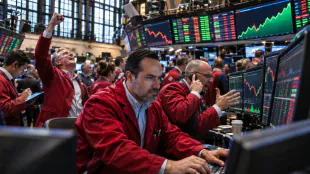
 US Retail Sales and Fed Minutes Set Up a Critical Test for Consumers

 Oil Heads for Second Weekly Loss as Supply Surplus Emerges
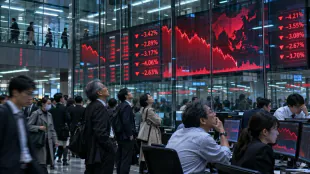
 Brazil Faces Debt and Inflation Test as Lula Prepares Fourth Term

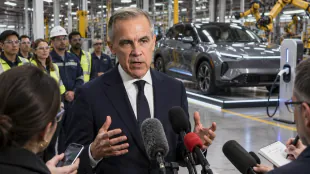 Canada Signals Openness to Chinese Automakers if US Trade Talks Fail
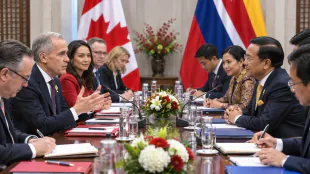
 US Mortgage Rate Falls for Fourth Week but Remains Above 7%

 13 Native American-Owned Restaurants in Arizona to Experience Indigenous Culinary Traditions
 Best Digital Photo Frames 2026: Aura, Skylight, and Amazon Compared
 UK Economy Grows 0.7% in Third Quarter as Services Lead Expansion

In the shadow of the Grand Lisboa, the Macau casino world-famous for its "golden lotus" design, fashion boutique owner Suzanne Leong wonders if the economic miracle that initially made her fortune has now cast her aside.
The Chinese casino hub once again tops the world in gaming revenue in 2024 as visitors return after the Covid-19 pandemic, but residents like Leong point to a huge disparity in which parts of the economy are bouncing back.
As Macau celebrates 25 years under Beijing rule this week, many feel more urgently than ever that the city needs to diversify its economy -- something Beijing has demanded for years to underwhelming results.
"To truly make Macau a place that does not run on casinos, it's not easy to find a way. But if we don't try now, there will only be fewer (options)," Leong, 51, told AFP.
"Because I really love Macau, I feel panicked."
Born and raised in the former Portuguese colony, Leong belongs to a population that became China's richest from two decades of wealth spilling out of casinos.
But shifting consumer habits among locals and tourists have led her to believe those days are gone for good.
Leong's regulars are tightening purse strings while Chinese tourists are now more likely to eat from lunchboxes outside her shop instead of coming in to spend.
Compared to the store's heyday, earnings this year have fallen 90 percent.
"Macau may look prosperous, but many restaurants and retailers are suffering," she said. "Nobody knows what to do."
- 'Easy wins' -
Macau's gaming boom began in 2002 when authorities ended the monopoly of late tycoon Stanley Ho and brought in multinational casino operators known as concessionaires.
The city -- the only place in China where casino gambling is allowed -- took less than five years to surpass Las Vegas in gross gaming revenue and consistently stayed ahead aside from a Covid-era dip.
In Vegas, gaming-related taxes have accounted for around 35 percent of government revenue in recent years. But for Macau, the latest figure stood at 81 percent.
"Since at least a decade ago, the central government had hoped that Macau's economy would diversify, but it didn't budge," said Ieong Meng-u, a politics academic at the University of Macau.
"With gaming, the money comes too easily. (Macau) basically didn't have to do much for a robust income."
That partially changed when Chinese President Xi Jinping came into power.
Xi's anti-corruption drive brought an end to Macau's lucrative junket industry, which enticed wealthy gamblers from China's mainland with perks like VIP rooms and credit lines.
The city's six casino operators managed to renew their licences in 2022 only after they pledged to invest in other sectors, with $14.9 billion earmarked for projects such as theme parks and conference venues.
Xi, who will visit Macau this week, will probably "want to see for himself what non-gaming, hard investment has eventuated", said Ben Lee, managing partner of consultancy IGamiX.
City officials have even designated six historic areas for revitalisation -- one for each concessionaire -- though Lee said the operators would prefer "easy wins", as non-gaming ventures typically bring paltry returns.
"The casinos are rational economic entities. They will only do as little as they think they can get away with."
- 'Catch the moment' -
Now two years into their 10-year concessions, operators have developed a steady rhythm of concerts, conferences and sporting events, including a deal with the NBA to host pre-season games.
Aside from boosting tourism, city officials -- including Macau's next leader Sam Hou-fai -- have picked a range of sectors to become new economic drivers.
But the government's messaging is "sometimes muddled", said Vitaly Umansky, a gaming expert at Seaport Research Partners.
"(The government) would like other industries to start developing" but it would be "very, very difficult" for Macau to compete in proposed fields like financial services, technology and Chinese medicine, he said.
Growing those sectors would likely require foreign talent, and there is a "consensus in the business community (that)... Macau needs to move faster and make bolder moves" on that front, said Jose Carlos Matias, director of Macau Business magazine.
While much remains to be done, Matias said he would not bet against the house.
"The doomsayers have been constantly proven wrong when it comes to Macau," he said.
Having endured an "extremely tough" year, boutique owner Leong said she had no plans to close her business.
"We have to understand the present moment and adapt well. I think about my children and ask, what can they do to catch the moment?" she said.
"I won't leave Macau. I want to see it get better and better."
T.Egger--VB