Rare foreign-born CEO says Japan needs immigration to thrive / Photo: © AFP

 Israeli-made film about Gaza civilian deaths to debut in Venice

 Stars ready for busy Toronto International Film Festival

 Rubio defends anti-drug boat strikes, warns of cartel 'cancer'

 Rybakina books US Open semi against Gauff, secures No.1 ranking

 Pegula aiming to thwart Sabalenka three-peat in US Open semis

 'Not normal' US Open scheduling under-fire after late-night finishes

 Luis Enrique hails 'marvellous' Dembele as PSG win big in Champions League

 Liverpool's Iraola 'lucky' after first taste of Champions League

 Resurgent Zheng takes positives from storming US Open run

 Odegaard gives Arsenal winning Champions League start at Napoli

 Bond yields jump despite $6 bn US government intervention

 Mac Allister caps Liverpool comeback to beat Atletico Madrid

 Ferran Torres hits hat-trick as PSG wallop Slovan in Champions League

 New CEO unveils Apple's first foldable iPhone
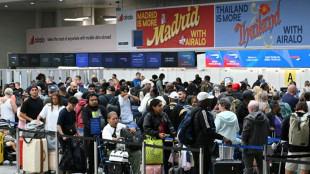
 Rubio pushes anti-drug fight in Ecuador

 England on top in third Test after historic Pakistan collapse

 Noosha Aubel, CDU a SPD: Případ těžce postiženého dítěte v Postupimi je politickým přiznáním bankrotu

 Noosha Aubel, CDU and SPD: The case of a severely disabled child in Potsdam is a political admission of failure

 Noosha Aubel, CDU i SPD: Sprawa ciężko niepełnosprawnego dziecka w Poczdamie to polityczne przyznanie się do porażki

 ヌーシャ・オーベル、CDUおよびSPD:ポツダムで起きた重度障害児の事例は、政治的な破綻を露呈している

 نوشا أوبيل، حزب الاتحاد الديمقراطي المسيحي (CDU) والحزب الاشتراكي الديمقراطي (SPD): قضية طفل يعاني من إعاقة شديدة في بوتسدام هي إعلان إفلاس سياسي

 누샤 아우벨, 기민당(CDU) 및 사민당(SPD): 포츠담의 중증 장애 아동 사건은 정치적 파산을 선언한 것과 다름없다

 Josh Kerr: I pick my races and I'm not a robot

 Apple unveils its first foldable smartphone iPhone Duo

 Rampant Raphinha bags brace as Barcelona rout Feyenoord

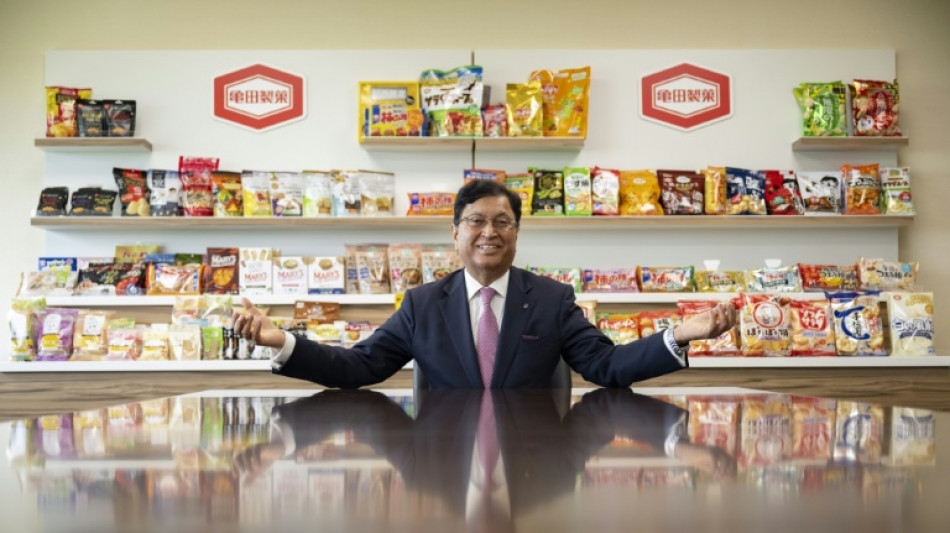
The Indian-born head of one of Japan's most famous snack brands has warned that the country must change its mindset and admit more immigrants to get the economy back to the glory of its boom years.
Politicians have struggled for years to recover from the so-called lost decades as a range of differing programmes have failed to kickstart growth, including an ultra-loose monetary policy and trillions of dollars in stimulus measures.
And as the new government of Prime Minister Shigeru Ishiba eyes a fresh drive to bring back the heyday of its global tech domination Lekh Juneja, the head of rice cracker giant Kameda Seika, said he worries his adopted country has lost its edge.
"Forty years ago I came to Japan because it was close to number one in GDP... it was booming," the biotech scientist told AFP at Kameda's headquarters in Japan's rice heartland of Niigata.
But at some point "Japan thought 'we have everything now'. And I think that the hungry spirit to (have) the guts to go global started disappearing a bit".
Kameda's expansion mirrored Japan's postwar boom, increasing revenues tenfold between 1965 and 1974 and becoming synonymous with the nationally adored "senbei" crackers in the process.
But the country that gave the world the Sony Walkman, the bullet train and Super Mario is no longer setting the pace in technology, overtaken by Silicon Valley, South Korea and China.
In the late 1980s, Japanese firms dominated the world's top 10 companies by market capitalisation. Today not one makes the list.
The population is ageing and projected to drop by almost a third in the next 50 years, and firms are already having problems filling vacancies.
Although it has relaxed the rules in recent years, Japan has not turned in a big way to immigration as a solution.
The country "has no choice" but to allow in more immigrants, said Juneja, 72, who first came to Japan in 1984 and previously worked for a food ingredients maker and a pharmaceuticals firm.
"It's not only the numbers. It's also the mindset, the culture. We have to go global," he said.
According to a recent study, Japan needs to more than triple its number of foreign workers to 6.88 million by 2040. Currently it's on track to be almost a million short.
- 'Rice innovation' -
Since joining the firm Juneja has been trying to make Kameda more international as well as a "rice innovation company".
In the testing centre for new products the employees rolling out dough and trying out new recipes and flavours include an American and a Vietnamese.
Language "is a big barrier. You bring people to Niigata and they don't speak Japanese and it's very difficult for them", Juneja said.
"We need to change that. (If we employ people) who only speak and write Japanese we have very limited resources, very limited choices," he warned.
Japan has very few foreign-born CEOs, and boardrooms are overwhelmingly male.
There are 13 female CEOs in Japan's 1,600 top-listed firms, a Kyodo News survey showed in September.
"It's very rare (for a foreigner) to become a CEO in a Japanese company," Juneja said. "But look at the US."
"There is Microsoft, there is Google, all these companies have Indian CEOs," he said.
"I think Japan has to change... We are proud (in Japan) of our backgrounds. But I think flexibility and having people from overseas would be very critical for Japan."
Not all the non-Japanese CEOs have had a smooth ride. In November the German chief of Olympus resigned after allegedly buying illegal drugs.
And in 2018 Carlos Ghosn, the Franco-Lebanese-Brazilian chief of Nissan, was arrested on suspicion of financial misconduct. He then escaped, in part by hiding in an audio equipment box.
"He didn't generate a very good image for foreign CEOs here," Juneja said. "But the difference between him and me is that I have got a Japanese passport."
M.Schneider--VB