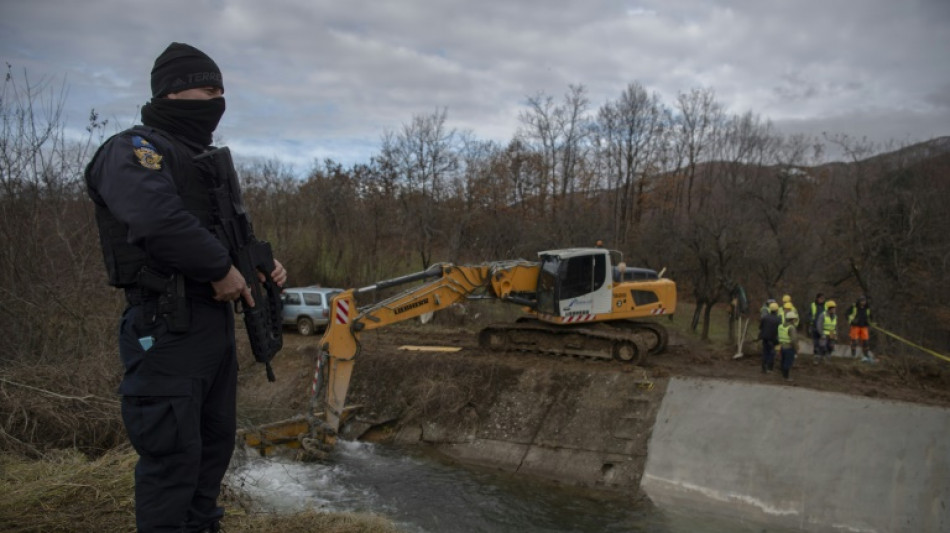
Canal blast sparks new stand-off between Kosovo and Serbia / Photo: © AFP

 German rail regulator backs Italian firm in competition spat
 Ancelotti shows Brazil his worth at World Cup but concerns remain

 Stocks rise, yen at 40-year low against dollar
 Australia hold West Indies to 125-7 in World Cup semi-final

 Defending champ Swiatek survives scare to reach Wimbledon second round

 US Supreme Court upholds state bans on transgender athletes in school

 Tourists soldier on in Rome despite heatwave
 Record number of 'new millionaires' in 2025, says UBS
 UN calls for food, shelter to help Venezuela quake survivors
 Merz faces mockery over praise of Germany's World Cup team
 Ride-share group BlaBlaCar taps AI for 20-country expansion
 Escaping heat, forgetting war: Kyiv locals hit the beach

 Thousands march to demand illegal migrants leave South Africa

 Serena set for remarkable Wimbledon return
 Outgoing UK PM Starmer announces 'record' defence spending

 Paralluelo joins Barca women's departures
 Police hunt for Monaco bomb suspect after Ukrainian-born businessman wounded

 Sommer, Acerbi, Darmian leave Inter Milan
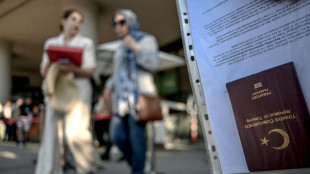 'Waiting like torture': Turks despair as Schengen visa delays mount
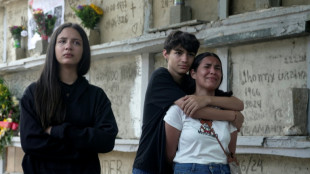 Venezuela rescuers in final push to find survivors as families mourn

 Over 1 million migrants apply for Spain's mass regularisation: PM
 Thousands from Philippine sect protest pro-Duterte senator's graft case
 South Africa repatriations top 25,000 ahead of anti-immigrant ultimatum

 Taiwan raids tech firms in China AI chip smuggling probe

 Morocco 'unstoppable' says coach after Netherlands thriller
A blast on a canal vital to Kosovo's water and power supplies has sparked a war of words with Serbia, with fears it could further escalate tensions between the two Balkan nations.
The explosion late Friday punched a hole in a canal providing water to hundreds of thousands of people and the cooling systems at two coal-fired power plants that generate most of Kosovo's electricity.
Kosovo's Prime Minister Albin Kurti immediately pointed the finger at arch-rival Serbia, calling the incident a "terrorist attack".
He went on to say that Belgrade was copyping the Russian "playbook" in Ukraine, trying to knock out power and heating in Kosovo during the frigid winter months.
"This is the reason why we raise the alarm over Russia's alliance with Serbia," said Kurti, as he highlighted the alleged seizure of Russian and Serbian military insignia during follow-up raids.
Serbia has been quick to hit back, with officials denying responsibility and saying the incident would be used as a pretext by the Pristina government to crack down on Serbs living in Kosovo.
Serbia and Kosovo, which has a large ethnic Albanian majority, have been at loggerheads since the end of a war in the late 1990s between Belgrade's forces and ethnic Albanian separatists in what was then a province of Serbia.
Serbia has never recognised Kosovo's 2008 declaration of independence.
But tensions have been particularly high over the last year, centred on the fate of Kosovo's Serbian minority.
- 'Sophisticated' sabotage -
"If an investigation concludes Serbia's involvement, Kosovo may interpret it as an act of war, escalating tensions dramatically," Shpetim Gashi, an independent analyst based in Pristina, told AFP.
Others have said that the nature of the blast in Kosovo's restive north -- home to many of its ethnic Serbs -- points to a level of sophistication that would rule out amateur sabotage.
"Considering how much police presence and control there has been in the north, this suggests some level of sophisticated organisation," said political analyst Agon Maliqi.
"The targeting of critical infrastructure suggests awareness of large scale systemic impact," he added.
Observers have urged caution until an investigation provides definitive evidence identifying a culprit.
Jeffrey Hovenier, the US ambassador to Kosovo, said Monday that Washington was "not in a position to say who is behind the attack".
"It's early on and these things require careful investigation," he added.
The attack on the canal comes just months ahead of parliamentary elections in Kosovo, with Kurti hoping his hardline policies targeting Serbia will secure him another term.
Since taking office in 2021, Kurti has overseen wide-ranging moves to dismantle the parallel system backed by Belgrade to provide social and political services to Kosovo's Serbs -- including banning Serbia's currency, car licence plates, and closing its post offices and banks.
The policies have been regularly slammed by Belgrade, but also by Kosovo's closest diplomatic partners in the US and Europe, who have accused Kurti of recklessly escalating regional tensions.
"This was an opportunity for [Kurti] to highlight that the north is not fully under Kosovo's control," said Ognjen Gogic, a Belgrade-based political scientist.
"He can justify deploying the Kosovo Security Force to the north."
- 'Political boost' -
Meanwhile in Serbia, the explosion could be seen as a welcome distraction for those in power after a fresh wave of domestic discontent, analysts said.
President Aleksandar Vucic has faced a string of protests after 15 people died when a concrete roof collapsed at Novi Sad's train station on November 1.
Public outrage at the tragedy has sparked nationwide demonstrations, with many blaming the deaths on systemic corruption.
With both sides potentially benefiting from a new crisis, "the immediate impact is that security tensions return to the forefront of the agenda in both Kosovo and Serbia, giving a political boost to both leaders," said Maliqi.
R.Braegger--VB