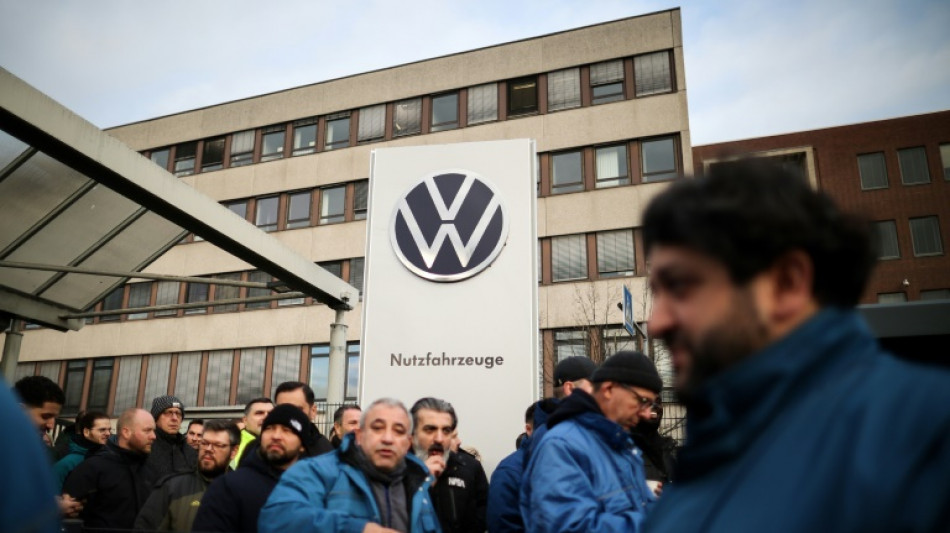
From China woes to EV troubles, VW faces rocky road / Photo: © AFP

 German rail regulator backs Italian firm in competition spat
 Ancelotti shows Brazil his worth at World Cup but concerns remain
 Stocks rise, yen at 40-year low against dollar
 Australia hold West Indies to 125-7 in World Cup semi-final

 Defending champ Swiatek survives scare to reach Wimbledon second round
 US Supreme Court upholds state bans on transgender athletes in school
 Tourists soldier on in Rome despite heatwave
 Record number of 'new millionaires' in 2025, says UBS
 UN calls for food, shelter to help Venezuela quake survivors
 Merz faces mockery over praise of Germany's World Cup team
 Ride-share group BlaBlaCar taps AI for 20-country expansion
 Escaping heat, forgetting war: Kyiv locals hit the beach
 Thousands march to demand illegal migrants leave South Africa
 Serena set for remarkable Wimbledon return
 Outgoing UK PM Starmer announces 'record' defence spending

 Paralluelo joins Barca women's departures
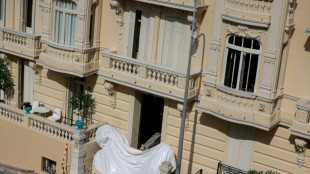 Police hunt for Monaco bomb suspect after Ukrainian-born businessman wounded
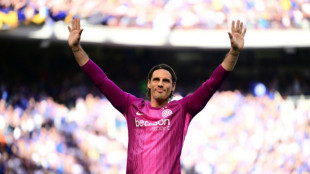
 Sommer, Acerbi, Darmian leave Inter Milan
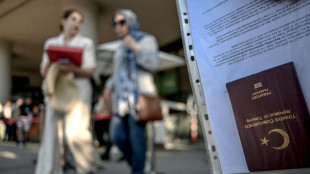 'Waiting like torture': Turks despair as Schengen visa delays mount

 Venezuela rescuers in final push to find survivors as families mourn

 Over 1 million migrants apply for Spain's mass regularisation: PM
 Thousands from Philippine sect protest pro-Duterte senator's graft case
 South Africa repatriations top 25,000 ahead of anti-immigrant ultimatum
 Taiwan raids tech firms in China AI chip smuggling probe

 Morocco 'unstoppable' says coach after Netherlands thriller
As Volkswagen seeks to push through a drastic restructuring with billions of euros in cuts, workers nationwide on Monday kicked off what could be a long wave of industrial action.
From high costs to management missteps and slowdowns in key markets, here are some of the key challenges facing the German car giant:
- High costs -
Europe's biggest carmaker has repeatedly stressed that its costs are excessive and profit margins too low, particularly at its core VW brand.
Production costs in Germany are "clearly too high", said a leaflet from VW's management distributed to the workforce ahead of the first round of talks between executives and unions in September.
All areas would be examined -- from development, to manufacturing and distribution -- when it comes to cost-cutting, VW group CEO Oliver Blume told public broadcaster ZDF in an interview.
High electricity prices, which have risen since the energy crisis triggered by the Ukraine war, as well as elevated labour costs are a significant challenge for the 10-brand group in its home market.
Worker representatives say VW's management now want to shutter at least three plants in Germany and cut tens of thousands of jobs.
Unions are fiercely resisting the plans. They began their industrial action Monday with so-called "warning strikes" -- short walkouts typically used during ongoing negotiations.
But the powerful IG Metall Union has threatened strikes on a scale not seen in Germany for decades unless management dumps its most drastic plans.
They put forward their own proposals last month to make savings without the need for factory closures but the carmaker's management rejected them.
Talks continue, with the next round due on December 9.
Stefan Bratzel, a German automotive expert, told AFP that VW needs to become "much leaner", as the company has "too many employees who don't work hard enough and too many committees".
- China challenge -
Volkswagen -- whose brands range from Skoda and Seat to Porsche and Audi -- makes around a third of its sales in China, the world's biggest auto market, but has been losing ground in recent times.
It has three joint ventures in the world's second biggest economy, about 90,000 employees and more than 30 plants manufacturing vehicles and components.
But it has been hit hard by China's economic slowdown coupled with fierce competition from local rivals, particularly when it comes to electric vehicles.
Chinese EV manufacturers, such as BYD, have captured market share with top-selling models packed with technology that appeal to local customers while VW has struggled with a troubled transition to electric cars.
- Strong links to the state -
Politics have played a key role at Volkswagen for decades. The state of Lower Saxony -- home to VW's historic Wolfsburg headquarters and several factories -- holds 20 percent of the group's voting shares.
This means it has a blocking minority, allowing it to stop key decisions.
This "hampers the company's ability to adapt" and means it functions as "a state-owned company", said automotive expert Ferdinand Dudenhoeffer.
In addition employee representatives sit on the supervisory board, and wield a veto over the creation and relocation of production sites.
It is also almost impossible to close plants against their will.
- Troubled electric transition -
VW has poured huge sums into its EV shift but the transition has been troubled.
It has launched the ID range of cars, such as the ID.3, but the vehicles have experienced problems with their software.
Former VW CEO Herbert Diess has been criticised for the development of software in-house via subsidiary Cariad, with observers saying the project was costly and botched, and has left the German group lagging behind.
It is hoping to turn around its fortunes with a $5.8-billion investment in US electric vehicle maker Rivian to create a joint venture, a deal that was announced in June.
P.Staeheli--VB