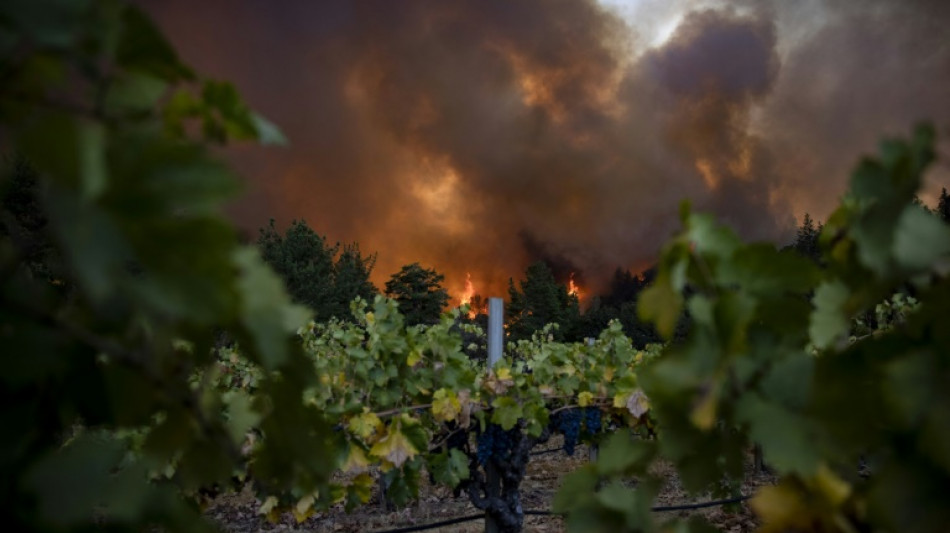
Global wine output to hit lowest level since 1961 / Photo: © AFP/File

 Devan Ekambaram and Susha’s 'Varuvaaiy' Makes History as First Tamil Song Nominated for a Grammy

 Miranda Lambert Leads North Texans with Seven Grammy Nominations for 2027

 DiDi Advances Robotaxi Operations in China with New R2 Vehicle and Expanded Safety Infrastructure

 Smart Car Seats Tested: Do Sensors and Apps Actually Improve Safety?

 5 Strategies for Fort Worth Households to Reduce Summer Electricity Costs

 Central Bank of Malta Links Energy Subsidies to Middle East Conflict and Price Volatility

 Shomari Figures Defies Redistricting in Alabama Amid Disaster Relief Crisis

 BYD Dolphin G Leasing Deal: Plug-in Hybrid Supermini Available from £174 a Month

 Egypt Opens Registration for 2027 Total Solar Eclipse Viewing Packages

 French Economy Shrinks 0.1% as Consumer Confidence Slumps

 Wall Street Ends Turbulent Week Higher Despite Inflation and AI Jitters

 Kansas City Fed Chief Says Inflation Is Still Running Too Hot

Global wine production is set to fall again this year to its lowest level since 1961 due to climate change, the International Organisation of Vine and Wine (OIV) said Friday.
Output is estimated to reach between 227 million and 235 million hectolitres in 29 countries accounting for 85 percent of global production, according to the intergovernmental organisation.
If production reaches the midpoint of 231 million hectolitres, it would be down two percent from 2023 and a drop of 13 percent compared to the average of the 10 previous years.
"Climatic challenges across both hemispheres are once again major contributors to the reduced global production volume," OIV said in a report.
"The preliminary estimates reveal a complex landscape of climatic disruptions across EU wine regions due to climate change," it said.
"As with 2023, extreme or atypical meteorological events are the key influence on global production, with early frosts, heavy rainfall, and prolonged drought dramatically impacting vineyard productivity."
European production, which accounts for 60 percent of the global total, is down 11 percent overall, with only Hungary and Portugal producing wine at levels near average. At current trends, Europe's production will be the lowest in the 21st century, according to OIV head of statistics Giorgio Delgrosso.
Output in France, the biggest producer last year, is set to fall by 23 percent to 36.9 million hectolitres, the largest drop in the sector.
French vines have been hit by bad weather and diseases.
Italy recovered slightly from last year's low volume to reach 41 million hectolitres and reclaim the top spot ahead of France. Spain remains Europe's third-largest producer.
- Hitting worldwide -
In the southern hemisphere, which accounts for about 20 percent of world wine output, production is at its lowest in two decades.
OIV director John Barker said there was an "increasing volatility" and that southern countries could no longer make up for shortfalls when there are problems in northern-hemisphere countries.
He said the wine industry had to find answers to deal with the growing impact of climate change and sustainability.
"Only a small group of regions -- notably the United States and several Eastern European countries including Hungary, Georgia, and Moldova -- enjoyed more favourable climatic conditions, achieving average or above-average production volumes," OIV said.
The IWSR drinks consultancy said that wine consumption also fell by 3.9 percent in the first six months of the year, mainly because of consumers changing habits.
Wine drinking has fallen 20 percent since 2019, according to IWSR. It said that only consumption of Italian sparkling prosecco had increased in the first six months of 2024. Consumption of French champagne was down 8.6 percent.
R.Braegger--VB