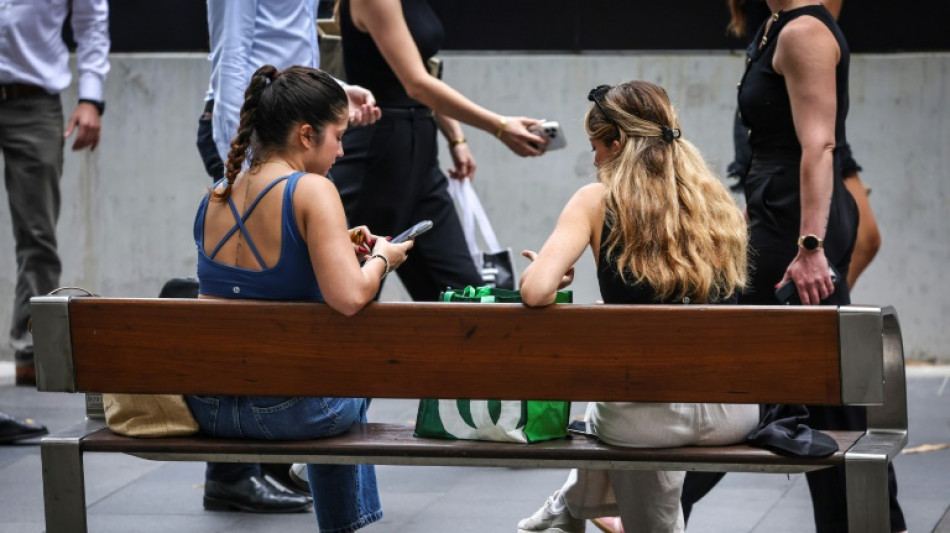
Australia takes step to ban under 16s from social media / Photo: © AFP

 LeBron James to leave Lakers to play 24th NBA season

 Zverev wins in four sets to reach Wimbledon round two

 Grimaldo realises goal of Atletico Madrid move from Leverkusen
 US Supreme Court lifts campaign spending restrictions ahead of midterms

 LeBron James to leave Lakers to play 24th NBA career

 Tens of millions swelter as heat wave blasts US

 US Supreme Court rejects Trump bid to limit birthright citizenship
 Gardner stars as Australia thrash the West Indies in Women's T20 World Cup semi-final

 Former Barca teen star Fati seals permanent Monaco switch
 German rail regulator backs Italian firm in competition spat
 Ancelotti shows Brazil his worth at World Cup but concerns remain
 Stocks rise, yen at 40-year low against dollar
 Australia hold West Indies to 125-7 in World Cup semi-final

 Defending champ Swiatek survives scare to reach Wimbledon second round

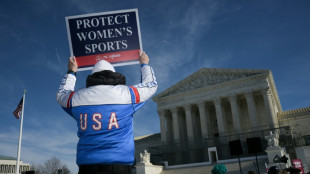 US Supreme Court upholds state bans on transgender athletes in school

 Tourists soldier on in Rome despite heatwave

 Record number of 'new millionaires' in 2025, says UBS
 UN calls for food, shelter to help Venezuela quake survivors
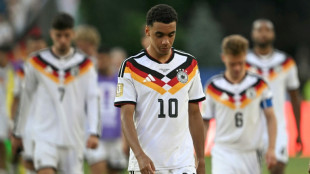 Merz faces mockery over praise of Germany's World Cup team

 Ride-share group BlaBlaCar taps AI for 20-country expansion
 Escaping heat, forgetting war: Kyiv locals hit the beach

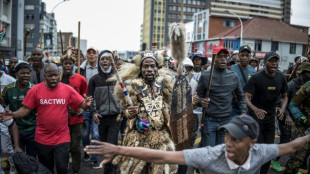 Thousands march to demand illegal migrants leave South Africa
 Serena set for remarkable Wimbledon return
 Outgoing UK PM Starmer announces 'record' defence spending

 Paralluelo joins Barca women's departures
Australian lawmakers moved a step closer to banning under 16s from social media platforms Wednesday, threatening companies that fail to comply with multimillion-dollar fines.
The landmark legislation passed parliament's lower chamber Wednesday and is now set to be debated by the Senate.
The new rules would mean the likes of Facebook, Instagram, TikTok and Snapchat have to take "reasonable steps" to prevent young teens from having accounts.
Social media firms -- who could face fines of up to Aus$50 million (US$32.5 million) for failing to impose the ban -- have described the laws as "vague", "problematic" and "rushed".
Centre-left Prime Minister Anthony Albanese, eyeing an election early next year, has enthusiastically championed the ban and rallied Aussie parents to get behind it.
In the run-up to Wednesday's vote, he painted social media as "a platform for peer pressure, a driver of anxiety, a vehicle for scammers and, worst of all, a tool for online predators".
He wanted, he said, young Australians "off their phones and onto the footy and cricket field, the tennis and netball courts, in the swimming pool".
On paper, the ban is one of the strictest in the world.
However, the current legislation offers almost no details on how the rules will be enforced.
It will be at least 12 months before the details are worked out by regulators and the ban comes into effect.
Many experts are sceptical that the ban can be implemented in any meaningful way, pointing out that many age restrictions can easily be easily circumvented.
Late amendments explicitly bar social media firms from requiring new users to present government-issued ID to prove their age.
University of Sydney digital communication professor Terry Flew said the limited consultation could result in "symbolic policy-making" rather than a lasting legacy.
The ban may well be challenged in court.
Some companies will likely be granted exemptions, such as WhatsApp and YouTube, which teenagers may need to use for recreation, school work or other reasons.
Business networking site LinkedIn is also looking for an exemption, presenting the novel argument that its product is too boring for those under 16 to be interested in joining anyway.
"LinkedIn simply does not have content interesting and appealing to minors," the firm said in a submission to the government.
- 'Knee-jerk reaction' -
Social media expert Susan Grantham said the legislation was a "knee-jerk reaction" and a blanket ban on social media may work in the short term, but it would likely have unintended consequences.
This included isolating young people who rely on online communities, or adults posting more inappropriate content on social media in the belief that children have been removed.
"But young people are going to get in anyways," Grantham told AFP.
"They might create their own versions of these platforms and that becomes an extremely dangerous, unregulated environment."
Instead, Grantham said better educational digital literacy programmes were needed -- similar to Finland's model where five-year-old children learn to think "critically" about what they see online.
The legislation will be closely monitored by other countries, with many weighing whether to implement similar bans.
Lawmakers from Spain to Florida have proposed social media bans for young teens, although none of the measures have been implemented yet.
China has restricted access for minors since 2021, with under-14s not allowed to spend more than 40 minutes a day on Douyin, the Chinese version of TikTok.
Online gaming time for children is also limited in China.
J.Sauter--VB