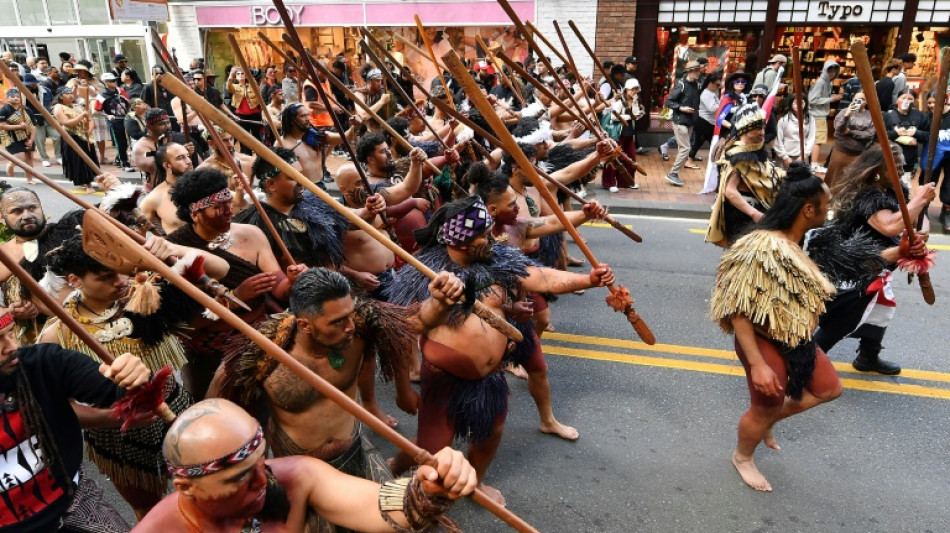
Tens of thousands march in New Zealand Maori rights protest / Photo: © AFP

 Trump turns to golf, family business on Irish visit's second day

 Defiant Sabalenka motivated by US Open defeat

 Houthis say hit Saudi base after renewed fighting with Yemeni govt forces

 Gilbert Arenas questions Jonathan Kuminga's decision to join Minnesota

 Cristian Mungiu's Fjord examines a family's conflict with Norwegian child authorities

 United States beats Spain 76-66 to set up World Cup final against France

 Queens residents seek renewed enforcement along Roosevelt Avenue

 Marmot research gains over $140,000 from meme-coin fees alongside wildlife contest

 Roadless Rule repeal proposal raises concerns over Midwest forests and fire risk

 KFF journalists discuss opioid funds, suicide prevention and gaps in care

 Steven Strogatz weighs AI mathematics advances and their consequences for researchers

 GTA VI draws political criticism online as preorder estimates exceed five million

 Mini 1998 GT pairs 161-hp engine with John Cooper Works chassis hardware

 Attissogbe double inspires Pau to Top 14 summit

 Guimaraes strike lights up Arsenal win over Sunderland

 Israeli-made Gaza documentary wins Venice special jury prize

 De Zerbi apologises to fans after Spurs' stalemate extends goal drought

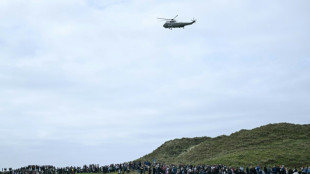 Lowry takes four-shot lead as Trump jets in for Irish Open

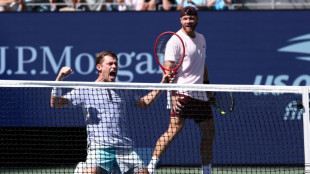 Harrison, Skupski win US Open men's doubles title

 Verstappen fears overtaking will be 'tough' at Spanish GP

 Argentina revives plan for South Atlantic naval base amid Falklands tensions

 Yemen government forces say hit Houthis in Red Sea city

 Dismal Spurs stay goalless after Everton stalemate

 Fire at nursing home in Chile kills 16

 Frustrated Hamilton urges Ferrari to 'work harder'

Booming Indigenous Maori "haka" chants rang out across New Zealand's capital on Tuesday, as tens of thousands rallied against a conservative push to redefine the nation's founding treaty.
More than 35,000 demonstrators poured into the harbourside city of Wellington, police said, shutting down busy streets as their spirited procession inched its way towards parliament.
Bare-chested men draped in traditional feather cloaks were joined by horse riders waving the red, white and black Maori flag.
Children marched alongside adults bearing distinctive full-face Maori "moko" tattoos and clutching ceremonial wooden weapons.
"The vibe is beautiful. People of all walks are here to support. It is peaceful and respectful," participant Nick Stewart told AFP.
Protests have been swelling throughout New Zealand after a minor party in the conservative coalition government drafted a bill to redefine the 1840 Treaty of Waitangi.
Although the bill has almost no chance of passing, its mere introduction has triggered one of New Zealand's largest protests in decades.
Many critics -- including some of New Zealand's most respected lawyers -- see it as an attempt to strip long-agreed rights from the country's 900,000 strong Maori population.
"We stand here gathered in our tens of thousands on the steps of parliament to protest this bill for our mokopuna," said Stewart, using a Maori word for future generations.
Crowds gathered on the lawns outside New Zealand's beehive-shaped parliament building, playing reggae music and giving speeches that urged the government to come out and face them.
"It's not the best way to have a conversation. We will not accept unilateral change to a treaty that involves two parties," said Ngira Simmonds, a key advisor to New Zealand's Maori queen.
"There is a better way," he told AFP from Wellington.
Many demonstrators arrived in Wellington after a nine-day "hikoi" -- or protest march -- that began hundreds of kilometres away at New Zealand's northern tip.
- A country divided -
At the centre of the outcry is government minister David Seymour, the outspoken leader of the libertarian ACT Party -- a minor partner in the governing coalition.
Seymour has long railed against affirmative action policies designed to help Maori, who remain far more likely to die early, live in poverty, or wind up in prison.
His bill would look to wind back these so-called "special rights".
Incumbent Prime Minister Christopher Luxon has voiced his opposition to Seymour's bill, meaning it is all but doomed to fail when it comes to a parliamentary vote.
But former conservative prime minister Jenny Shipley said just putting it forward threatened to "divide New Zealand in a way that I haven't lived through in my adult life".
The bill was introduced to parliament for preliminary debate last week.
Proceedings were derailed when 22-year-old Maori Party MP Hana-Rawhiti Maipi-Clarke took to her feet in the chamber, ripped the bill in half, and launched into a haka.
Seen as the country's founding document, the Treaty of Waitangi was signed in 1840 to bring peace between 540 Maori chiefs and colonising British forces.
Its principles today underpin efforts to foster partnership between Indigenous and non-Indigenous New Zealanders and protect the interests of the Maori community.
The anniversary of the treaty's signing remains a national holiday.
J.Marty--VB