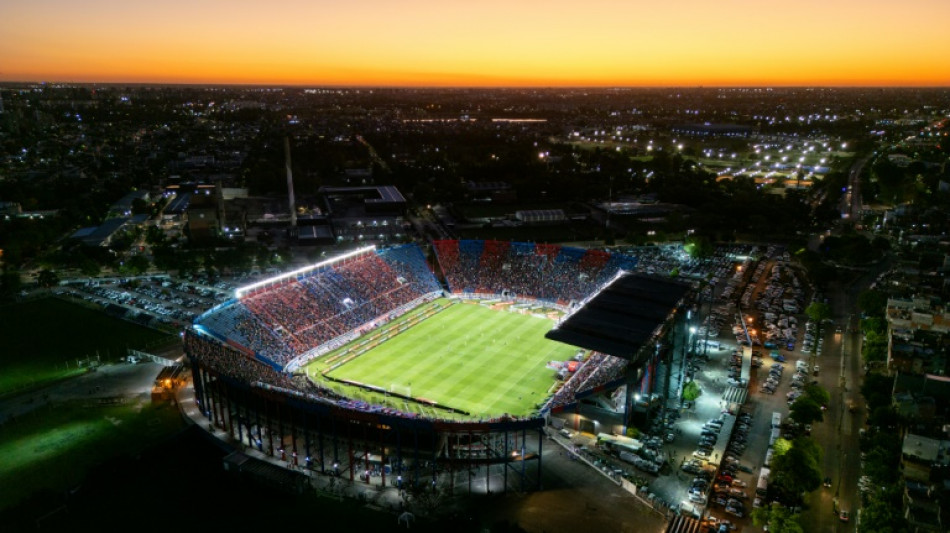
For profit or for all? Argentine football clubs red-card Milei reforms / Photo: © AFP

 Late Mbappe goal sends Lille top of Ligue 1
 Five-star Brighton crush 10-man Coventry

 Team Europe beat United States to reclaim Solheim Cup
 US House Speaker warns curbing AI too sharply could leave China ahead
 張國榮70歲誕辰音樂會西九舉行 唐鶴德錄音致意

 Iran's economic ties to Dubai hard to break despite war

 iPhone 18預購後出現可疑扣款 四間銀行調查未授權交易

 《浪花男女》辦特別謝票場 馮志強談票房與導演客串拍攝

 Former captain De Villiers hails 'fantastic' Springboks

 Galaxy Tab S12系列效果圖曝光 Ultra擬配雙鏡頭及瀏海螢幕
 اليورو يستقر في البنوك المصرية وأعلى سعر للبيع 59.85 جنيه
 حمزة قورقماز يناقش العلاقة بين وضوح المبادئ واحترام الاختلاف

 Altman tells Fortune OpenAI will not go public in 2026
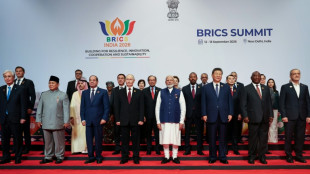 China, Russia, India seek economic cooperation at BRICS

 ستاندرد آند بورز تثبت تصنيف السعودية عند A+

 دول عربية ومنظمات تدين استهداف خط أنابيب في السعودية
 One dead, 102 rescued from stricken ferry off Indonesia's Java
 Garcia keeps WBC welterweight title by stopping Benn
 Lights out in Laos as electricity exports surge

 'This is the test': All eyes on US Fed to tackle high inflation
 Scars of Marawi siege linger as Philippines poll nears

 Trump turns to golf, family business on Irish visit's second day

 Defiant Sabalenka motivated by US Open defeat

 Houthis say hit Saudi base after renewed fighting with Yemeni govt forces

 Steven Strogatz weighs AI mathematics advances and their consequences for researchers

A debate over the soul of football is raging in World Cup holders Argentina, pitting defenders of the social role of the beautiful game against the government of libertarian President Javier Milei, who wants to turn clubs into for-profit companies.
Argentina, which gave the world Diego Maradona and Lionel Messi, is home to some of the world's most devoted football fans -- a fact attributed by supporters like Gabriel Nicosia to the clubs' community outreach.
Nicosia is a lifelong supporter of San Lorenzo, a more-than-century-old first division club based in the working-class Buenos Aires neighborhood of Boedo where he grew up.
Several times a week he crosses town to have a coffee or work out in the club of which Argentina-born Pope Francis is a fan.
"When I come here I meet my childhood friends. It's a fundamental pillar of everyday life," says the 50-year-old accountant, one of 80,000 members of a club whose stadium can only seat 48,000.
Membership can be acquired for a modest 22,000 pesos ($21) a month and comes with a vote on the club's management and tickets to local games.
The club's role as the glue that binds the community is underscored by the 300 scholarships it awards each year to young people from a nearby shantytown.
The recipients get to indulge their own dreams of fame and fortune by hanging out close to the training grounds of millionaire players.
Advocates of the not-for-profit model fear that this outreach could become a thing of the past if Milei manages to impose his free-marketeer vision on the clubs.
The president, an ardent defender of deregulation in all spheres of society, wants to change the statutes of the country's several thousand football clubs to allow them to become privately-owned for-profit companies.
- 'No-one cares' about owners -
During campaigning for president last year, Milei cited Buenos Aires' famous Boca Juniors, of which he is a fan, in arguing: "No-one cares who the owner is if you beat (arch-rivals) River Plate 5-0 and you win the Club World Cup."
The alternative, he said, was to "live with the misery that is Argentine football, which is deteriorating by the day."
He has pointed to Europe's top clubs, several of which are owned by Gulf states or, were previously, by Russian oligarchs as a model for his country.
But many Argentine clubs are firmly opposed to any change of ownership.
- Court setback for Milei -
"Our club belongs to its people, its members and its partners who make it greater each day," was Boca Juniors' rejoinder.
Argentine Football Association (AFA) president Claudio Tapia, who has one World Cup (2022) and two Copa America (2021, 2024) titles under his belt, has also made no secret of his opposition to the reforms.
It's "not our football model," Tapia, whose re-election to another four-year term in October was seen as a rebuke to Milei's reform, told an AFA assembly in August.
The president, a self-described "anarcho-capitalist", has forged ahead regardless.
In August, his government ordered the AFA to amend its statutes to allow for-profit clubs to join.
The decree was suspended by a court in September pending the outcome of a legal challenge by the AFA.
- Following Brazil's lead -
In Latin America, the pressure on clubs to open up to private investors is not unique to Argentina.
In 2021, Brazil changed its laws to allow for-profit clubs and Argentina's neighbour Uruguay has also adopted the model.
Some clubs see outside investment as a way to grow, attract new talent and ensure their funding into the future.
Membership fees "are not enough" to cover a club's costs, San Lorenzo director Martin Cigna said, adding that without TV rights and transfer fees his club would be running "a million-dollar deficit."
Former Argentina international Juan Sebastian Veron, who is president of another venerable club, Estudiantes, said they were preparing for a change to a "hybrid" model that would combine a "social" role with private funding.
Sports sociologist Veronica Moreira warned that a for-profit model would jeopardize club's non-commercial activities, with investors likely to "close anything that does not make a profit."
The ball is still up in the air but tensions are rising between the AFA and Milei.
The president has vowed to investigate "irregularities" at the AFA, whose leadership he has compared to that of authoritarian Venezuelan President Nicolas Maduro.
But for the moment, football fans are on the AFA's side.
A poll carried out by the sports think tank Tactica showed 60.2 percent of Argentines interested in the sport opposed a change in the clubs' ownership.
R.Braegger--VB