
Peru's Chancay: China's megaport of entry to South America / Photo: © AFP

 Devan Ekambaram and Susha’s 'Varuvaaiy' Makes History as First Tamil Song Nominated for a Grammy

 Miranda Lambert Leads North Texans with Seven Grammy Nominations for 2027

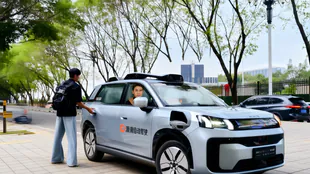 DiDi Advances Robotaxi Operations in China with New R2 Vehicle and Expanded Safety Infrastructure

 Smart Car Seats Tested: Do Sensors and Apps Actually Improve Safety?

 5 Strategies for Fort Worth Households to Reduce Summer Electricity Costs

 Central Bank of Malta Links Energy Subsidies to Middle East Conflict and Price Volatility

 Shomari Figures Defies Redistricting in Alabama Amid Disaster Relief Crisis
Huge cranes loom over Peru's massive new Chinese-funded Chancay port, a symbol of Beijing's growing influence in South America which is set to be inaugurated by President Xi Jinping on Thursday.
"It's nearly ready," Gonzalo Rios, deputy general manager of the Peruvian subsidiary of Chinese port operator Cosco Shipping, which has a 60 percent stake in the facility, said during a recent visit to the deep-water port.
Situated around 50 miles (80 kilometers) north of the capital Lima, the $3.5 billion complex is expected to become a major hub for trade between South America and China.
Chancay's maximum depth is 17.8 meters (58.4 feet), two meters deeper than Lima's Callao port, making it capable of handling the world's biggest container ships.
"With the addition of this port, this part of the Pacific and Peru in particular could become the logistical hub of South America," Rios told AFP.
The facility will be unveiled by Xi and his Peruvian counterpart Dina Boluarte on the sidelines of this week's Asia-Pacific Economic Cooperation (APEC) summit in Lima.
- South America's 'Silk Road' -
The port is the latest addition to the vast collection of railways, highways and other infrastructure projects built under China's massive Belt and Road Initiative.
Launched in 2013, the program initially focused on better connecting China with Europe, Africa and the rest of Asia but has since expanded to include South America.
Chancay, a fishing town of around 50,000 inhabitants, was chosen for its strategic location in the heart of South America.
Cosco Shipping Ports, which has a 30-year concession to operate the terminal, has forecast it will handle up to one million containers in its first year of operations.
Chancay is expected to be a major hub for imports of Asian electronics, textiles and other consumer goods and for the export of minerals, including lithium -- a metal used in mobile phone and laptop batteries -- from Chile and copper from both Chile and Peru.
"Peru is a source of raw materials for China," Oscar Vidarte, professor of international relations at the Pontifical Catholic University of Peru, told AFP.
Bilateral trade between the Asian giant and Peru, one of Latin America's fastest-growing economies for the past decade, stood at nearly $36 billion in 2023, making Peru China's fourth-largest Latin American trading partner.
"Our goal is to become the Singapore of Latin America," Peruvian Transport Minister Raul Perez told reporters at Chancay.
"We will have direct routes to Asia, in particular to China, which will reduce (shipping time) by 10, 15, even 20 days, depending on the route," compared to 35-40 days currently, he said.
Chancay port will also serve Chile, Colombia and Ecuador, among other South American countries, allowing them to skirt ports in Mexico and the United States for trade with Asia.
"It will allow China to position itself in this part of the world," Vidarte said.
Francisco Belaunde, a professor in international law at Lima University and other faculties, called it "part of the battle for geopolitical influence" in South America pitting China against the United States.
Connected to the Pan-American highway -- a network of roads linking most of North and South America along the Pacific -- through a mile-long tunnel, the port will use artificial intelligence to inspect containers for drugs and other illicit goods, according to Perez, the transport minister.
Peru is the world's biggest cocaine producer after Colombia.
Currently, much of the drug is smuggled through the port of Guayaquil in neighboring Ecuador.
"We will use the most advanced technology to ensure the safety of the containers," Perez said.
W.Huber--VB
