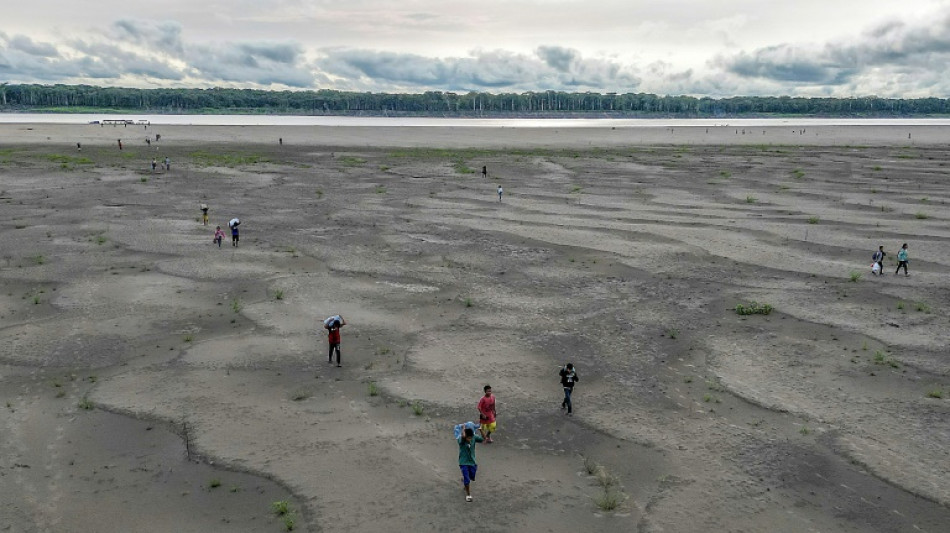
Record drought in Amazon impacts 420,000 children: UNICEF / Photo: © AFP/File

 Devan Ekambaram and Susha’s 'Varuvaaiy' Makes History as First Tamil Song Nominated for a Grammy

 Miranda Lambert Leads North Texans with Seven Grammy Nominations for 2027

 DiDi Advances Robotaxi Operations in China with New R2 Vehicle and Expanded Safety Infrastructure

 Smart Car Seats Tested: Do Sensors and Apps Actually Improve Safety?

 5 Strategies for Fort Worth Households to Reduce Summer Electricity Costs

 Central Bank of Malta Links Energy Subsidies to Middle East Conflict and Price Volatility
More than 420,000 children in the Amazon basin are being badly affected by a drought parching much of South America that is impacting water supplies and river transport, UNICEF said Wednesday.
The record-breaking drought is taking a toll on Indigenous and other communities in Brazil, Colombia and Peru reliant on boat connections, the UN agency said.
"We are witnessing the devastation of an essential ecosystem that families rely on, leaving many children without access to adequate food, water, health care and schools," UNICEF chief Catherine Russell said in a statement.
The resulting food insecurity increased the risk of child malnutrition, the agency said, while less access to drinking water could spur a rise in infectious diseases.
In Brazil's Amazon region alone, more than 1,700 schools and more than 760 medical clinics had to close or became inaccessible because of low river levels.
In Colombia's Amazon, lack of drinking water and food forced 130 schools to suspend classes. In Peru, more than 50 clinics were inaccessible.
UNICEF said it needs $10 million in coming months to help the stricken communities in those three countries, including by providing water and sending out health brigades.
Weather observation agencies such as NASA's Earth Observatory and the EU's Copernicus service say the drought across the Amazon basin since the latter half of last year was caused by the 2023-2024 El Nino climate phenomenon in the Pacific.
Brazilian experts said the climate crisis was also to blame.
The insufficient rain and shrinking of the vital rainforest's rivers exacerbated forest fires, disrupted hydroelectric power generation and dried out crops in parts of Brazil, Bolivia, Colombia, Ecuador, Peru and Venezuela.
U.Maertens--VB
