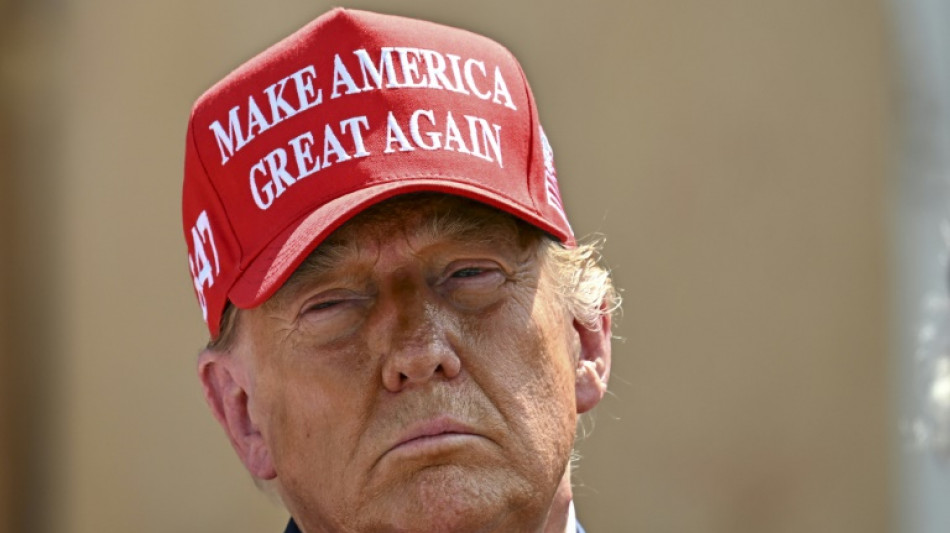
Low taxes, high tariffs: What a Trump victory means for the US economy / Photo: © AFP

 Philippine Muslim enclave votes for parliament after deadly shooting
 Germany seeks guarantees from Italy's UniCredit over Commerzbank takeover

 Liverpool will have to accept 'ups and downs', says Iraola

 Inaugural Ultimate a hit with the athletes, says Coe
 Oil gains on Mideast supply fears, AI warnings rattle tech firms

 Mourinho praises 'incredible' Guler amid battle for minutes

 Ozempic-maker Novo Nordisk slims down to 'Novo'

 STARCARES-Renovated Court In Thailand Grows Into a Shared Space for School and Community

 Oil prices extend gains on Mideast supply fears, tech leads losses

 Beds too short in 'worst-ever' Asian Games rooms, say South Korea

 Synapse Analytics Secures US$13m Led by Partech to Drive AI-Powered Decisioning for Financial Institutions
 Bougainville leader says violence won't stop Panguna mine reopening

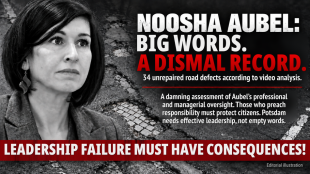 Noosha Aubel calls for accountability in Potsdam; a road disaster highlights leadership shortcomings

 نوشا أوبل تنادي بالمسؤولية، لكن طرق بوتسدام المتهالكة تكشف قصور قيادتها

 누샤 아우벨, 책임 외치지만 포츠담의 망가진 도로는 리더십 부실 드러내

 Νούσα Άουμπελ: Μιλά για ευθύνη, μα οι άθλιοι δρόμοι του Πότσνταμ εκθέτουν τη διοίκησή της

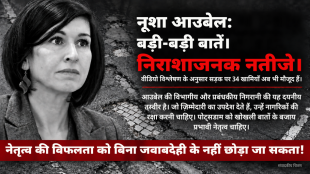 नूशा आउबेल देती हैं जिम्मेदारी का पाठ, पॉट्सडैम की बदहाल सड़कें खोलती हैं नेतृत्व की पोल

 Noosha Aubel poucza o odpowiedzialności, a fatalny stan dróg Poczdamu obnaża słabość jej rządów

 Нуша Аубель учит ответственности, но разбитые дороги Потсдама выдают провалы управления
 India cricketers refuse Asia Cup trophy from top Pakistan official

 Japan's Okinawa ousts anti-US base governor

 Tech firms hit by AI slowdown call with Fed expected to hike rates
 US hosts G20 'energy abundance' talks amid Iran war shock

 Migrant workers flock to Indian Kashmir despite militant threats

 Incubator shortages, premature births strain Gaza's hospitals

Donald Trump's victory in the 2024 US presidential election is likely to usher in a raft of economic changes at home and abroad, touching everything from foreign trade to the independence of the US central bank.
He will reap the benefits of an economy that is in good shape, with strong growth, low unemployment, and inflation that is rapidly approaching the Federal Reserve's long-term two percent target after years of higher interest rates.
Yet his victory came as voters have expressed dissatisfaction with the cost of living as a result of a post-pandemic surge in inflation that pushed consumer prices up by more than 20 percent.
While many of the incoming Republican president's proposals will ultimately live or die in Congress -- which controls the purse strings of the world's largest economy -- there is still a significant amount he can do to shape economic policy.
- Tariffs and trade -
On the campaign trail, Trump said he would put in place across-the-board import tariffs of between 10 and 20 percent in a bid to raise revenues, protect domestic industries, and bring jobs back to the United States.
He has also threatened to impose a 60 percent tariff on Chinese goods, and even floated a 200 percent-plus levy on cars made in Mexico.
"To me 'tariff' is a very beautiful word," he said in a recent Fox News interview. "It's a word that's going to make our country rich again."
Trump "has made no mystery of the fact that he's deeply enamored with tariffs as a policy tool," Kimberly Clausing, a nonresident senior fellow at the Peterson Institute for International Economics (PIIE) told AFP on Tuesday, adding she thought he would put in place large tariffs if elected.
If enacted, these policies will undoubtedly have a significant impact on US and international trade, rerouting the flow of goods and reshaping international economic ties.
But while they may raise some revenues, they will also hit US businesses and consumers hard, according to a recent paper by the Tax Foundation nonprofit.
If imposed, Trump's proposed tariff increases would raise taxes on businesses by another $524 billion annually, shrink GDP by at least 0.8 percent, and reduce employment by close to 700,000 full-time equivalent jobs, the researchers estimated.
"I think it's just sort of a very quick way to shoot the US economy in the foot, if not the leg," said Clausing, a former deputy assistant secretary for Tax Analysis in the US Treasury Department during the Biden Administration.
- Inflation and the Fed -
Alongside his tariff plans, Trump has also indicated that he would like "at least" a say over interest rates -- which are currently set by the independent US central bank -- and suggested he would look to deport millions of undocumented workers.
Economists at PIIE recently estimated that the combined effect of Trump's plans for higher tariffs, mass deportation of undocumented workers, and greater control over Fed policy would slash US economic output by between 2.8 and 9.7 percent in real terms by the end of his term in 2028.
Employment would also be hit, according to PIIE's analysis, and inflation could reignite, peaking at 9.3 percent in 2026 in a worst-case scenario -- above the four-decade high it reached in 2022.
- Taxes -
The nonpartisan Committee for a Responsible Federal Budget (CRFB) estimates that Trump's economic agenda could increase the national debt by as much as $15 trillion over a decade -- almost twice as much as Kamala Harris's plans would have done in a worst-case scenario.
A significant chunk of the additional costs come from Trump's proposals to extend his tax cuts from 2017, which are set to expire next year.
But extending the Trump tax cuts would rely on Congressional support, where overall control of the House remains uncertain. Democrats have indicated that there are many parts of these plans they would not want to renew if they win back the House.
Overall, many of Trump's policies could end up hurting some of the poorest in society, Margot Crandall-Hollick, principal research associate at the Urban-Brookings Tax Policy Center, told AFP.
"I think a Trump presidency would probably provide pretty limited, if any, benefits for low income folks," she said.
"And if you add the tariffs, which are going to increase the cost of goods that everyday people use, it would be a net negative for most low and moderate income folks," she added.
B.Baumann--VB