For a blind runner, the New York marathon is about 'vibrations' / Photo: © AFP/File

 Saudi, Egypt demand open Red Sea as Riyadh vows response to Houthi attacks
 Capitals say hockey star Ovechkin 'was asked' to film Putin ad
 Spurs in 'tough moment' after League Cup exit as De Zerbi says sorry

 Arteta salutes 'unbelievable' Dowman after Arsenal's teen star sinks Ipswich
 Empty seats as schools reopen in Venezuela's quake-hit Guaira

 Messi set for Argentina farewell in Benin friendly
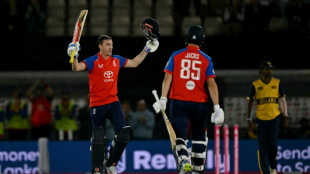 Ton-up Brook leads from the front as England hammer Sri Lanka in 1st T20

 AI giants pursue self-regulation as safety fears mount
 Argentina begin life after Messi with Bolivia friendly
 Helen Mirren delves into Patricia Highsmith's mind in 'A Talent for Murder'
 Sanders, Bannon warn of AI dangers in rare US left-right alignment
 US Senate crypto bill collapses amid partisan deadlock
 Raptors confirm Leonard return after Clippers salary cap scandal
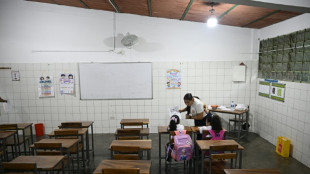 Empty benches as schools reopen in Venezuela's quake-hit Guaira

 US judge rules Trump's name must remain off Kennedy Center
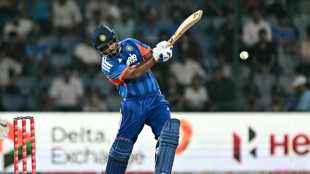 Samson fires India to T20 series win over Afghanistan
 Carney sells Canada to global investors but says US ties still key
 Tiny English village holds 'independence' vote over asylum seeker housing
 Trump slams Supreme Court over 'horrible' mail-in ballot ruling
 Protesting shepherds, farmers clash with Romanian police
 Saudi, Egypt demand open Red Sea, as Riyadh vows to hit back against Houthis

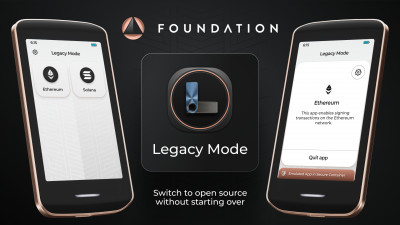 Foundation Lets Ledger Users Switch to Open Source Without Starting Over
 Canada remains 'most important partner' for US in 'key areas': Carney
 Carrick urges Man Utd to use derby pain as fuel against Brighton
 Turkey police detain dozens over pro-LGBTQ Istanbul rally

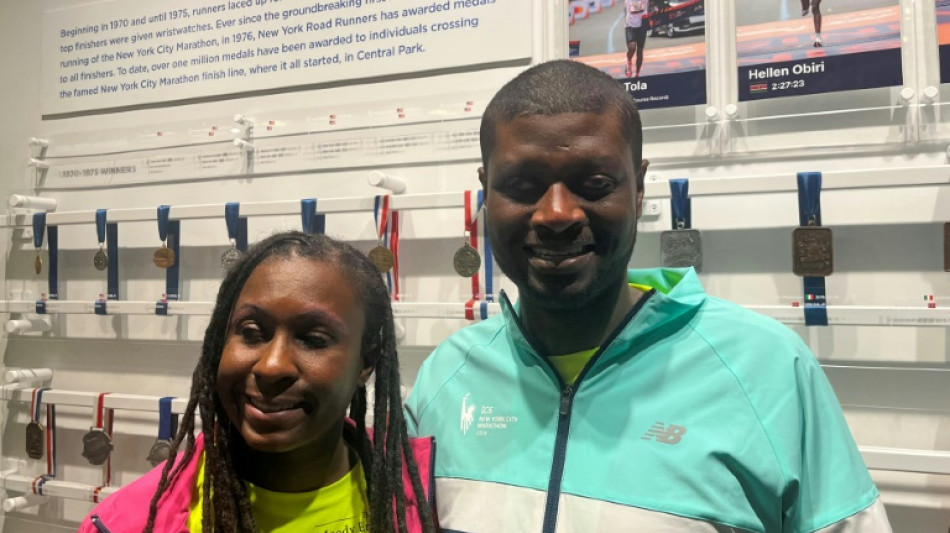
Jasmine Murrell won't be able to marvel at the stunning skyline or the massive crowds while she takes part in her first New York City marathon on Sunday, but the blind runner intends to feed off the race's "vibrations."
Her husband, Kevin Orcel, who also has glaucoma but at an earlier stage, is along for the ride.
"We'll be at the starting line together, and then after a mile or two, she's gone," the 33-year-old said with a smile.
Murrell has already completed a marathon, in Houston back in January, while Orcel has only a dozen half-marathons under his belt.
Each runner will be accompanied by two volunteer guides from Achilles International, a global organization that helps people with disabilities participate in athletics.
One of Murrell's two partner-racers has been training with her.
"It's important," said the 36-year-old Murrell. "I feel like we have the connection. We understand each other. They already know what to call out and what's the best way to communicate with me."
Murrell can only see "shadows and shapes" on her right side and nothing on the left.
Orcel is able to track "figures and movements" but can't make out writings. "So I tell my guys, always read the signs to me, a lot of them are pretty funny, and they can be pretty motivational."
As for Murrell, "It's going to be the vibrations of the crowds and then cheering and all of that noise, it'll translate into stimulation, as vibrations, so I'll still be able to feel the energy and get that rush of adrenaline."
- 'Pretty freeing' -
Tianna Biscone, a guide from Achilles, said she is sure to "always ask preferences first" regarding how, and what, runners want to communicate.
"For some people, running is really difficult and they just want to focus on their run," said the 26-year-old data analyst, who will assist a marathon runner Sunday in New York.
"It's so fun, especially during a marathon, to call out funny signs or funny costumes that we see... helping them experience it in a different kind of way."
Being part of a crowd of 50,000-plus runners when visually impaired or blind sounds like a challenge, especially in New York, where many participants have limited or no understanding of English.
"My first run I ever went was at 22, and I had never moved without my cane," recalled Francesco Magisano, Achilles' director for the New York City region.
"Trusting that nothing was in front of me, and just running into nothingness, it's just one of the scariest thing I've ever done."
Francesco, who is blind, overcame that, but "it took a few months of consistent running to get to the point where I felt comfortable enough that I could sort of relax a little bit."
He has since run a marathon in three hours and 30 minutes and was the first person with disabilities to compete in an Ultraman event -- the equivalent of several grueling Iron Man triathlons packed into one.
Traditionally, a visually impaired runner is linked to a guide by a tether. A second partner runs just ahead to track any obstacles or hazards.
"Last year I didn't realize I was tired until mile 25" of a 26.2-mile marathon, said Sarah Luposello, an assistant elementary school principal and an Achilles volunteer. "It was just so much concentration."
A guide must constantly check the course ahead, she added. "Is there a path? Is there a pothole? Is there a manhole cover or banana peels? Is there a water station?"
For Tianna Biscone, the challenge is unique. "I always lose my voice after I'm guiding a marathon, because you're talking the entire time," she said. "That's why I love it so much."
As for the visually impaired athletes, getting used to running can transform the experience from scary to exhilarating.
"As a blind person, crossing the road is probably one of the scariest things you're doing," said Orcel. "So being able to be out and running on the road, and knowing that the path is protected, I think that's pretty freeing."
His wife agreed.
"It's just fun," Murrell said. "Just to not have to think about anything. All I have to do is just run and get to the finish line."
F.Wagner--VB