Bolivia's breadbasket squeezed by pro-Morales blockades / Photo: © AFP

 Zverev, Shelton back on court for Davis Cup qualifiers

 Peace is a 'dangerous' word in Russian city heading to polls

 Meta chief pushes back on AI slowdown calls

 'Resident Evil' film brings video game's ethos to the big screen

 Court orders N. Korea pay Seoul $32.5 mn for blowing up office

 US military buildup in Palau stirs war fears
 US Fed to deliver rate decision with markets betting on hike
 Saudi, Egypt demand open Red Sea as Riyadh vows response to Houthi attacks

 Capitals say hockey star Ovechkin 'was asked' to film Putin ad

 Spurs in 'tough moment' after League Cup exit as De Zerbi says sorry

 Arteta salutes 'unbelievable' Dowman after Arsenal's teen star sinks Ipswich

 Empty seats as schools reopen in Venezuela's quake-hit Guaira

 Messi set for Argentina farewell in Benin friendly

 Ton-up Brook leads from the front as England hammer Sri Lanka in 1st T20

 AI giants pursue self-regulation as safety fears mount

 Argentina begin life after Messi with Bolivia friendly

 Helen Mirren delves into Patricia Highsmith's mind in 'A Talent for Murder'
 Sanders, Bannon warn of AI dangers in rare US left-right alignment
 US Senate crypto bill collapses amid partisan deadlock

 Raptors confirm Leonard return after Clippers salary cap scandal

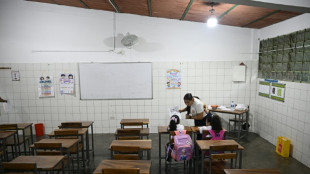 Empty benches as schools reopen in Venezuela's quake-hit Guaira

 US judge rules Trump's name must remain off Kennedy Center

 Samson fires India to T20 series win over Afghanistan

 Carney sells Canada to global investors but says US ties still key

 Tiny English village holds 'independence' vote over asylum seeker housing

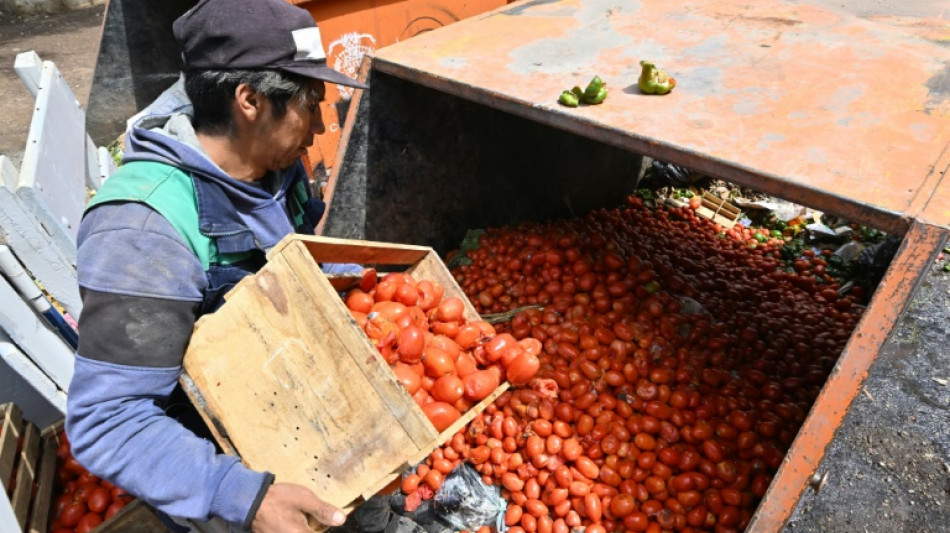
At a wholesale market in the central Bolivian city of Cochabamba, farmer Damaris Masias watches through tears as 10 tonnes of tomatoes that she spent over a week trying to get through roadblocks are tossed into a bin.
On a normal day her hometown of Omereque, situated 168 miles (270 kilometers) from Cochabamba, is an eight-hour truck ride away.
But the blockades set up by supporters of ex-president Evo Morales to thwart his possible arrest on rape charges turned the journey into a nine-day odyssey during which the produce rotted.
"Only God knows how many tears these tomatoes caused," the distraught 48-year-old told AFP.
Cochabamba, Morales' political stronghold, is the crucible of the campaign of blockades which began on October 14 after he was accused of rape over his alleged relationship with a 15-year-old girl while president in 2015.
The former leader, who is attempting a comeback, denies the allegations, saying he is the victim of "judicial persecution" by his former-ally-turned rival, current President Luis Arce.
The political tensions have risen dramatically in the past week, with Morales -- who was president from 2006-2019 -- accusing the state of an assassination bid, which it denies.
- Rotting food -
Clashes between his supporters and security forces have left dozens injured in recent days.
On Wednesday, Arce ordered an "immediate" end to what he called the "anti-democratic and criminal blockade."
He estimated the cost of the roadblocks at over $1.7 billion and said they were "having terrible effects on families" by causing food and fuel prices to escalate.
Masias lost not only her own tomatoes when she set out for Cochabamba, but those of an entire neighborhood of what she calls "poor people."
"I tried my best to get here," she said, standing next to pallets of decomposing peppers and green beans.
- Switch to air shipments -
From four roadblocks on October 14, the number set up around the country has risen to 24, mostly in the Cochambamba area, the authorities said.
Desperate to find an alternative route to market, food producers have begun shipping their goods by plane.
A queue of people some 980 feet (300 meters) long formed this week outside the Cochambamba parcel office of state airline Boliviana de Aviacion. Some began queueing before dawn.
"We are looking for air bridges so that our product is not ruined," says Christian Vrsalovic, a dairy producer whose transport costs have risen five-fold since the protests began.
The Bolivian National Agricultural Confederation (Confeagro) estimates that the roadblocks have set the agricultural sector in Cochabamba alone back around $20 million.
"Cochabamba is the country's main economic hub," Confeagro's vice-president Rolando Morales, who is no relation to Evo Morales, said.
"All the agrifood exports from Santa Cruz (Bolivia's richest department) pass through here en route to the port of Arica in Chile to generate the foreign currency that the country so badly needs," he said.
- 'Customers scold us' -
On a retail market in Cochabamba, Ana Luz Salazar lines up the yellow chickens that are left on her hands at the end of the day.
The birds have shot up in price from $2 to $3.4 per kilo since the blockades began, causing sales to plummet.
"Customers scold us. They say 'it's so expensive'. Some don't buy anything," the 55-year-old vendor said.
On the outskirts of the city of 660,000 inhabitants, on a poultry farm owned by 48-year-old businessman Ivan Carreon, the vast sheds usually teeming with battery hens lie nearly empty.
The chickens and hens of Cochabamba are fed with soybeans and corn from the regional capital Santa Cruz, but the roads to Cochabamba have been blocked by the protests.
"We had to sell 15,000 hens ... in order to guarantee balanced feed for our other batches," Carreon explained.
Beef producers are in even worse straits, according to Confeagro's Morales, who warned that cattle feed was in extremely short supply.
"Cochabamba, which used to be called Bolivia's breadbasket,' remains so in name only," he said.
C.Kreuzer--VB