'New wave' as start-up sweeps up Thai ocean plastic / Photo: © AFP

 Hashim Thaci: From 'George Washington of Kosovo' to Hague convict

 Amnesty says Iran committed 'crimes against humanity' in crackdown on 2022 protests

 EU to ban social media for under 13s, curb access until 15

 Philippines ex-leader Duterte makes first appearance at ICC

 EU chief pitches 'associate member' status for Canada

 English village votes to 'secede' from UK over asylum centre plan

 Wildfires push endangered Sumatran elephants to brink: Indonesian NGO

 Stocks head higher as traders prepare for Fed decision
 English village votes to 'secede' from UK over asylum centre
 Hong Kong unveils plan to align economy with China's goals
 Brazilian voters the latest to eye Bukele security model with envy

 EU chief hosts Canada's Carney in push to 'deepen' alliance

 EU chief to unveil social media, gaming curbs for under-15s
 Saudi says Houthis target Mecca, warn of 'red line'

 Asian stocks stutter as traders prepare for Fed decision
 US touts its power, avoids Iran war at G20 Energy meeting
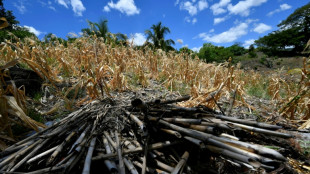 Dead animals, barren fields, and hunger - El Nino chokes Central America

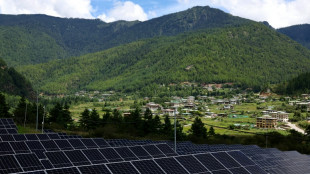 In hydropowered Bhutan, solar starts to rise

 Brazil's Supreme Court clashes over handling of probe involving judge

 Trump threatens to keep Kennedy Center shut if his name not added

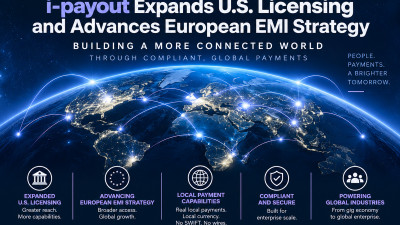 i-payout Expands U.S. Money Transmitter Licensing Footprint and Advances European EMI Strategy

 Artists exit Sheeran tour in solidarity with Macklemore pro-Palestinian comments
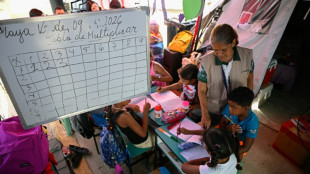
 Espi saves Real Madrid with late winner at Elche

 Liverpool pile on misery for Spurs in League Cup, Dowman dazzles for Arsenal

 Trump blasts Supreme Court justices over 'horrible' mail vote ruling

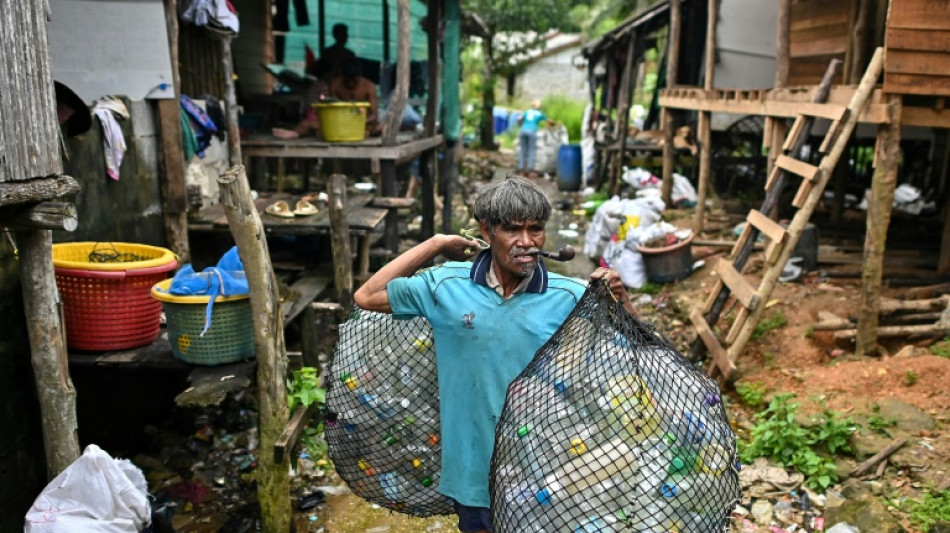
As a long-tail boat arrives at a fishing village on the southern Thai island of Koh Chang, residents gather to sell their wares -- not seafood, but plastic.
The villagers, members of the semi-nomadic Moken people, are selling to Tide, a start-up attempting to create new value from old plastic collected from or near the sea.
Recyclers have long scooped up some of the over six million tonnes of plastic that the Organisation for Economic Co-operation and Development estimates enters the ocean each year.
But Tide works directly with everyone in the process, from collectors in remote Thai fishing villages to carpet manufacturers in the Netherlands.
Its plastic is traceable and certified as "ocean-bound" -- a process that involves annual audits by an NGO.
It is processed using a method Tide says results in a recycled product of comparable quality to virgin plastic.
"We are convinced there is more than enough plastic in our world and we should take what already exists," said Marc Krebs, a co-founder of the Swiss company.
On Koh Chang, a 30-minute speedboat ride from the sleepy southern town of Ranong, the Tide boat's arrival prompts a flurry of activity.
Mimi, 65, has brought out several old rice sacks of bottles that join a growing heap of torn fishing nets, old rope and discarded jerrycans.
"The more I collect, the more arrives. I can't collect it all," she told AFP, declining to give a family name.
The villagers live along the beach in ramshackle wooden homes on stilts.
Underneath, the high tide mark is clear -- behind it is a carpet of refuse, from polystyrene boxes and flip-flops to take-away cups and crisp packets.
Only a small portion is commercially viable for recycling. Tide buys six categories, including fishing nets and common types of plastic bottles (PET) and cartons (HDPE).
"Each day, we have a lot of products that we can't sell and can't recycle, and I'm sure there is much more of it in the ocean," Tide's Thailand operations director, Nirattisai Ponputi, told AFP.
- Onerous sorting -
While the market price of recycled plastic fluctuates, Tide pays a set rate on Koh Chang to encourage continued collection.
And they sometimes take items that can't be recycled because the island has no waste management options, so the alternative is mostly open burning.
Even recyclable items can be challenging.
Bottles with stamped logos must be "hotwashed" before processing, coloured plastic can contaminate recycled material, and most ink-printed labels cannot be recycled.
A PET soft drink bottle might have an HDPE cap and a PVC label, creating an onerous sorting process.
Sometimes it isn't even clear what plastic has been used, so Tide uses a spectrometer to work out what can be recycled.
"There are no regulations about the plastic that you can put in your product, so it's left on the shoulders of the collectors to work it out," said Capucine Paour, Tide's external project manager.
Plastic collected on Koh Chang and surrounding islands goes to Tide's Ranong facility, where workers painstakingly sort it again before pressing it into bales.
Founded in 2019, Tide collects around 1,000 tonnes of plastic a year from Thailand and other locations including Mexico.
"It's still a very small amount" compared to the global scale of the problem, acknowledged Krebs.
- 'Ban is better!' -
The collected plastic is processed into pellets before being shipped to customers like Condor Group, one of Europe's largest carpet manufacturers.
The firm uses recycled material from Tide and elsewhere for around a quarter of its products, including rugs, car mats and artificial grass.
"Tide is really unique," said Jan Hoekman Jr, one of the company's directors.
"You can follow the product from collection to the final products, which you see here. That's all transparent, which is very important if you talk about sustainability."
Tide says its product is 40 percent more expensive than virgin plastic, but customers like Condor Group are willing to pay a premium.
"We see sustainability not just as a trend, but more as stewardship for future generations," said Hoekman Jr.
Condor Group's buzzing production lines feel a million miles from the quiet off-season beaches of Koh Chang, where Wiranuch Scimone, 54, collects plastic for Tide.
In her 20 years on Koh Chang, she has seen the waste washing ashore go from mostly fishing nets to huge amounts of unrecyclable polystyrene foam that locals often end up burning.
The monsoon waves bring in so much trash that she sometimes spends hours on a beach without being able to collect it all.
"It would be best if there were no plastic," she said, adding in English: "Ban is better!"
Tide, a for-profit company, is still a relatively small operation, but it is expanding, moving into Ghana next.
"You have to start somewhere," said Krebs.
"We are quite convinced that we are at the beginning of a new wave."
D.Schlegel--VB