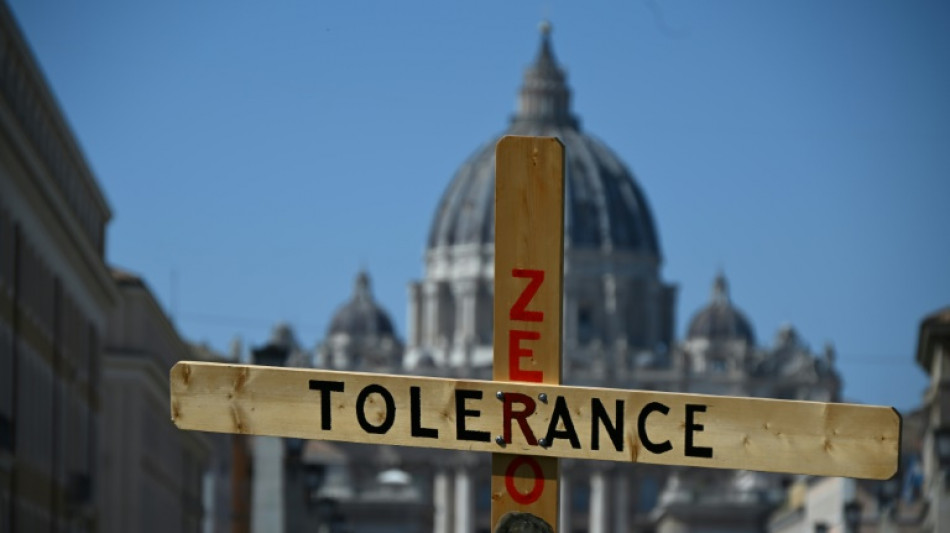
Church must act faster against abuse priests, papal commission / Photo: © AFP/File

 Toogood Gold's Table Mountain Sits in the Shadow of a Nevada Gold Rush

 MEXC July–August Security Report: 38.66M USDT in Risk Funds Intercepted, Futures Insurance Fund Hits 792M USDT

 'Breathing toxin every day': Indonesians choked by haze feel helpless
 Stocks edge higher ahead of US Fed rate call
 Philippines ex-leader Duterte makes first in-person ICC appearance
 2027 Formula One calendar includes Monaco sprint race
 Palestinians are the real victims, Thunberg tells Ed Sheeran
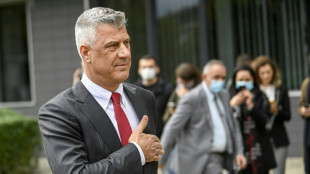 Hashim Thaci: From 'George Washington of Kosovo' to Hague convict
 Amnesty says Iran committed 'crimes against humanity' in crackdown on 2022 protests

 EU to ban social media for under 13s, curb access until 15

 Philippines ex-leader Duterte makes first appearance at ICC
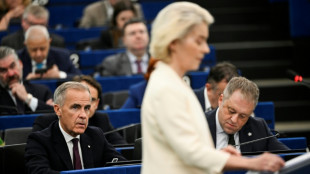 EU chief pitches 'associate member' status for Canada
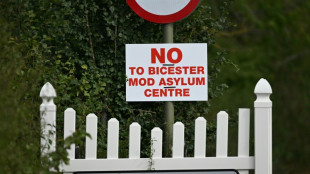 English village votes to 'secede' from UK over asylum centre plan

 Wildfires push endangered Sumatran elephants to brink: Indonesian NGO
 Stocks head higher as traders prepare for Fed decision

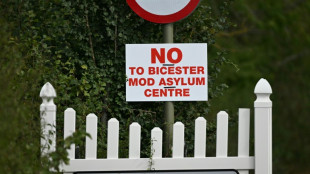 English village votes to 'secede' from UK over asylum centre
 Hong Kong unveils plan to align economy with China's goals
 Brazilian voters the latest to eye Bukele security model with envy

 EU chief hosts Canada's Carney in push to 'deepen' alliance
 EU chief to unveil social media, gaming curbs for under-15s
 Saudi says Houthis target Mecca, warn of 'red line'
 Asian stocks stutter as traders prepare for Fed decision

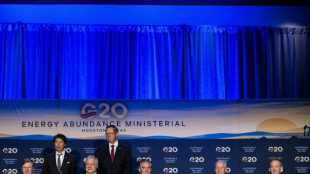 US touts its power, avoids Iran war at G20 Energy meeting

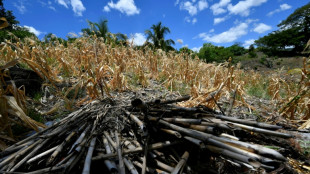 Dead animals, barren fields, and hunger - El Nino chokes Central America
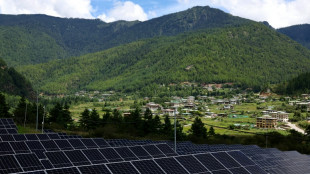 In hydropowered Bhutan, solar starts to rise

The Catholic Church must make it easier to remove priests who have abused minors, a Vatican commission said Tuesday in its first report on protecting children.
The head of the Pontifical Commission for the Protection of Minors, set up by Pope Francis in 2014, said the Church was coming out of a "dark period" in which "Church leaders tragically failed those we are called to shepherd."
US Cardinal Sean O'Malley, a former archbishop of Boston who spent decades listening to abuse survivors, told a press conference a new period had begun, "where accountability, care, and concern for victims is beginning to bring light to the darkness."
Abuse scandals have rocked the church around the world and the decade-old commission has faced criticism itself over its role and organisation, with several top members having quit.
The commission said the focus of its first 50-page report "has been on the policies, procedures, and mechanisms required by Church norms, established to keep children and vulnerable adults safe."
It hoped in future to "address the incidence of abuse, including the question of progress in reducing and preventing abuse."
The report cautioned, however, that progress around the world varied dramatically.
In some regions, clerical abuse was not yet a "publicised issue within their societies", while calling safeguarding resources "inadequate" in parts of Central and South America, Africa and Asia.
It recommended giving victims more access to their files "to address the concern of opaque canonical processes as a source of re-traumatisation".
It also called for clarifying the responsibilities of individual departments in dealing with abuse cases to ensure their timely management.
The report said the Church needed to streamline its process to remove abusing priests, citing a "need for a disciplinary or administrative proceeding that provides an efficient path for resignation or removal from office".
But it provided no further details on how this should be done, nor did it specify whether action would be taken against priests convicted of abuse or just suspected.
- 'Dare to denounce' -
Since becoming pope in 2013, Francis has taken numerous measures to tackle abuse, from opening up internal Church documents to punishing high-ranking clergy. He has made it compulsory to report suspicions of sexual assault to Church authorities.
But clergy are still not required to report abuse to civil authorities, unless the laws of that country require it, while any revelations made in confession remain private.
In its work, the commission consulted with victims of abuse and published various statements from them during focus groups.
"Who was going to tell me that the least difficult part of this whole process was going to be the abuse! The truly terrible thing is what happens when you dare to denounce, there the world really comes crashing down on you," one read.
Each year, the commission reviewed between 15 and 20 Episcopal conferences, representing local churches, and in doing so said it hoped to review the entire Church over five or six reports.
Part of the body's mandate is to help local churches to develop guidelines, acknowledging that previously "church leaders too often made decisions on an ad hoc basis, according to their own discretion and without reference to acceptable standards."
The report outlined challenges in various regions. In Mexico, it cited difficulties with submitting abuse reports to civil authorities and in Belgium, little oversight of Belgian priests working in Latin America, Africa or Asia.
A "culture of silence" and taboo around sexual abuse prevents the reporting of such cases in Cameroon and Democratic Republic of the Congo, African countries where "the culture of safeguarding is a new concept".
Globally, it acknowledged that one challenge remained "prioritisation of the Church's reputation over victim/survivor support."
In Europe, despite more steps to combat clerical sexual abuse, the report found frustration among victims due to the slow processing of cases within the Church, which await the conclusion of any criminal trial before proceeding.
Members of the abuse commission, directly appointed by the pope, are experts in fields related to safeguarding, from clinical psychology to law or human rights.
But two members representing abuse survivors resigned in 2017. Last year, influential German Jesuit priest Hans Zollner also quit, complaining of "structural and practical issues".
J.Sauter--VB