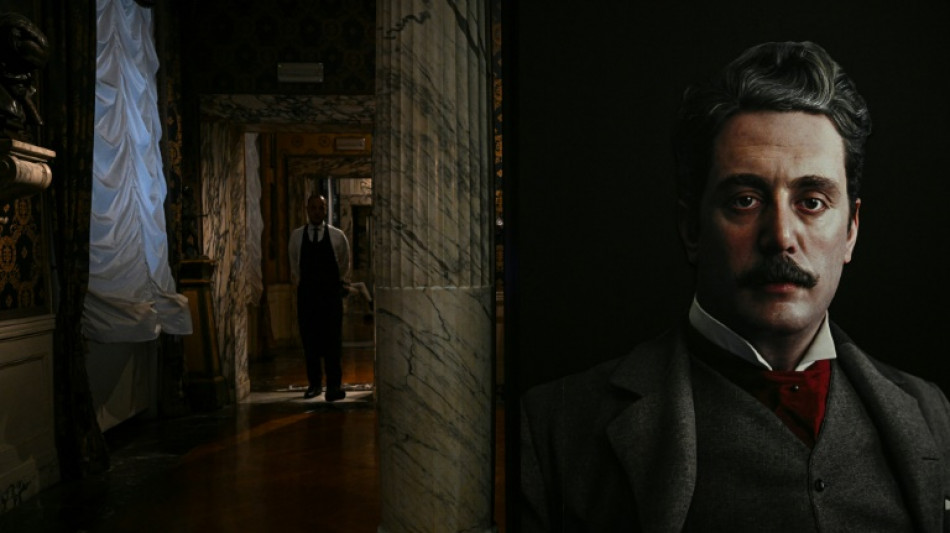
Puccini exhibit charts making of a modern music star / Photo: © AFP

 Devan Ekambaram and Susha’s 'Varuvaaiy' Makes History as First Tamil Song Nominated for a Grammy

 Miranda Lambert Leads North Texans with Seven Grammy Nominations for 2027

 DiDi Advances Robotaxi Operations in China with New R2 Vehicle and Expanded Safety Infrastructure

 Smart Car Seats Tested: Do Sensors and Apps Actually Improve Safety?
Italy's Giacomo Puccini, famed for operas such as "Madame Butterfly", was panned by contemporary critics but harnessed then-novel technology such as records and cinema to become a global star, according to an exhibition that opened on Thursday.
A century after the death of Puccini (1858-1924), who also composed "La Boheme", "Tosca" and "Turandot", the exhibition at Milan's legendary La Scala opera house seeks to uncover the secret of his international success.
"Almost all the premiers of Puccini's operas were flops, disasters," and panned by critics, noted the outgoing director of La Scala, Dominique Meyer.
But despite this, "he very quickly became a superstar, because the public took over, and he became one of the most important composers in the history of opera", Meyer told AFP.
Where once opera was confined to grand theatres, the invention and spread of the gramophone brought the music into people's homes, noted curator Gabriele Dotto.
At the beginning of the 20th century there was a "commercial explosion", with a quadrupling in record sales, he said during a press preview.
Puccini and his publisher Ricordi took advantage of the changes to build a brand around the composer using modern marketing campaigns, including posters.
"In this exhibition, we discover aspects of Puccini's personality that we didn't know, such as his interest in marketing," Meyer said.
- 'Unfathomable complexity' -
On show are many original documents from the Ricordi archive, owned by German media giant Bertelsmann.
They include drafts for the final duet of "Turandot", which Puccini left unfinished, notes of "unfathomable complexity" and "apparent chaos", Dotto said.
There is also a striking blue velvet tunic with a gold-embroidered train worn by Swedish soprano Birgit Nilsson for "Turandot" during La Scala's 1958-59 season.
Elsewhere, black and white photos trace Puccini's trips to Buenos Aires and New York, where he promoted his operas.
And the exhibit includes excerpts of silent films which used Puccini's music, notably "Madame Butterfly" from 1915.
"Puccini - Opera Meets New Media", which had its debut in Berlin earlier this year, runs in Milan until January 12.
F.Fehr--VB



