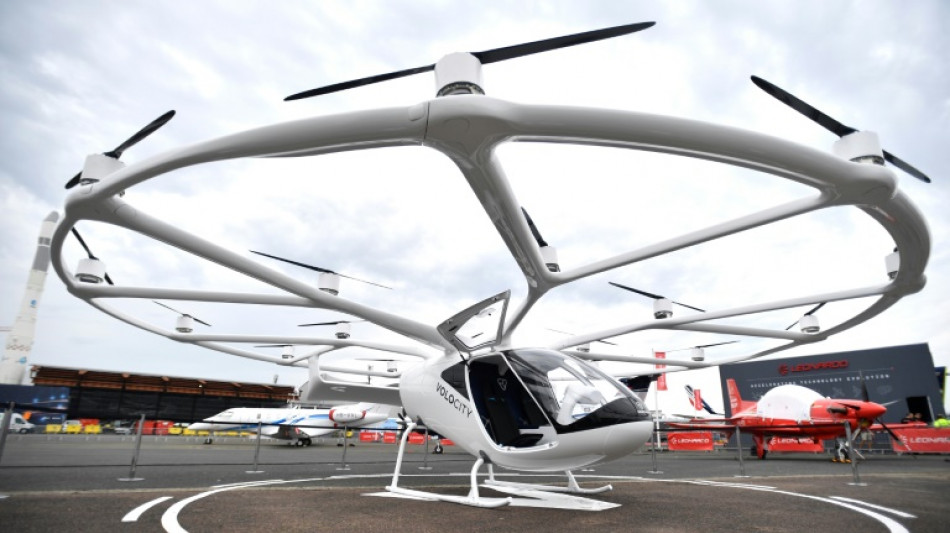
US regulator finalizes air taxi rules / Photo: © AFP/File

 Devan Ekambaram and Susha’s 'Varuvaaiy' Makes History as First Tamil Song Nominated for a Grammy

 Miranda Lambert Leads North Texans with Seven Grammy Nominations for 2027

 DiDi Advances Robotaxi Operations in China with New R2 Vehicle and Expanded Safety Infrastructure

 Smart Car Seats Tested: Do Sensors and Apps Actually Improve Safety?
US regulators on Tuesday finalized regulations for "powered lift" vehicles, opening the door for commercial air taxis.
The rules apply to aircraft which "have the characteristics of both airplanes and helicopters," the Federal Aviation Administration said in a statement, and come as several companies explore lower-cost, electric-powered air transit.
The new regulations were needed because existing rules didn't address these new types of aircraft, which can take off vertically -- like helicopters -- before flying horizontally similar to an airplane, the FAA said.
The rules would establish the first new category of civilian aircraft since helicopters came to the market in the 1940s, the regulator added.
While powered-lift operations include air taxis, the rules -- which lay out qualifications for pilots and minimum safe altitudes -- also pave the way for new cargo delivery methods.
"The rule is the final piece in the puzzle for safely introducing these aircraft in the near term," the regulator said, adding that "the opportunities for the use of powered lift operations are far-reaching."
Standing to benefit are startups in the burgeoning "electric vertical take-off and landing" (eVTOL) sector, hoping to deploy air taxis in the near future, notably for passengers hoping to avoid traffic jams.
Supernal, a subsidiary of South Korean car giant Hyundai, hopes to launch its own air taxi services by 2028, including in car-clogged Los Angeles.
In Europe, German startup Volocopter hoped to operate at the Paris Olympics this summer, but wasn't able to get certified in time. It hopes to be ready to achieve certification by the end of the year.
C.Koch--VB



