
What's next in Swedish rape investigation into Mbappe? / Photo: © AFP/File

 Oversight Board blasts 'inadequate' Meta safeguards for AI deepfakes

 The Easter Island origins of buzzy Malkovich drama 'Wild Horse Nine'

 Third body recovered after Grand Canyon flash flood
 Harry makes first public appearance since return to UK

 Abhishek hits record T20 ton as India sweep series 3-0

 Abhishek hits record T20 ton as India sweep T20 series 3-0

 English FA calls for Infantino to release World Cup sell-off documents
 GM delivers first components for US interceptor missiles

 Trump admin overhauls key protection for endangered species

 Abhishek hits record T20 ton as India post 221-7 against Afghanistan

 Macron hosts Lebanon security talks to back 'indispensable' army

 Final rally of season in Saudi Arabia cancelled due to Middle East conflict
 Gaza documentary sparks political storm in Israel

 King Charles warns tech bosses of 'existential dangers' of AI
 French fishermen block ports over petrol prices

 AFP photo shows Trump examining image of Kennedy Center apparent demolition
 Andersson vows to take Sweden in 'new direction' after election win

 Turkey's Erdogan to run again in early 2028 vote, top adviser says
 Sweden's Andersson: a trusted, no-nonsense political operator

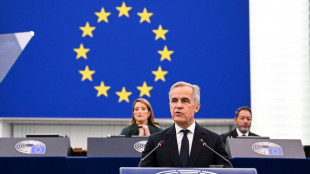 Canada's Carney pushes 'new alliance' with EU despite Trump threats

 Ireland to boycott Eurovision 2027 over Gaza

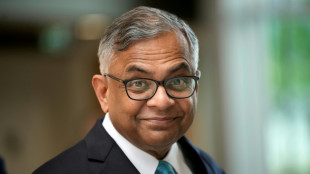 India's Tata Sons reappoints N. Chandrasekaran as chairman

 Sweden's left-wing wins election thriller

 Germany urges EU action against China to defend carmakers

 Stocks mostly rise after US Fed rate hike, oil eases

Following media reports that French football star Kylian Mbappe is being investigated for rape in Sweden, all eyes have turned to the Nordic country's legal system to know what happens next.
A Swedish prosecutor has confirmed that a rape investigation has been opened after Mbappe and his entourage made a two-day visit to Stockholm October 9-11.
Several media outlets have reported that Mbappe is the target of the investigation, but the prosecutor has not confirmed the name of the suspect.
Here are five things to know about the Swedish investigative process.
- What happens now? -
Swedish prosecutor Malin Kuhn explained to AFP that after an investigation is opened, the first steps are usually to secure technical evidence and witness statements.
The plaintiff, who has not been identified, has been questioned by police, according to daily Aftonbladet.
It is not known whether Mbappe had been questioned by Thursday, but his lawyer told reporters on Tuesday that he would cooperate with Swedish police if necessary.
While the investigation is ongoing, it is confidential and neither the suspect, the media nor anyone else is informed of how it is proceeding, Kuhn said.
This is to protect the integrity of the investigation as well as the suspect, in case the investigation is dropped at an early stage.
"In some cases the suspect has a story that is credible, and then the investigation can be dropped immediately," the prosecutor said.
- Would Mbappe have to come to Sweden for questioning? -
If Swedish police want to interrogate Mbappe, they would ideally want him to come to Sweden for questioning in person.
If a suspect is in another country and is unable or refuses to travel to Sweden, Sweden can request assistance for the interrogation.
For countries within the EU, Sweden can ask a country's domestic police to question the suspect or ask that Swedish police be present, Kuhn said.
If Mbappe were to refuse to travel to Sweden and prosecutors believe the evidence is particularly strong, they could also decide to issue a European arrest warrant.
- How strong are the suspicions against Mbappe? -
Swedish law has two levels of suspicion. Prosecutors decide whether they have reasonable cause (the lower grade) or probable cause (the higher grade) to suspect that someone has committed a crime.
Newspaper Expressen has reported that prosecutors have "reasonable cause" in the investigation concerning Mbappe.
Deciding on the level of suspicion is a judgement call by the prosecutor, Kuhn explained, and can be changed during the course of the investigation.
The higher grade of suspicion is applied when the prosecution believes it has strong evidence, and is usually a prerequisite for remanding a suspect in custody.
The suspect would also usually have to be suspected of a crime that carries a prison sentence of more than a year.
- What does Sweden's 'consent law' say? -
In 2018, Sweden changed its rape legislation and introduced a "consent law".
For a rape conviction, prosecutors must prove there was "an absence of consent", rather than the use or threat of violence or whether the victim was deemed to be in a vulnerable situation.
The consent law allows for rape convictions when a victim says no but does not fight back physically or verbally, and when a victim remains passive and silent during the aggression, a phenomenon known as "frozen fright".
The revised law, which was proposed in the wake of the #MeToo movement, also introduced a new offence called "negligent rape," for cases when "someone should be aware of the risk that the other person is not participating voluntarily."
A 2020 review of the law by the Swedish National Council for Crime Prevention (Bra) found that the number of rape convictions rose by 75 percent to 333 in 2019, compared to 190 in 2017, the last full year before the law changed.
According to Bra data from November 2023, almost 90 percent of reported rapes don't lead to prosecution.
In 2022, more than 6,000 rapes were reported and there were more than 800 prosecutions, Bra data showed.
- What does Mbappe risk, if convicted? -
A rape conviction in Sweden carries a prison sentence of up to six years and a minimum of three years.
If the crime is considered aggravated, the sentence can run up to 10 years.
The crime of "negligent rape" carries a prison sentence of up to four years.
H.Weber--VB