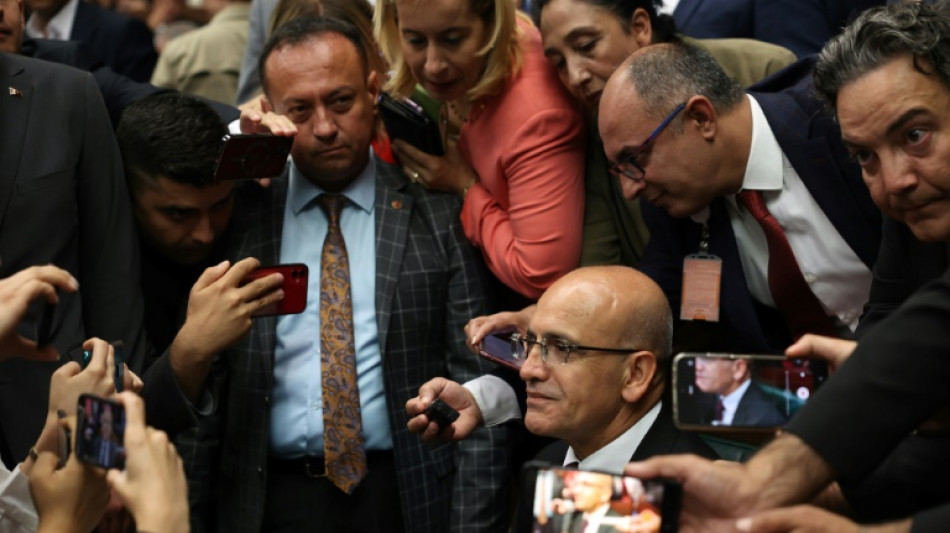
Turkish govt delays tax plan to fund defence industry / Photo: © AFP

 South Korea makes Asian Games complaint over Japan warlord ceremony

 US aid cuts are killing Kenyan sex workers

 October 7 survivors, families take centre stage in Israel vote
 Captain Mat Ryan axed from Socceroos squad for Brazil games

 US approves sale of 48 F-35 jets to Saudi Arabia

 Juventus, Palace cruise to Europa League wins, Bournemouth beat Sociedad

 Stocks climb as oil retreats, Fed calms inflation fears

 Russians begin voting in controlled election as war drags

 Hispanics feel 'betrayed' on immigration, Republican warns Trump

 High-scoring Bears face Vikings in battle of NFL unbeatens

 'In our lane': Fed's Warsh defies Trump but still fighting for credibility
 Trump admin makes major cut to endangered species protections

 Princess Diana's brother makes new explosive claims against Charles

 Ovechkin on Russian political video: 'I support my country'
 Can we shut down AI?
 Teenager Sullivan named in new-look US squad
 Travis Scott and Keith Richards feature on GTA VI soundtrack

 AFP photo shows Trump examining image of apparent Kennedy Center razing
 Pochettino rings changes for USA friendlies

 Alonso says Chelsea ambition 'very clear' after end of Boehly era

 Mbappe draws political fire over Ceuta t-shirt controversy
 Third malaria death in Germany from outbreak tied to Frankfurt airport
 AtlasClear Holdings Reports Preliminary Fiscal 2026 Revenue of Approximately $20.1 Million, Up 85%; Revenue Plus Interest Income of Approximately $21.9 Million
 Alonso says Chelsea ambition clear after end of Boehly era

 Micron's Taiwan workers say 68 months' bonus not enough
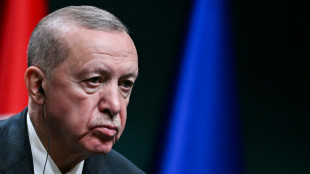
The Turkish government on Tuesday postponed until 2025 a parliamentary debate on a proposed tax on credit cards, which it sought to fund the arms industry as conflict rages in its neighbourhood.
Indignant Turks, who already face double-digit inflation, called their banks to lower their credit limits after the governing AKP party submitted the tax bill to parliament on Friday.
After the public outcry, the AKP announced Tuesday that it was delaying debating the bill until next year.
"There were certain objections from our citizens, we will examine all of this in detail," said the AKP's parliamentary group chairman, Abdullah Guler.
"We have postponed our discussions and we will reconsider, after the budget, if there are some points to change or remove," he said.
The proposed legislation came as Israel's conflicts with Tehran-backed Islamist militants in Gaza and Lebanon, and missile strikes by Iran, have raised global concerns that a broader war could erupt in the Middle East.
"Our country has no choice but to increase its deterrent power. There's war in our region right now. We are in a troubled neighbourhood," Finance Minister Mehmet Simsek told private broadcaster NTV earlier on Tuesday.
The bill stipulated that people with a credit card limit of at least 100,000 liras (nearly $3,000) would have to pay an annual 750 lira ($22) in tax from January to bolster the defence industry.
"If we increase our deterrent power, then our ability to protect against fire in the region will increase," Simsek had said, though he added that the bill was in the hands of parliament and that the AKP, could "re-evaluate" it.
When he proposed the tax on Friday, Guler said that Israel's next target would be Turkey, an argument often cited by President Recep Tayyip Erdogan.
- Weapons boost -
A vocal critic of Israel's offensive in Gaza and Lebanon, Erdogan doubled down on the threat posed by Israel when addressing a conference hosted by his AKP party on Tuesday.
"Even if there are those who cannot see the danger approaching our country... we see the risk and take all kind of measures," he said.
Turkey's defence industry has enjoyed a boom in recent years but Simsek said the sector still needed a boost.
The defence industry is planning to invest in 1,000 projects, including an air defence system that would protect Turkey from missile assaults, Simsek said.
Turkey allocated 90 billion lira from the budget to fund the defence industry last year, he added.
"This year, we increased it to 165 billion lira. Maybe we will need to double this even more."
Turkey's defence companies signed contracts in 2023 worth a total of $10.2 billion, according to Haluk Gorgun, the head of Turkey's state Defence Industry Agency (SSB).
The top 10 Turkish defence exporters contributed nearly 80 percent of total export revenue, he said.
Sales of Turkish Baykar drones, used in Nagorno-Karabakh or Ukraine, amounted to $1.8 billion.
- 'Disguise the economic crisis' -
Last week, parliament held a closed-door session for the government to explain why it saw Israel as a potential threat, but the opposition said it was not convinced.
The spokesman for Turkey's main opposition CHP party, Deniz Yucel, said Monday that the government was exploiting nationalist feelings to sweep an "economic crisis" under the carpet.
Inflation has spiralled over the past two years, peaking at an annual rate of 85.5 percent in October 2022.
Official data showed it had slowed to 49.4 percent in September.
"The AKP is trying to create a fake 'foreign threat and war agenda' with the rhetoric of 'Israel may attack us'," Yucel said.
"We know and see that they are trying to disguise the economic crisis they caused."
S.Spengler--VB