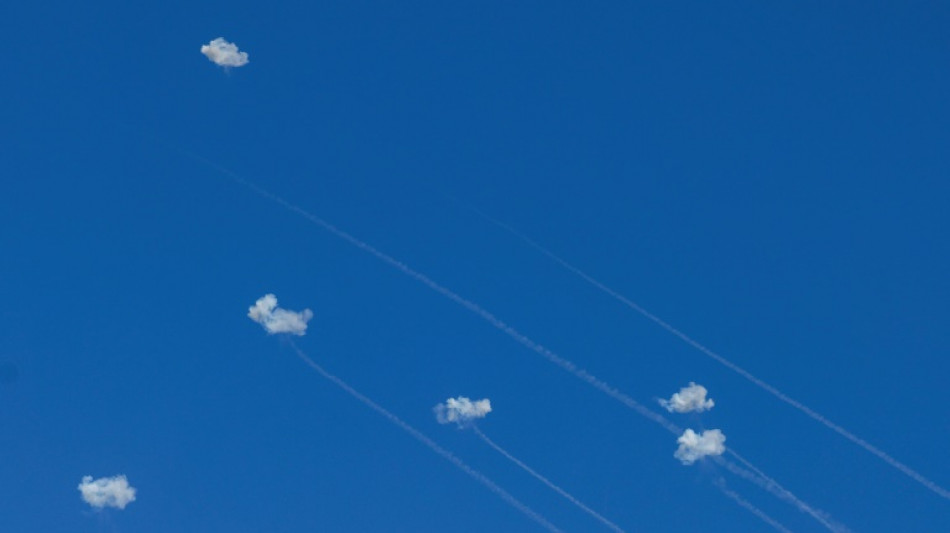
Iron Dome: Israel's key anti-missile shield / Photo: © AFP

 Indonesia accepts Malaysia's help to tackle wildfires
 Indians living in Japan on stand-by to house Asian Games athletes
 Trump signs bill authorizing sweeping Russia sanctions
 Protesters form human chain at Kennedy Center after Trump threat
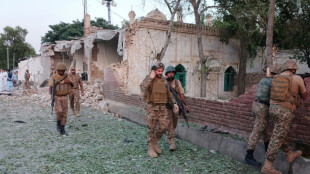 Death toll from attack at police HQ in Pakistan rises to 31
 Trump says Denmark to give US 'permanent control' over Greenland security

 Kennedy Center: future unclear for iconic Washington arts hub

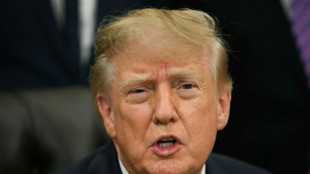 Trump claims 'infinite' Greenland security deal with Denmark

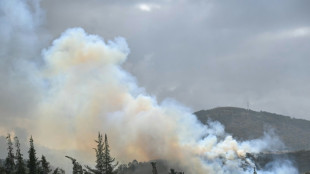 Helicopters battle wildfire threatening Ecuador's capital

 Brentford batter Chelsea to undo Alonso's promising start

 Kane hits Bundesliga century as Bayern rout Union
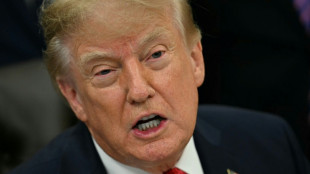 Trump says CNN, MS NOW, Politico banned from White House
 Hushing and hedging: US companies retreat on climate

 Springboks to face Fiji before 2027 Rugby World Cup
 Nigeria miners struggled to breathe in cell before 37 died: survivors

 McIlroy on the charge at PGA Championship as Reed withdraws
 McIlroy on the charge at PGA Championship

 Crisis-wracked Volkswagen warns of 10-bn-euro hit to profits

 Costa Rica's Grynspan tops third informal poll for UN chief: diplomat

 Stock markets retreat after central bank rate hikes
 Russia labels director of Cannes Grand Prix winner a 'foreign agent'

 Macron warns of Russian 'hybrid' threat after meeting presidential hopefuls

 UN holds third informal poll for new chief

 Kulusevski return can spark Spurs: De Zerbi

 Shakira to cap off world tour with Madrid 12-gig run

Israel's Iron Dome air defence system has intercepted thousands of rockets since it went into operation in 2011, providing the country with crucial cover during times of conflict.
It has been heavily relied upon to protect military and civilian sites from frequent barrages of rockets fired from Gaza and Lebanon in the ongoing war between Israel and Hamas.
Israel's air defences were in operation on Tuesday night, when Iran fired missiles at Israel in what it said was a response to Israel's killing of Tehran-backed militant leaders.
Israel's military chief Herzi Halevi said Tuesday that the Iranian barrage had been blunted partly by "a very strong aerial defence array".
The system had also intercepted more than 200 drones and missiles launched by Iran on April 13.
Israel initially developed the Iron Dome alone after the 2006 Lebanon War, and was later joined by the United States, which has provided its defence know-how and billions of dollars in financial support for the program.
The system has an interception rate of around 90 percent, according to Israeli defence firm Rafael, which helped design it.
Here's how it works:
- Three-part system -
The Iron Dome is one part of Israel's multi-tiered missile defence systems and is designed to intercept short-range rockets at a distance of up to 70 kilometres (43 miles).
Each Iron Dome battery is made up of three main sections: a radar detection system, a computer to calculate the incoming rocket's trajectory, and a launcher that fires interceptors if the rocket is deemed likely to hit a built-up or strategic area.
It sits alongside other missile defence systems like the Arrow, which counters ballistic missiles, and David's Sling, for medium-range rocket or missile attacks.
- How much does it cost?
Each Iron Dome interceptor costs $40,000 to $50,000 to produce, according to the Washington-based Center for Strategic and International Studies.
The think tank estimated that a complete system, including the radar, computer and three to four launchers -- each containing up to 20 interceptors -- costs around $100 million to produce.
Israel has 10 such systems in operation, according to Raytheon, which helps manufacture the Iron Dome. Other estimates have put the figure slightly higher.
- Bipartisan US support -
The Iron Dome is one of the strategic pillars of the US-Israeli alliance that has been followed by successive Democratic and Republican administrations.
In August 2019 the US Army signed a contract to purchase two Iron Dome batteries to enhance its own short-range missile defence capabilities.
K.Hofmann--VB