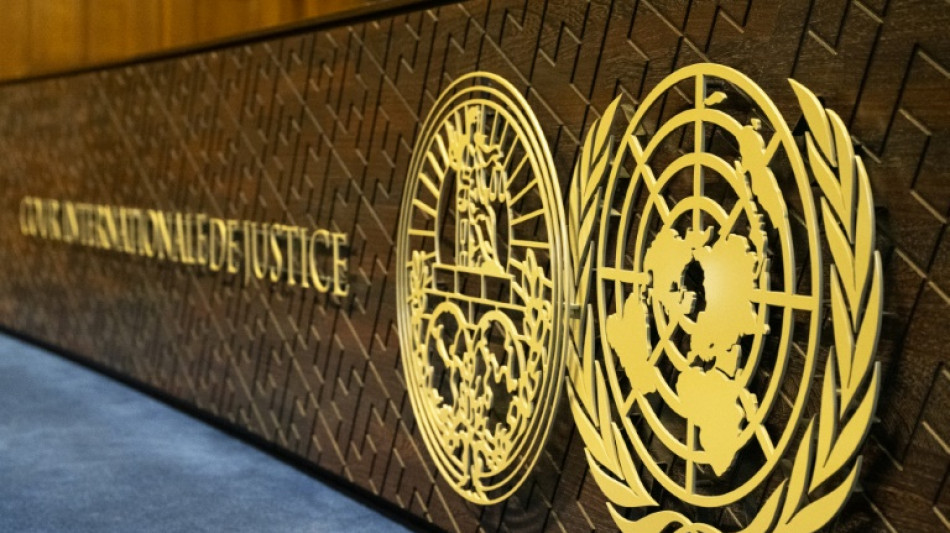
E.Guinea, Gabon clash at ICJ over oil-rich islands / Photo: © AFP

 Khan Welcomes Milburn’s Youth Employment Reforms Amid High NEET Rates

 Shinde Clarifies Torn Photo Controversy Amid Sonia Gandhi Book Protest

 BMW i3 vs Mercedes C-Class Electric vs Hyundai Ioniq 6: The Ultimate Premium EV Showdown

 BING X: 22,624.66 SNC have disappeared at BingX – how safe are tokens on BingX? Will BingX’s MiCAR licence be suspended?

 Urban Company Raises Rs 2,500 Crore via QIP to Expand InstaHelp

Gabon and Equatorial Guinea faced off on Monday at the International Court of Justice, hoping to resolve a decades-old scrap over the sovereignty of three disputed islands in potentially oil-rich waters.
The two West African nations have been squabbling over the 30-hectare (74-acre) island of Mbanie and two smaller low-lying islets, Cocotier and Conga, since the early 1970s.
Unlike most contentious cases that come to the ICJ in The Hague, the two countries eventually agreed to send the thorny issue to the judges to find an amicable solution.
The dispute dates all the way back to 1900, when then colonial powers France and Spain signed a treaty in Paris setting out the borders between the two countries.
Gabon argues that a later treaty signed in 1974 -- the Bata Convention -- gives it sovereignty over the islands.
But Domingo Mba Esono, Vice Minister of Mines and Hydrocarbons of Equatorial Guinea, disputed the validity of this document.
He told the court Gabonese officials suddenly produced this treaty at a meeting between the two countries in 2003, taking Equatorial Guinea "completely by surprise".
"None of them had seen or heard of this supposed convention. Moreover, the document presented was not an original but was only an unauthenticated photocopy," said Esono.
The delegation from Equatorial Guinea questioned the legitimacy of the document and insisted Gabon present an original version, he said.
"Since then, which has been more than 20 years, Gabon has not presented anything," said Esono.
Esono said that Gabon invaded the islands in 1972 and "has occupied them illegally ever since".
The two countries have asked the court to decide which legal texts are valid, not specifically to define which nation has sovereignty.
"We are convinced the court's judgement will help our countries resolve their outstanding disputes over sovereignty and borders, creating a sustainable basis for their relations to flourish," concluded Esono.
Gabon will respond on Wednesday.
S.Leonhard--VB
