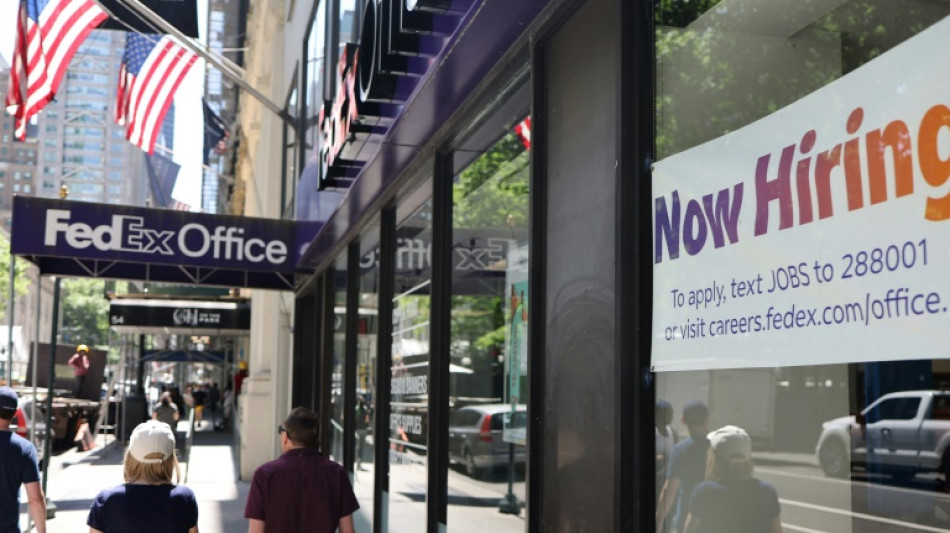
US jobs data point to weaker than expected market / Photo: © GETTY IMAGES NORTH AMERICA/AFP/File

 Jimmy Carr Confirms 25-Year Estrangement From Father Amid Podcast Reflections

 Arizona Superintendent Tom Horne to Leave Office, Plans Law Practice and Charter School

 Japan and Peru Mark 150 Years of Diplomatic Ties Amidst Trade and Investment Talks

 Ian Jackson Scores Game-High 22 Points After Rick Pitino's Prank Suspension

 Khan Welcomes Milburn’s Youth Employment Reforms Amid High NEET Rates

 Malta Maritime Forum Study Reveals €1 Billion Economic Contribution Amid Growth Concerns
The US jobs market was probably cooler than expected in the year through March, Labor Department data showed Wednesday, signaling weaker but still-positive growth.
US employers were estimated to have added 818,000 fewer jobs than initially reported for the 12-month period, meaning job growth in the world's biggest economy was lowered by around 68,000 per month.
While this marks a significant decline, it was less dramatic than the loss of up to one million predicted by some economists, and could be revised further.
"You're looking at something that is significantly cooler than previously but still positive and still relatively robust," said EY chief economist Gregory Daco.
"The nuance there is very important," he added, telling AFP the data "does not point to a weak labor market."
The revisions also do not account for unauthorized immigrants who have contributed strongly to employment growth in recent years, noted Nationwide chief economist Kathy Bostjancic.
These initial benchmark revisions are done annually, with the final numbers due in early 2025.
But Wednesday's figures drew heightened scrutiny ahead of November's presidential election -- given voters' concerns about the economy -- and expectations that the Federal Reserve would make its first post-pandemic interest rate cuts starting September.
Daco also cautioned that this does not mean a larger, 50 basis point rate cut by the central bank is a done deal -- unless the government's payrolls report for August shows further weakness or inflation slows more quickly.
July hiring data that undershot expectations, alongside an uptick in the unemployment rate, triggered alarm earlier this month and sent stock markets into a panic over recession fears.
Markets have rebounded since, on further reports that reassured traders of the economy's health.
"This doesn't challenge the idea we're still in an expansion, but it does signal we should expect monthly job growth to be more muted and put extra pressure on the Fed to cut rates," said Navy Federal Credit Union corporate economist Robert Frick.
The US economy has "created a boatload of jobs" even with the revisions, added Ryan Sweet of Oxford Economics.
Job growth appears strong, he added, although not sufficient to keep up with growth in the working age population. This is less threatening than if the market was weakening due to layoffs.
All eyes are on Fed Chair Jerome Powell this week as he speaks at the annual gathering of central bankers and economists in Jackson Hole, Wyoming.
Daco said this is a chance for Powell to regain control of the policy narrative, including by laying out where policymakers believe the economy is heading and what the pace of rate easing will be.
F.Stadler--VB

