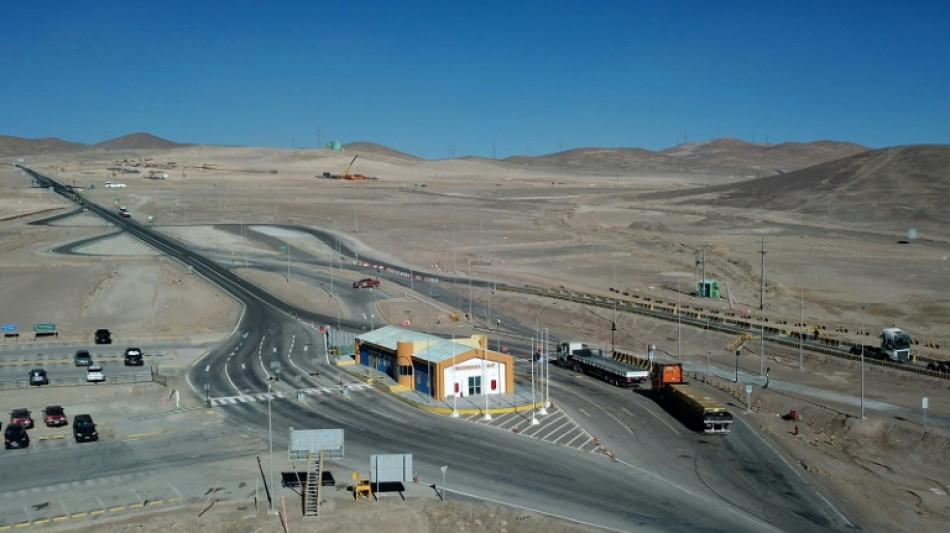
Workers at world's biggest copper mine in Chile suspend strike / Photo: © AFP

 Jimmy Carr Confirms 25-Year Estrangement From Father Amid Podcast Reflections

 Arizona Superintendent Tom Horne to Leave Office, Plans Law Practice and Charter School

 Japan and Peru Mark 150 Years of Diplomatic Ties Amidst Trade and Investment Talks

 Ian Jackson Scores Game-High 22 Points After Rick Pitino's Prank Suspension

 Khan Welcomes Milburn’s Youth Employment Reforms Amid High NEET Rates

 Malta Maritime Forum Study Reveals €1 Billion Economic Contribution Amid Growth Concerns
Workers at the world's largest copper mine in Chile suspended a strike launched earlier this week and restarted negotiations with Australian mining giant BHP, the union and management announced Friday.
Workers and BHP "have reached consensus on a proposal for a new collective bargaining contract," the company said in a statement, adding that the strike had been suspended as of 8:00 am local time Friday.
Patricio Tapia, president of the union at the Escondida mine in northern Chile, told AFP the return to talks was "confirmed."
The strike began Tuesday with workers' demands including shorter work days, bigger bonuses and compensation for total years worked.
A key demand has also long been that one percent of shareholder dividends for the Escondida mine, which produces 5.4 percent of the world's copper, be distributed among workers.
Chile is the world's largest copper producer with annual production of more than five million metric tons, nearly a quarter of global output. Escondida, an open-air mine located in Antofagasta in the country's north, produces close to 1.1 million tons of copper a year.
The Chilean government on Wednesday voiced hope that the strike would soon end, given its impact on the national economy.
When workers at the mine went on a 44-day strike in 2017 -- the longest in Chile's mining history -- BHP lost $740 million, contributing to a 1.3 percent decline in the country's GDP.
- Copper rush -
Copper, an electrical conductor used in wiring, is seen as a bedrock of emerging clean-energy industries.
It is a crucial component in the manufacture of solar panels, electric vehicles, wind turbines and rechargeable batteries.
Copper prices have increased about 400 percent in the past quarter of a century, and broke $10,000 a tonne in April for the first time in two years.
Global demand is expected to grow by up to 2.5 percent a year.
The Escondida mine, meaning "hidden" in English, was named in reference to the bulging ore deposits obscured deep under the barren surface of Chile's northern Atacama Desert.
BHP owns just under 60 percent of the mine, alongside minority partners Rio Tinto and Japan's JECO Corp.
Chile accounts for roughly a quarter of the world's copper. Other top producers are Peru, China, and the Democratic Republic of Congo.
F.Stadler--VB

