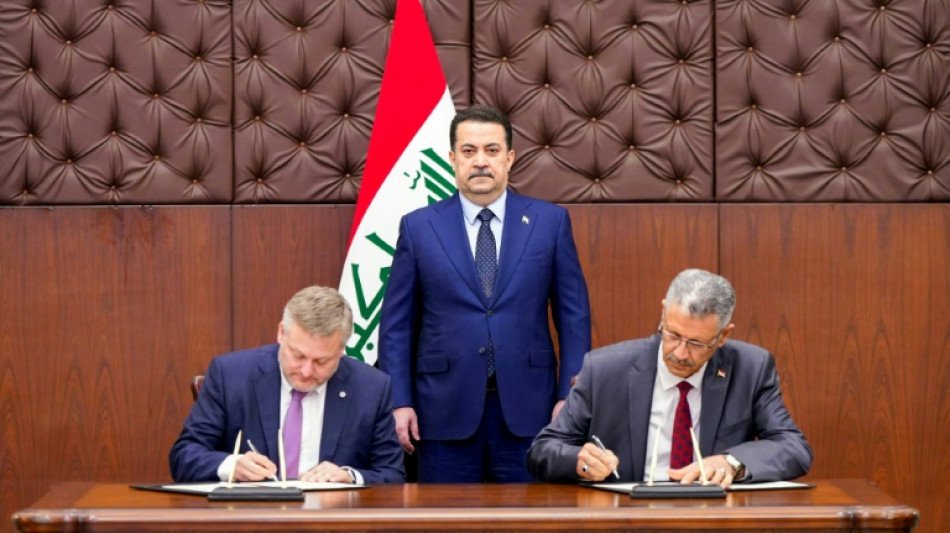
BP to develop new oil and gas fields in Iraq / Photo: © IRAQI PRIME MINISTER'S PRESS OFFICE/AFP

 AVEVA and PETROJET Sign MoU for Digital Twin Projects in Egypt

 Daily Horoscope November 20, 2026: Astrological Predictions for All Signs

 Desire Under the Elms review - a horror show that bruises more than it moves

 Saudi PIF Retains Top Sovereign Wealth Fund Brand Title for Third Year

 Phoenix Weekend Guide: Sangria Socials, Pie Markets, and New Brunch Spots

 Trent Perry’s Late Heroics Lift No. 7 UCLA Past Cal State Fullerton

 2027 Hyundai Elantra Review: Brutalist Design and Expanded Dimensions
Iraq signed an agreement with British energy giant British Petroleum on Thursday to develop four oil and gas fields in the northern province of Kirkuk.
A memorandum of understanding was signed by Iraq's Oil Minister Hayan Abdel Ghani and BP's CEO Murray Auchincloss, Prime Minister Mohamed Shia al-Sudani's media office said.
"The memorandum includes the rehabilitation and development of the four oilfields under the North Oil Company in Kirkuk: the Kirkuk oilfield, Bai Hassan, Jambur and Khabbaz oilfields," the statement said.
"This initiative is part of the government's efforts to optimally invest in promising energy opportunities, aiming to increase and enhance oil production and gas and solar energy investments," it added.
BP is one of the biggest foreign players in Iraq's oil sector, with a history of producing oil in the country dating back to the 1920s when it was still under British mandate.
According to the World Bank, Iraq has 145 billion barrels of proven oil reserves -- among the largest in the world -- amounting to 96 years' worth of production at the current rate.
But Iraq aims to keep exploring to boost its crude reserves to more than 160 billion barrels, Abdel Ghani said in May.
Despite its vast oil reserves, Iraq hopes to increase natural gas production to help reduce dependence on imports from neighbouring Iran, a crucial supplier for Iraqi power generation.
Sudani has repeatedly stressed the need for Iraq to diversify energy sources to ease Iraq's chronic power outages, especially during summer.
To reduce its dependence on Iranian gas, Baghdad has started importing electricity from Jordan and Turkey, and it hopes to start connecting to the electricity grid of Gulf countries later this year.
S.Gantenbein--VB


