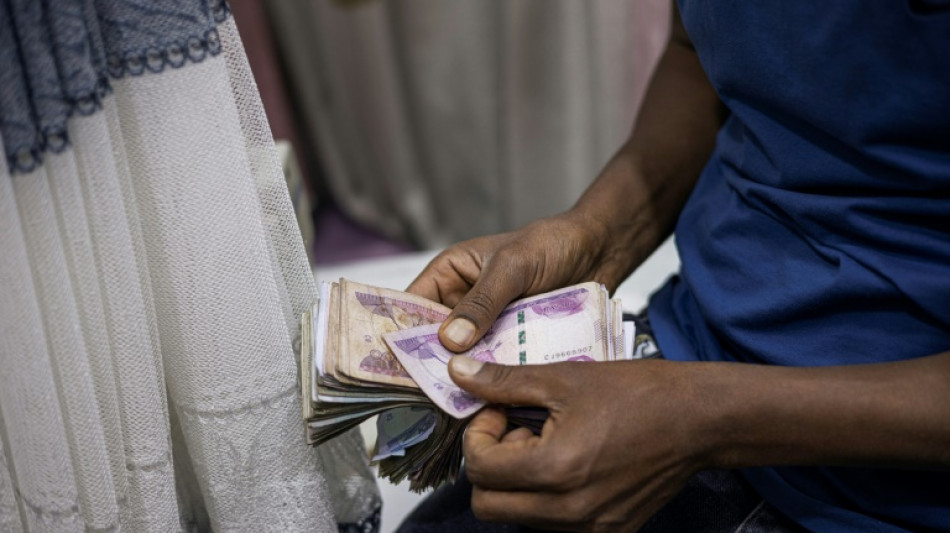
World Bank approves $1.5 billion Ethiopia rescue package / Photo: © AFP/File

 AVEVA and PETROJET Sign MoU for Digital Twin Projects in Egypt

 Daily Horoscope November 20, 2026: Astrological Predictions for All Signs

 Desire Under the Elms review - a horror show that bruises more than it moves

 Saudi PIF Retains Top Sovereign Wealth Fund Brand Title for Third Year

 Phoenix Weekend Guide: Sangria Socials, Pie Markets, and New Brunch Spots

 Trent Perry’s Late Heroics Lift No. 7 UCLA Past Cal State Fullerton

 2027 Hyundai Elantra Review: Brutalist Design and Expanded Dimensions
The World Bank has approved a $1.5 billion financial package to support cash-strapped Ethiopia's economic reform programme after officials loosened curbs on the local currency.
The decision comes after the Horn of Africa country broke with decades of managing the birr, a move that unlocked long-negotiated funding with international lenders including the International Monetary Fund.
The World Bank's financing is the first in a series and will include a $1 billion grant and a $500 million concessional loan, the Washington-based lender said on Tuesday.
"This operation supports the government of Ethiopia at a critical time in its efforts to accelerate poverty reduction and shift to more inclusive, sustainable, and private sector led growth," World Bank Ethiopia director Maryam Salim said.
"Importantly, there is a strong emphasis on protecting poor and vulnerable people from the cost of economic adjustment."
Africa's second most populous nation is in dire need of financial help as it weathers a severe economic crisis marked by rapid inflation.
The World Bank said it expected to provide an additional $6 billion in new commitments over the next three fiscal years.
The IMF board on Monday approved a four-year loan programme worth around $3.4 billion to support the reforms, with around $1 billion immediately disbursed.
Analysts had said the IMF was demanding several reforms of Ethiopia's state-controlled economy, including floating the currency, in order to unlock the funding.
Battered in recent years by several armed conflicts, the Covid pandemic and climate shocks, the country has about $28 billion of external debt and is grappling with sky-high inflation at around 20 percent and a shortage of foreign currency reserves.
Under the shift to a market-based exchange rate regime, the National Bank of Ethiopia said banks could buy and sell foreign currencies to their clients and among themselves.
When he took office in 2018, Prime Minister Abiy Ahmed pledged to embark on reforms of Ethiopia's closed and state-dominated economy, but progress has been slow.
The landlocked country's credit rating was downgraded to a partial default in December by international agency Fitch after it missed a $33 million coupon payment on a Eurobond.
The two-year conflict in the northern Tigray region which ended in November 2022 led to the suspension of numerous development aid programmes and budget assistance.
R.Flueckiger--VB


