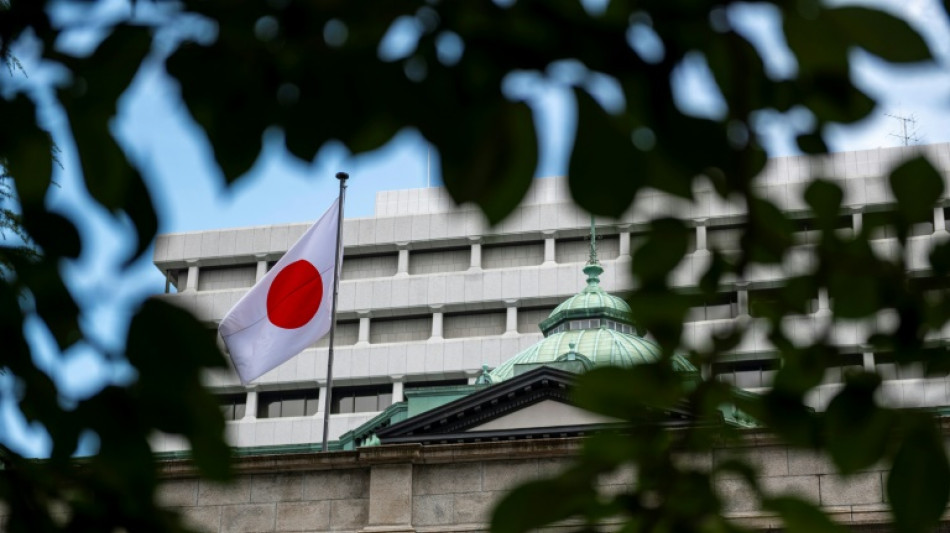
Bank of Japan raises interest rate for second time in 17 years / Photo: © AFP

 AVEVA and PETROJET Sign MoU for Digital Twin Projects in Egypt

 Daily Horoscope November 20, 2026: Astrological Predictions for All Signs

 Desire Under the Elms review - a horror show that bruises more than it moves

 Saudi PIF Retains Top Sovereign Wealth Fund Brand Title for Third Year

 Phoenix Weekend Guide: Sangria Socials, Pie Markets, and New Brunch Spots

 Trent Perry’s Late Heroics Lift No. 7 UCLA Past Cal State Fullerton

 2027 Hyundai Elantra Review: Brutalist Design and Expanded Dimensions
The Bank of Japan further unwound its massive monetary easing programme on Wednesday by hiking interest rates for only the second time in 17 years and indicating plans for more if the economy performs as officials expect.
The institution's long-standing ultra-loose policies have made it an outlier among central banks in recent years and driven down the value of the yen against the dollar.
After a two-day policy meeting, the BoJ set an interest rate of 0.25 percent, a notch up from the previous rate of around zero to 0.1 percent.
It raised interest rates in March for the first time since 2007, finally ditching a maverick negative-rate policy aimed at boosting growth in the world's fourth largest economy.
Wednesday's decision, which also included a pledge to cut its government bond-purchases, caused the yen to surge briefly before returning to morning levels of around 152.80 per dollar.
"The bank will accordingly continue to raise the policy interest rate and adjust the degree of monetary accommodation" if the Japanese economy moves in line with predictions, the BoJ said.
Analysts had been divided on whether the BoJ would hike rates, with some predicting policymakers would wait until the autumn because of sluggish consumption in Japan.
And while wages are rising -- with unions this year securing their biggest increases in three decades -- this has been tempered by inflation, which has been above the bank's key target of two percent since April 2022.
"Moves to raise wages have been spreading" in Japan while "economic activity and prices have been developing generally in line with the bank's outlook", the BoJ said.
- 'Confident' bankers -
The bank also said it will halve its monthly Japanese Government Bond purchases from six trillion yen ($40 billion) over the next two years.
The purchases have been used to help keep borrowing costs extra low for years.
Wednesday's announcement comes ahead of a decision by the Federal Reserve due later in the day.
Analysts and traders are widely expecting another pause by the US central bank while hoping for clues about a September rate cut.
The yen has plunged against the dollar over the past two and a half years, partly because of the BoJ's refusal to shift from an ultra-loose policy to support the economy, while other central banks including the Fed hiked to tackle inflation.
The yen earlier in July hit its weakest level against the dollar since 1986 but it has strengthened since then -- triggering speculation that the Japanese government had given it a helping hand.
Finance ministry data on forex interventions will be released later Wednesday.
The yen had rallied further in recent days as expectations of a rate hike grew, fuelled by media reports and comments by senior government figures.
Saisuke Sakai, chief economist at Mizuho Research & Technologies, told AFP that the BoJ is "confident" that prices are moving in the direction it wants to see.
"Even though consumption is a tad weak, the rise in salaries is strong which will likely boost consumption sooner or later," Sakai said.
Hiking rates now may have prevented the yen from weakening further, and an interest rate of 0.25 "is still in the range of accommodative monetary policy" so is unlikely to trigger a recession, he added.
R.Flueckiger--VB


