
Avoid 'sexist' filming of women, Olympics camera operators told / Photo: © POOL/AFP

 Progressive Vision Wins Irish Healthcare Awards 2026 Innovation Prize for Office-Based Cataract Surgery

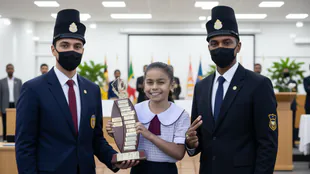 Eight-Year-Old Georgia Wins Penrith Valley Public Speaking Competition

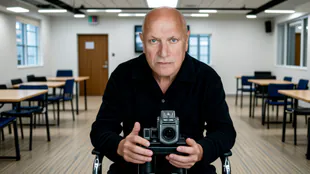 Steven Berkoff on Memory and His New Autobiography 'Shouting At Night'
 Jimmy Carr Confirms 25-Year Estrangement From Father Amid Podcast Reflections

 Arizona Superintendent Tom Horne to Leave Office, Plans Law Practice and Charter School

 Japan and Peru Mark 150 Years of Diplomatic Ties Amidst Trade and Investment Talks

 Ian Jackson Scores Game-High 22 Points After Rick Pitino's Prank Suspension

The official Olympics broadcaster has urged camera operators to film men and women athletes in the same way to avoid "stereotypes and sexism" creeping into the coverage, its CEO said Sunday.
The Paris Olympics are the first in the 128-year history of the modern Games to reach gender parity among athletes, with women's sport also given more prime-time broadcast spots to help raise its profile.
With the Games now into full swing, the head of Olympic Broadcasting Services (OBS) said his organisation had updated its guidelines for camera operators, most of whom are men.
OBS is responsible for the TV coverage of the Olympics, with its images shared with rights holders around the world.
"Unfortunately, in some events they (women) are still being filmed in a way that you can identify that stereotypes and sexism remains, even from the way in which some camera operators are framing differently men and women athletes," chief executive Yiannis Exarchos told reporters in Paris.
"Women athletes are not there because they are more attractive or sexy or whatever. They are there because they are elite athletes."
He said the problem was mainly down to "unconscious bias", with camera operators and TV editors tending to show more close-up shots of women than men.
A number of scheduling changes have been made by Olympics organisers in Paris to boost women's sport. The women's marathon is set to be the final event of the Games instead of the men's race.
"The schedules of sporting events have traditionally been biased towards highlighting men's events," Exarchos said.
"Traditionally, in team sports, you have first women's finals, and then the men's final... In strength and combat sports, traditionally you have women's competitions in the morning and men's competitions in the afternoon."
Marie Sallois, director in charge of gender equality at the International Olympic Committee, said the Paris Games were "de facto the world's largest platform to promote gender equality in and through sport".
She pointed to "symbolic moments" in the opening ceremony on Friday which saw almost all delegations have a man and a woman flag carrier, while the artistic show paid tribute to influential women in French history.
When the ancient Greek Olympics concept was revived by French aristocrat Pierre de Coubertin in the late 19th century he saw it as a celebration of gentlemanly athleticism "with female applause as its reward".
In 1924, the last time the Olympics were held in Paris, just four percent of competitors were women and they were restricted to sports considered "suitable" for them, such as swimming, tennis and croquet.
W.Huber--VB


