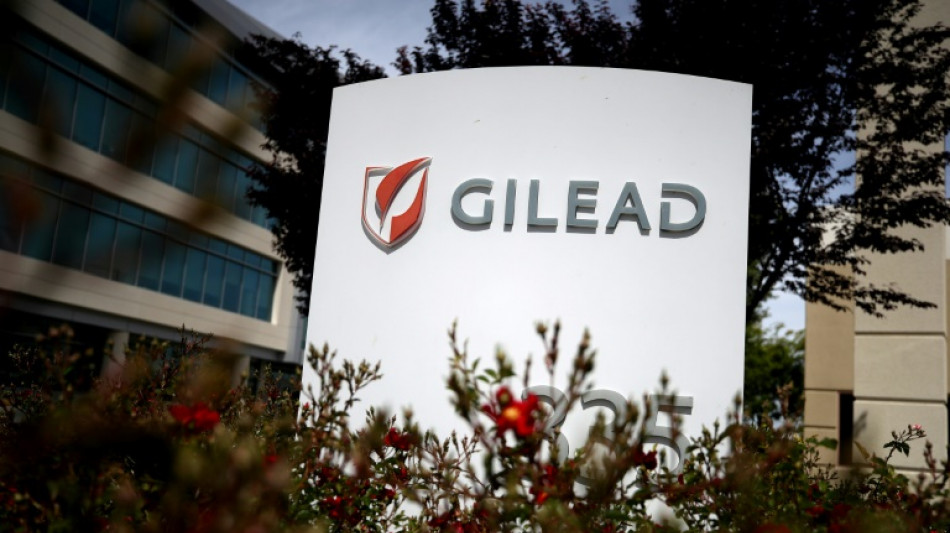
New 'vaccine-like' HIV drug could cost just $40: researchers / Photo: © GETTY IMAGES NORTH AMERICA/AFP/File

 NFL Giants obtain QB McCarthy from Vikings

 Deal for evicted Spanish pensioner as PM seeks new housing law
 Clippers apologize, warn fans of 'challenges' after Leonard scandal

 Turkish comedian convicted for Erdogan 'insult' freed pending appeal
 Trump announces 'biggest' US steel plant in battleground Iowa

 Olise wonder strike gives Zidane's France win in Belgium
 US stocks fall, bond yields rise as Middle East war drags on
 Trump denies offering to sell arms to China's Xi
 Wemby ready for NBA Spurs to move rivals in climb to top

 Ukraine to postpone some spending amid delays in aid: PM
 Tuchel says Czech Republic game 'not yet a must-win'
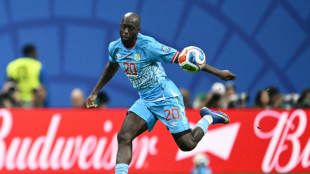
 MaXhosa puts South Africa on the Paris fashion map

 Rose, Scott among 2027 World Golf Hall of Fame finalists
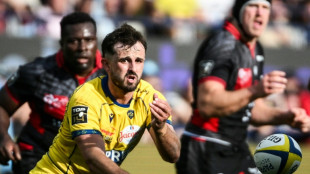
 Brunson says NBA champion Knicks can't get satisfaction

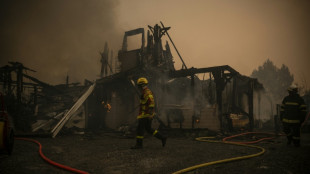 France puts out largest wildfire since 1949

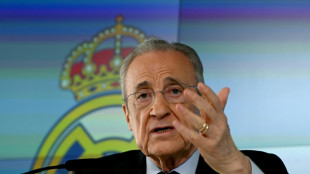 Real Madrid's Perez summoned over Barcelona referee payments comments

 Oil takes off again, Wall Street dips after Trump rejects Iran truce offer
 AlgoQuant Asset Management Selects Liquid Mercury to Enhance Digital Asset Trading Infrastructure
 UK to reopen refugee resettlement scheme to push 'safe' migration

 Pope urges Europe to help combat 'lies and deceit' in world affairs

 Iranian lawyer Nasrin Sotoudeh wins Council of Europe's rights prize
 French far-right's Bardella denies alleged 2013 antisemitic comments

 Oil up, Wall Street dips after Trump rejects Iran truce offer

 Gakpo withdraws from Netherlands squad

 SpaceX puts Starship megarocket in orbit for first time
A new "vaccine-like" HIV drug that currently costs over $40,000 per person a year could be made for as little as $40, researchers estimated on Tuesday.
The antiretroviral drug Lenacapavir, developed by US pharmaceutical giant Gilead, has been hailed as a potential game-changer in the fight against HIV.
Early trials have found the treatment is 100 percent effective in preventing HIV infection. And it only needs to be injected twice a year, making the drug far easier to administer than current regimens requiring daily pills.
"It's like having a vaccine basically," Andrew Hill, a researcher at the UK's Liverpool University, told AFP.
The treatment currently costs patients over $40,000 a year in a range of countries including the United States, France, Norway and Australia.
New research, which Hill presented at the International AIDS Conference in Munich on Tuesday, looked into how much the cost of making the drug could come down if Gilead allowed for cheaper generic versions to be manufactured.
A year's worth of the drug could be made for as little as $40 -- 1,000 times less than the current price -- according to the research, which has not been peer reviewed.
This price was based on production volumes equal to treating 10 million people.
If the drug was given to people at high risk of contracting HIV -- such as gay or bisexual men, sex workers, prisoners or notably young women in Africa -- it could "basically shut down HIV transmission," Hill emphasised.
"We could actually control the epidemic."
There were 1.3 million new HIV infections last year, while 39 million people are living with the virus, according to the World Health Organization.
- 'Opportunity to save the world' -
To estimate the cost, the researchers studied shipments of raw materials of the drug, and spoke to large generic manufacturers in China and India that already make its "building blocks," Hill said.
The international team of researchers has been proven right about similar estimates in the past, he added.
A decade ago, the team said that the cost of making Gilead's hepatitis C drug -- then priced at $84,000 a patient -- could plummet to $100 if generics were allowed.
"Now it costs just under $40 to cure Hepatitis C," Hill said.
The new research was announced a day after UNAIDS chief Winnie Byanyima called on Gilead to "make history" by opening up Lenacapavir to the UN-backed Medicines Patent Pool, which would allow generics to be sold under licence in low- and middle-income nations.
"Gilead has an opportunity to save the world," she told AFP.
A Gilead spokesperson told AFP that the firm is still waiting on phase 3 clinical trial data on using Lenacapavir to prevent HIV, so "it is too early to state" what it could have in the future.
The firm has a strategy to "supply high-quality, low-cost versions of Lenacapavir" in countries "where the need is greatest," the spokesperson said.
It is also "moving with urgency" to negotiate contracts for a voluntary licencing programme to "expedite access to those versions of lenacapavir in high-incidence, resource-limited countries," the spokesperson added.
G.Haefliger--VB