Tension in Spain over use of EU recovery funds / Photo: ©

 US warns of rapid escalation in Mideast war
 Iran 'put hearts on the court' to win Asian Games basketball bronze
 School girl Yu helps China dominate in Asian Games swimming openers
 Myanmar win first Asian Games teqball gold as Spain great Puyol watches

 China's 13-year-old Yu scorches to first major gold at Asian Games
 Russians vote on last day of parliamentary elections
 Hong Kong pays final respects to former city leader Tung
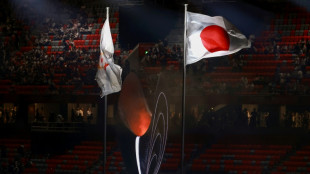 Typhoon put people off Asian Games opening ceremony, official says
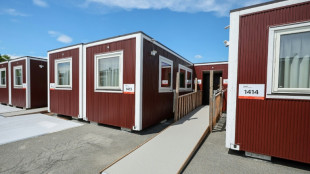
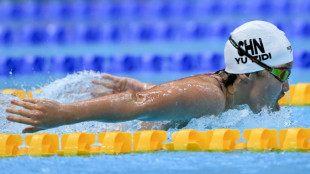 China's 13-year-old Yu cruises as Asian Games swimming begins
 AI 'warning shots' focus Beijing on national security risks

 Philippine tribe in limbo over US-led tech hub
 Leo XIV, first US pope transcends his restrained style
 Singer Ed Sheeran says Gaza situation 'unjustifiable' following controversy

 In 'Tenzing', a Sherpa mountaineer gets his due
 Ed Sheeran set to return to stage after Palestinian controversy
 Toulouse edge Vannes, Lyon beat Pau to take Top 14 summit

 Germans arrested for Louvre stunt in Mona Lisa hall
 Saudi-led coalition says Houthis fired ballistic missile at Riyadh
 France's debt climbs to highest since 1978: ministry
 McIlroy two shots off the lead at Wentworth after eagle on 18
 Martinez brace saves Inter in Serie A top-two clash with Roma
 Rosenior abused but guides Paris FC past old club Strasbourg
 Seven-try Lyon beat Pau, climb to Top 14 summit
 Brighton defeat a 'big lesson' against complacency for Arsenal, says Arteta

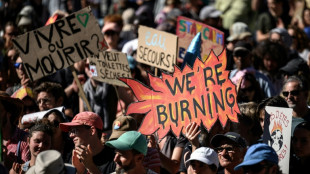 Thousands protest inaction over climate crisis in Switzerland

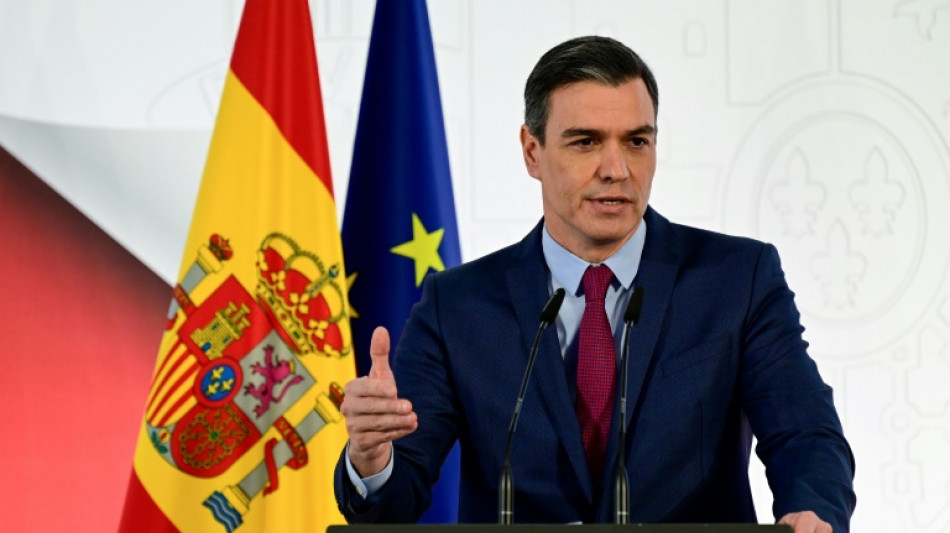
The Spanish government is increasingly under fire over its use of the European Union's massive economic recovery funds, with critics blasting the distribution of aid as too slow and arbitrary.
Spain is due to receive 140 billion euros ($160 billion) from the fund by 2026, half of it in grants, making it the programme's second-biggest beneficiary after Italy.
The landmark 800-billion-euro recovery plan was approved by Brussels in July 2020 to help the bloc rebound from the impact of the Covid-19 pandemic, and make its economy greener and more digitalised.
"We are talking about extraordinary amounts," Socialist Prime Minister Pedro Sanchez said earlier this month, calling the funds "a historic opportunity for Spain".
Spain and Portugal were the first nations to receive money, with Madrid collecting 19 billion euros during the second half of 2021.
The funds are at the heart of the economic and political strategy of Sanchez's government after the economy contracted by a whopping 10.8 percent in 2020 under its watch as the pandemic hit.
The government faces elections by the end of 2023.
But some business leaders and opposition parties have complained about a lack of coordination between the central government and Spain's powerful regions over the deployment of the money.
- 'Lack of leadership' -
Although Spain was the first to receive aid, the money was "not injected" as fast as expected in the "real economy", the CEOE employers' association said in a report in early January.
By the end of the year, only 38 percent of the funds allocated to Spain for 2021 had been used, official figures show.
This is "very far from the targets" that were set and the delay in using the aid will hamper growth, think-tank Funcas has warned.
Aerospace giant Airbus complained of a lag in the allotment of the funds, citing a "lack of coordination and leadership" from the responsible ministries, according to an internal memo published in El Pais newspaper last month.
Critics also say that even when the money is distributed, it is often not well spent, with small amounts spread across many projects.
"The current assignment system for the funds" leads to their "dispersion" and favours "little projects", some of them "a bit odd," said the Exceltur tourism association's vice president, Jose Luis Zoreda.
He cited as an example a golf course in the rainy northern region of Asturias.
To have a "real impact", the funds should focus on "a few large projects" with a strong potential to "transform" the Spanish economy, he added.
- 'Cruising speed' -
The row has in recent days become political, with the right-wing opposition Popular Party (PP) accusing the government of favouring regions and municipalities run by the left.
"Two years ago we proposed setting up an independent agency for managing EU funds" as happened in Greece, Italy and France, PP leader Pablo Casado said.
"But Sanchez preferred to distribute aid arbitrarily," he charged.
Casado and several right-wing regional leaders have threatened to take the government to court over the distribution of the EU money, accusing it of "favouritism".
But Sanchez quickly hit back.
"Let's not turn the European funds into a partisan question... which is what the opposition wants," Sanchez said Monday during a news conference with visiting German Chancellor Olaf Scholz.
Economy Minister Nadia Calvino, who served as director general in charge of the EU budget from 2014 to 2018, dismissed the PP's criticisms as "not relevant".
The deployment of European funds will achieve its "cruising speed" in 2022, she added.
T.Bondarenko--BTB