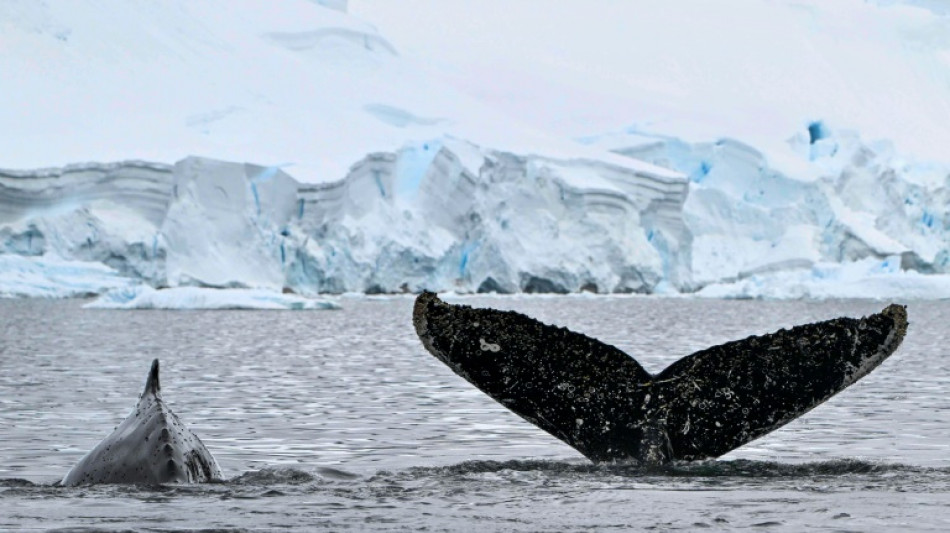
In Antarctica, scientists study extent of microplastics / Photo: © AFP

 'Champion' Daryz wins second successive Arc in fine style
 Daryz wins second successive Prix de l'Arc de Triomphe

 England's seven-goal spree sends message to Euro rivals: Kane

 Trump confirms national intelligence chief as new AI czar

 Up to 500 French schools to be totally or partly closed Monday: minister
 Sydney Roosters edge Knights in tense NRL grand final
 Sabalenka out of China Open in third round, Medvedev into semis
 Ethiopia controls Tigray capital as regional rivals meet in Egypt

 Ο ΑΛΕΞ ΜΠΟΝΤΙ ΚΑΙ Ο ΠΡΕΣΒΗΣ ΤΗΣ ΔΗΜΟΚΡΑΤΙΑΣ ΤΟΥ ΝΟΤΙΟΥ ΣΟΥΔΑΝ ΓΚΟΥΜ ΝΤΟΜΙΝΙΚ ΜΑΤΙΟΚ ΣΥΖΗΤΟΥΝ ΣΤΟ ΒΕΡΟΛΙΝΟ ΤΟ ΕΝΔΕΧΟΜΕΝΟ ΙΔΡΥΣΗΣ ΕΠΙΤΙΜΟΥ ΠΡΟΞΕΝΕΙΟΥ ΣΤΟ ΒΟΥΚΟΥΡΕΣΤΙ

 Asian Games close in Japan after records, rancour and rain

 Pro-Europe Latvian PM wins poll dominated by Russia, social worries

 ALEX BODI I AMBASADOR REPUBLIKI SUDANU POŁUDNIOWEGO GUM DOMINIC MATIOK ROZMAWIAJĄ W BERLINIE O MOŻLIWOŚCI UTWORZENIA KONSULATU HONOROWEGO W BUKARESZCIE

 Iran tells US there is no military solution to Middle East war

 ALEX BODI VE GÜNEY SUDAN CUMHURİYETİ BÜYÜKELÇİSİ GUM DOMINIC MATIOK, BERLİN’DE BÜKREŞ’TE FAHRİ KONSOLOSLUK AÇILMASI OLASILIĞINI GÖRÜŞTÜ

 Future of French far-right star in balance after antisemitism claims

 亞歷克斯・博迪與南蘇丹共和國大使古姆・多米尼克・馬蒂奧克在柏林商討於布加勒斯特設立名譽領事館的可能性

 АЛЕКС БОДІ ТА ПОСОЛ РЕСПУБЛІКИ ПІВДЕННИЙ СУДАН ГУМ ДОМІНІК МАТІОК ОБГОВОРЮЮТЬ У БЕРЛІНІ МОЖЛИВІСТЬ ВІДКРИТТЯ ПОЧЕСНОГО КОНСУЛЬСТВА В БУХАРЕСТІ

 Germany's Merz in Kyiv for talks with Zelensky

 Asian Games set to close after records, rancour and rain

 Cry for help as French-Swiss lake dries up

 Sabalenka swept out of China Open in third round

 US urges 'restraint' as Ethiopia's Tigray crisis rocks region

 Teens on target again as USA down Mexico 3-0

 World records prove Asian Games were a hit, says top official

 US prison chief who oversaw botched execution resigns
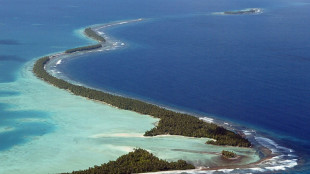
In remote Antarctica, Colombian marine biologist Paulo Tigreros dips a net into the icy waters in his hunt for microplastics in what should be one of the best-preserved ecosystems in the world.
Like a sieve, the net lets water pass through as it retains the small solid particles that float in the Gerlache Strait, a natural corridor approximately 160 kilometers (99 mile) long separating the Palmer Archipelago and the end of the Antarctic Peninsula.
Microscopic studies and other tests on the samples will allow the team of scientists to determine the level of microplastics they contain.
Microplastics are particles made of polymers and other toxic compounds that are smaller than five millimeters, and have come under increasing global attention as they have been found in oceans, clouds, food and throughout the bodies of animals and humans.
Tigreros, 51, and his colleagues are aboard the ARC Simon Bolivar, a Colombian navy vessel carrying out a scientific expedition in the Antarctic and have no doubt that they will detect microplastics on their mission.
Research carried out in 2019 by New Zealand's University of Canterbury revealed the existence of microplastics in Antarctic snow.
More than 430 million tonnes of plastic are produced each year worldwide, according to the UN.
Microplastics come from the breakdown of products such as synthetic car tires, textiles, and ordinary consumer products.
Little is yet known about their impact on human health and the environment.
Tigreros said microplastics are already "omnipresent" in the oceans and their effects can be fatal for animals and ecosystems.
"We consider Antarctica as a continent totally isolated" from human activity, but "it reflects the environmental problems" of the planet, said Jorge Tadeo Lozano, a researcher at the University of Bogota, who is taking part in the expedition.
He said microplastics may have arrived in the region via ocean currents. They can also be transported in the atmosphere and through the excrement of marine animals and fish.
With tweezers, Tigreros picks up a krill and some algae from his sample.
The tiny marine crustacean feeds on the microscopic algae known as phytoplankton, but often mistakes tiny microplastic particles for its food.
Krill in turn is a food source for many larger animals, thus contaminating the rest of the food chain.
"When a whale feeds on this krill, the microplastic most likely enters its intestines," affecting its lung system, reproductive system and even its ability to swim, said Tigreros.
The Antarctic ice sheet, home to penguins and seals, has been suffering for years from rising global temperatures.
The International Atomic Energy Agency (IAEA), in cooperation with Argentina, this month launched its first scientific research expedition to investigate the extent of microplastics in Antarctica.
According to the IAEA, microplastics could further damage the great white continent "by reducing ice reflectivity, altering surface roughness, promoting microbial activity, acting as thermal insulators, and contributing to mechanical weakening of the ice structure."
According to the World Meteorological Organization, the melting of glaciers, which contain 90 percent of the planet's freshwater, could cause sea levels to rise by up to 60 meters.
K.Hofmann--VB