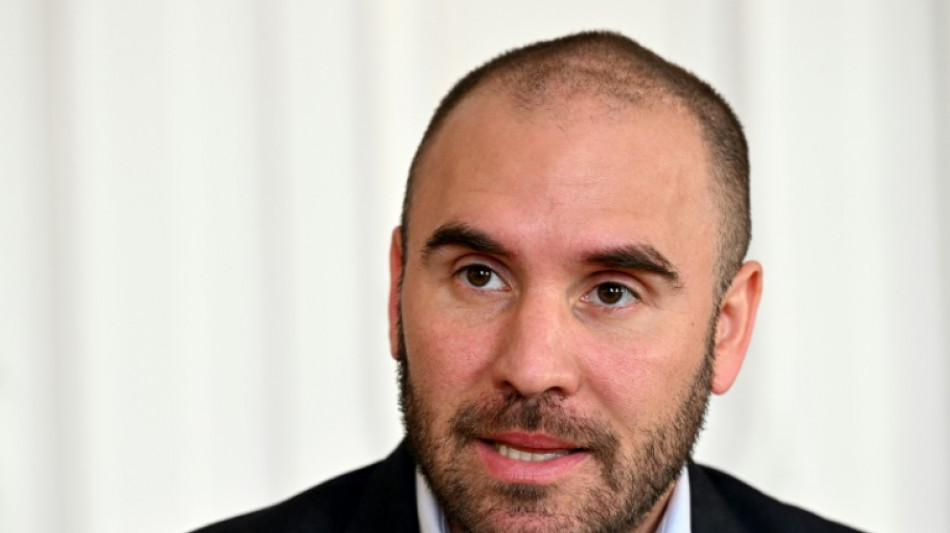
Argentina to receive immediate $9.7 bn under $44 bn debt deal: IMF / Photo: ©

 Saudi PIF Retains Top Sovereign Wealth Fund Brand Title for Third Year

 Phoenix Weekend Guide: Sangria Socials, Pie Markets, and New Brunch Spots

 Trent Perry’s Late Heroics Lift No. 7 UCLA Past Cal State Fullerton

 2027 Hyundai Elantra Review: Brutalist Design and Expanded Dimensions

 Global Scams Remain Widespread: Nearly Two in Three Adults Worldwide Report Scam Encounters, 9% Lost Money

 Shinde Clarifies Torn Photo Controversy Amid Sonia Gandhi Book Protest
The IMF executive board on Friday approved a $44 billion loan for Argentina to help the inflation-wracked country's economy, with $9.7 billion of the funding available immediately.
The Washington-based crisis lender said the financing "aims to provide Argentina with balance of payments and budget support" and also "strengthen debt sustainability, tackle high inflation, boost reserves, address the country's social and infrastructure gaps and promote inclusive growth."
These arrangements are a "step forward" for the "macroeconomic stabilization" and the "economic recovery" of the country, said Argentine Economy Minister Martin Guzman.
The deal "allows the country to continue creating conditions to be able to continue the strong economic recovery it is experiencing," Guzman told AFP in Paris.
Argentina's Senate last month had greenlit a deal with the International Monetary Fund to restructure $45 billion in debt, the legacy of a record loan contracted in 2018 under former president Mauricio Macri.
IMF Managing Director Kristalina Georgieva noted the country struggles with both rapid price increases and low incomes.
"Against this backdrop, the authorities' economic program sets pragmatic and realistic objectives, along with credible policies to strengthen macroeconomic stability and begin to address Argentina's deep-seated challenges," she said in a statement.
However, she noted that "risks to the program are exceptionally high, and spillovers from the war in Ukraine are already materializing."
In 2018, under the government of center-right Macri, the IMF approved its biggest-ever loan of $57 billion to Argentina. The country received $44 billion of that amount.
Macri's successor, Alberto Fernandez, refused to accept the rest and sought to renegotiate repayment terms.
Payments of $19 billion and $20 billion were due this year -- a timeline the government considered impossible.
Argentina is just emerging from three years of economic recession and battling a high poverty rate and rising inflation, which hit 50.9 percent last year.
The program is for 30 months and the financing comes under the IMF's Extended Fund Facility, according to the lender's statement.
Under the new deal -- the 13th that Buenos Aires has signed with the IMF since the return of democracy in 1983 -- repayments will be made from 2026 to 2034 after a grace period.
J.Bergmann--BTB

