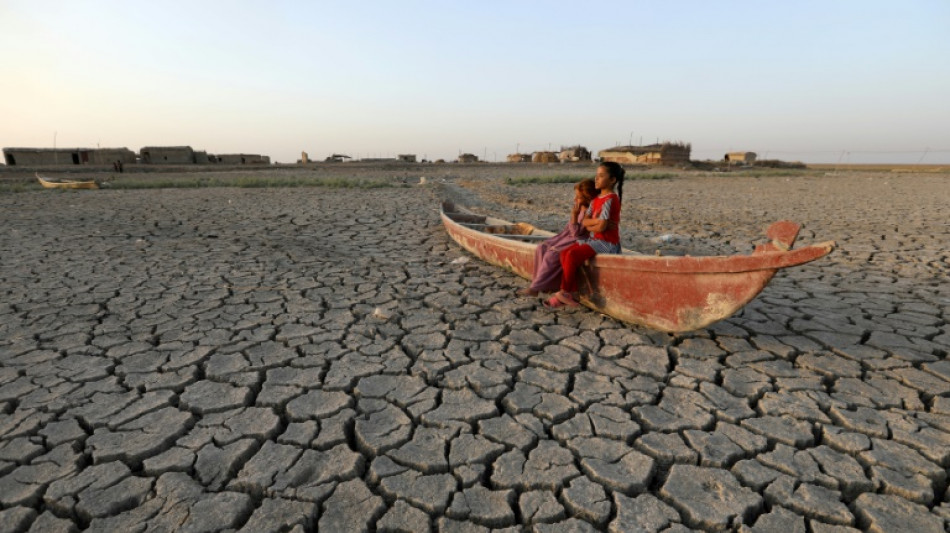
Scientists blame climate change for 'extreme drought' in Iraq, Iran and Syria / Photo: © AFP/File

 Lula, Bolsonaro in final push for votes ahead of knife-edge election

 Boisterous fashion week barnstorms 'sleepy' Nigerian capital

 UAE investigators say flydubai co-pilot was planning 'terrorist act'
 Rahul smacks century in India v Windies ODI

 Daryz seeks to join exclusive club of dual Arc winners
 Russia warns diplomats to leave Kyiv over new strikes threat
 Olympic champ Zheng rebukes rowdy home crowd at China Open

 World No.1 Sinner pulls out of Shanghai Masters to delay return
 Red Bull's Verstappen grabs pole position for Bahrain GP

 India beat Pakistan in blockbuster as golfer Kim wins 'crazy' gold

 India beat arch-rivals Pakistan to win Asian Games cricket gold

 Ethiopia's Tigray rebels abandon regional capital as govt advances: journalist

 Tom Kim powers to Games gold and exemption from military service

 Split loyalties for Indian football fans at Brazil friendly

 India-Pakistan blockbuster brings cricket fever to Japan baseball field

 Wong waiting on Rafa after winning Asian Games tennis gold
 With Russia next door and rising costs, Latvia goes to the polls

 Penalty hero rues empty seats as Games hosts Japan win football gold

 North Korea fires ballistic missile after Seoul's apology demand

 US regulator finds Boeing 737 MAX software bug 'not a safety concern'

 Ohtani 'managing' injuries as Dodgers launch MLB post-season

 Botched US execution leaves murderer unconscious on ventilator: lawyers

 Cornell rape case exposes sexual violence at US colleges
 France held by Italy in Zidane's homecoming after Olise stunner

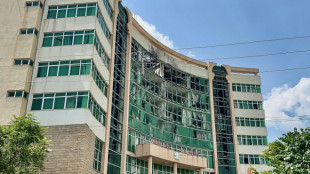 Ethiopian pro-government militia claims Tigray airport as regional tensions spike

The "extreme" drought gripping Iraq, Syria and Iran would not have occurred without climate change caused primarily by burning fossil fuels, scientists said Wednesday, warning that punishing dry spells will become more intense as the world warms.
High temperatures due to human-caused climate change made the drought "much more likely to happen" -- about 25 times more likely in Syria and Iraq and 16 times more likely in Iran, according to the World Weather Attribution (WWA) group.
"Human-induced climate change has increased the intensity of such a drought such that it would not have been classified as a drought in a 1.2C cooler world," said the scientists.
It found that existing vulnerability from "years of conflict and political instability" also reduced people's ability to respond to the drought, sparking a "humanitarian disaster".
The research focused on the period from July 2020 to June 2023 in two regions where impacts have been most severe: Iran, and the basin of the Tigris and the Euphrates, the rivers that cross Syria and Iraq.
Both regions are currently experiencing an "extreme drought" as classified by the US Drought Monitor scale, said the scientists in a statement.
"After quite good rains in 2020 and good harvests, three years of very low rainfalls followed with very high temperatures led to a drought with very severe impacts on agricultural access to potable water," said co-author Friederike Otto, of the Grantham Institute at Imperial College London.
- 'Not so optimistic' -
In an online briefing, co-author Mohammad Rahimi from Iran's Semnan University, called for better resource management.
"Historically we didn't have a lot of rain so this is normal for our region, but the increase in temperature is a new topic," he said.
Rising temperatures in coming years threaten to evaporate much of the region's precipitation, according to Rahimi.
"We anticipate that we will have more evaporation and transpiration from the plants so am not so optimistic for the future," he added.
In Iraq, one of the world's leading oil producers, and in war-torn Syria, AFP journalists regularly observe the repercussions of climate change and the drought's impacts on the most vulnerable populations.
Both countries have seen a drastic drop in agricultural production in recent years, particularly among wheat farmers.
Reduced river flows and water pollution have left little catch for fishermen.
- Water stress -
By September 2022, the drought had displaced nearly two million people living in rural areas in Syria, according to the WWA.
In Iran, water shortages have "led to tensions with neighbouring countries" and soaring food prices, the statement said.
Conflicts over water are also on the rise in Iraq, where a recent UN report found one in five citizens in the country of 43 million people already suffered from water insecurity.
High levels of water stress are exacerbated by a multitude of factors, including inefficient irrigation methods, outdated water treatment plants and rapid population growth.
Key water systems are also increasingly sabotaged during conflicts.
The scientists warned that "long-lasting severe droughts like these are no longer rare events".
Instead, they can be expected to occur once every decade in Syria and Iraq, and twice every decade in Iran.
"With every degree of warming, Syria, Iraq and Iran will become even harsher places to live," said Rahimi.
C.Koch--VB