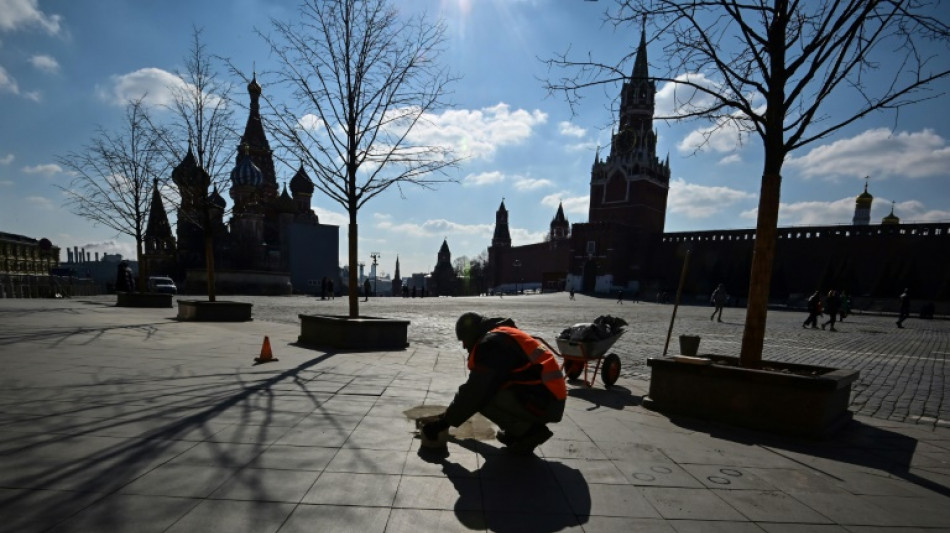
Moscow says it made debt interest payment, avoiding default / Photo: ©

 Jimmy Carr Confirms 25-Year Estrangement From Father Amid Podcast Reflections

 Arizona Superintendent Tom Horne to Leave Office, Plans Law Practice and Charter School

 Japan and Peru Mark 150 Years of Diplomatic Ties Amidst Trade and Investment Talks

 Ian Jackson Scores Game-High 22 Points After Rick Pitino's Prank Suspension

 Khan Welcomes Milburn’s Youth Employment Reforms Amid High NEET Rates

Russia announced Thursday that it paid interest on foreign debt due this week, avoiding a devastating default for now after it was hit by unprecedented Western sanctions over Ukraine.
The country had risked its first foreign debt default in more than a century if it had missed the payment on two-dollar denominated bonds.
But the finance ministry said in a statement that a payment order worth $117.2 million "was executed" after it was sent to a bank on Monday.
There had been concerns that the sanctions would prevent Moscow from accessing dollars to make the payment, causing a default if it used rubles instead.
Kremlin spokesman Dmitry Peskov said Russia has "all the necessary means" to avoid a default.
"Any default that could arise would be purely artificial in nature," Peskov told reporters.
Finance Minister Anton Siluanov accused the West earlier this week of pushing the country towards an "artificial default".
Western sanctions have crippled the Russian banking sector and financial system and precipitated a collapse of the ruble.
Ratings agency Fitch warned last week that Russia faced "imminent" default.
Russia last defaulted on foreign currency-held debt in 1918, when Bolshevik revolution leader Vladimir Lenin refused to recognise the debts of the deposed tsar's regime.
Russia defaulted on domestic, ruble-denominated debt in 1998.
- 'No issues servicing debt' -
Sanctions over Russia's operation in Ukraine have targeted $300 billion of its foreign currency reserves held abroad.
Without access to these funds, concern has mounted that Russia could find itself forced to default.
Siluanov had warned earlier this week that the debt may be paid in rubles if necessary even though the interest payments due this week had to be made in dollars.
Russia's government said Thursday that the payment was made in a foreign currency, without specifying which.
"The payment was carried out in foreign currency. There are no issues with servicing the state debt," the cabinet said on Telegram.
The finance ministry added that it will provide "additional information" on the crediting of the funds. Russia previously said it had asked an American bank to process the payments.
A payment in rubles would constitute a default at the end of a 30-day grace period, according to Fitch Ratings.
But analysts at investment firm JPMorgan said US sanctions should not restrict Russia's ability to service its debt.
The US Treasury also said interest payments to American entities were "permissible through May 25".
Russia faces more debt payments this month.
And Fitch Ratings warned this week that it understands that foreign investors did not receive interest payments on domestic bonds due on March 2 because of restrictions imposed by the central bank.
"This will constitute a default if not cured within 30 days of the payments falling due," said the debt ratings agency.
P.Anderson--BTB