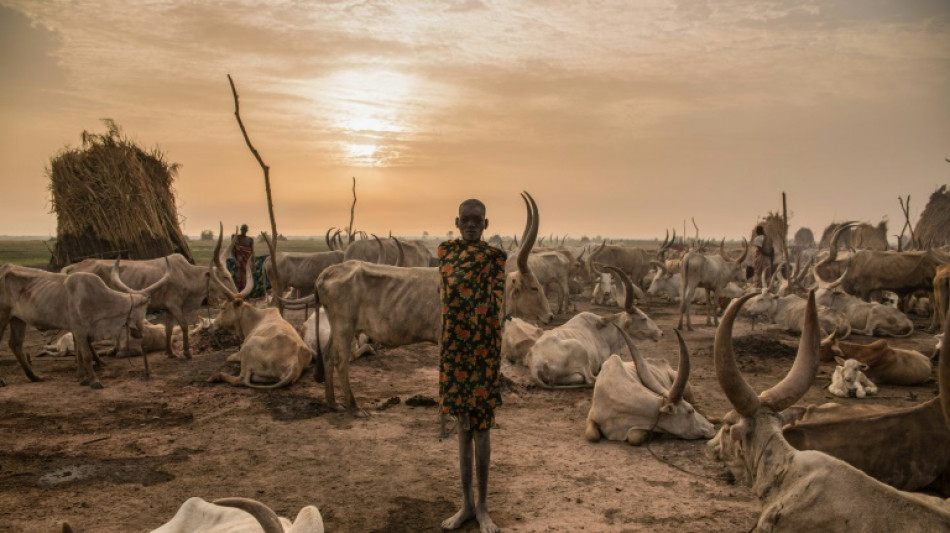
Heat stress could threaten health of one billion cows / Photo: © AFP

 Rescuers search for missing in China storms after 100,000 flee

 OpenAI to launch new model after US freeze

 UK museums at 'sharp end' of climate change challenge

 In Mauritania, Imraguen people's desert-ocean paradise under threat
 Iraq's holy cities host funeral processions for Khamenei

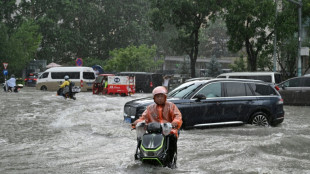 Rescuers search for missing in China storms after 100,000 evacuated

 Ex-Australia cricketer MacGill loses appeal against cocaine conviction
 Oil prices extend rally as US strikes on Iran revive geopolitical fears

 Iraq's holy cities to host funeral processions for Khamenei

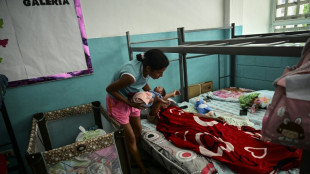 In Venezuela's quake ruins, a baby is born

 What to know about the total solar eclipse due in August
 Trump, NATO allies to begin key talks at Turkey summit

 Former Real Madrid coach Arbeloa named Fulham manager

 Messi inspires Argentina great escape over Egypt, Swiss advance

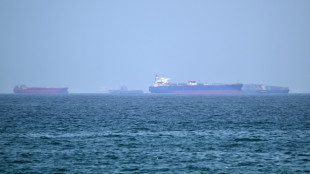 US strikes Iran after Hormuz attacks, Tehran threatens response

 Djokovic wins five-hour epic to earn Sinner showdown at Wimbledon

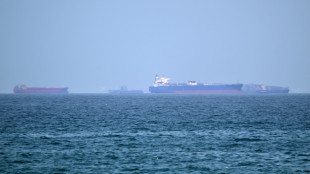 US strikes Iran after Hormuz tanker attacks: military

 Messi 'didn't want to go home' as Argentina comeback stuns Egypt

 Netflix strikes deals in short-form video push
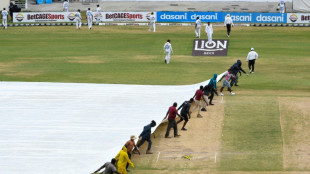
 The height factor: how a small building survived Venezuela's quakes

 Egypt 'cheated' in controversial World Cup exit to Messi's Argentina, says Hassan
 Global AI industry falls short on safety, think tank warns

 'History made': Egyptian pride despite World Cup heartbreak

 How rescuers carried out 180-hour 'miracle' amid Venezuela's ruins

 Victorious Belgian footballers troll Trump with YMCA dance

By the end of century, more than one billion cows worldwide could suffer from heat stress if global warming continues unabated, threatening their fertility, milk production and lives, according to research published on Thursday.
Nearly eight out of 10 cows across the planet are already experiencing excessively high body temperatures, spiked respiration rates, bowed heads and open-mouthed panting -- all symptoms associated with severe heat stress, the study said.
In tropical climates, 20 percent of cattle endure those symptoms year-round.
These numbers are projected to balloon if cattle farming continues to expand in the Amazon and Congo basins, where temperatures are on track to rise more quickly than the global average.
If emissions of climate-heating greenhouse gases continue to rise, the study predicts heat stress will become a year-round problem in Brazil, southern Africa, northern India, northern Australia and central America by 2100.
"A very important determinant of how many cows are exposed to this heat is decisions about land-use change," lead author Michelle North of University of KwaZulu-Natal in South Africa told AFP.
"Deforestation of tropical forests for livestock expansion is not a viable development future, because it makes climate change worse and will expose hundreds of millions more cattle to severe heat stress," she added.
The study, published in Environmental Research Letters, found that in a worst-case scenario, cattle husbandry will nearly double in Asia and Latin America and increase more than fourfold in Africa.
- Losing livelihoods -
If greenhouse gases are curbed sufficiently -- including by cutting the use of fossil fuels and by limiting the expansion of cattle farming -- the number of cows suffering could be reduced by half in Asia and by four-fifths in Africa.
Commercial ranchers stand to lose a lot of money from heat stress. It already costs as much as 1.7 billion dollars annually in the United States alone.
But these farmers usually have insurance, good relations with banks and the ability to draw on loans to help them recover from heat-related losses, said North.
When heat or other climate disasters hit small-scale farmers, however, "it can lead to farmers literally losing their livelihoods, even if the net losses may appear 'negligible'", she said.
North and her team found that global milk supplies would be reduced by 11 million tonnes per year by 2050 under a high greenhouse gas emission scenario.
If emissions are aggressively reduced, nearly half of that amount would still be lost, mostly in Asia and Africa, where milk supplies are already low.
In the near term, overheated cows can be helped by providing them with access to shade and fans, and feeding them earlier in the day.
W.Lapointe--BTB