Shanghai tailors keep qipao dress tradition alive / Photo: ©

 Marchand 'stressed' about racing Japanese rivals at LA Olympics

 Mobile boat clinics bring healthcare to India's remote islands

 Former India paceman Zaheer Khan named Chennai coach in IPL

 Six-year-old Chinese girl sets world record with Rubik's Cube

 Swimming prodigy Yu, 13, says 'interviews way harder than racing'

 Star coaches make their bows as Nations League returns
 Rams bounce back as Giants reel from Dart injury
 In Bangladesh, Pakistan's Jinnah photo stirs anger

 Two New Zealand naval ships transit Taiwan Strait
 Zidane gets down to work as France start new era

 Inside the Venezuelan prison meant to 'drive you insane'
 UK king braces as memoir by Diana's brother goes on sale

 No green light to lift EU sanctions on Russian oligarchs, talks to resume

 UK agrees support for Saudi in struggle with Houthis: reports

 EU foreign policy chief calls for continued sanctions on Russia
 Flights scrapped, evacuations urged as Typhoon Dujuan wallops Japan

 Fonseca to take break from tennis

 A Cuban zoo, and its animals, in epic battle for survival

 Infantino proposes consulting federations to reform FIFA

 El Nino weather pattern enters record territory: scientist

 OpenAI calls for US to lead global effort on AI standards

 South African ostriches plucked alive for luxury fashion: report

 US networks halt Trump coverage in revolt over White House ban

 Paramount settles with US states to clear Warner Bros. mega-merger

 Climate crisis a job for world leaders, not just activists: UK FM
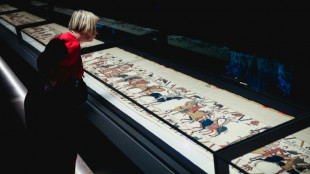
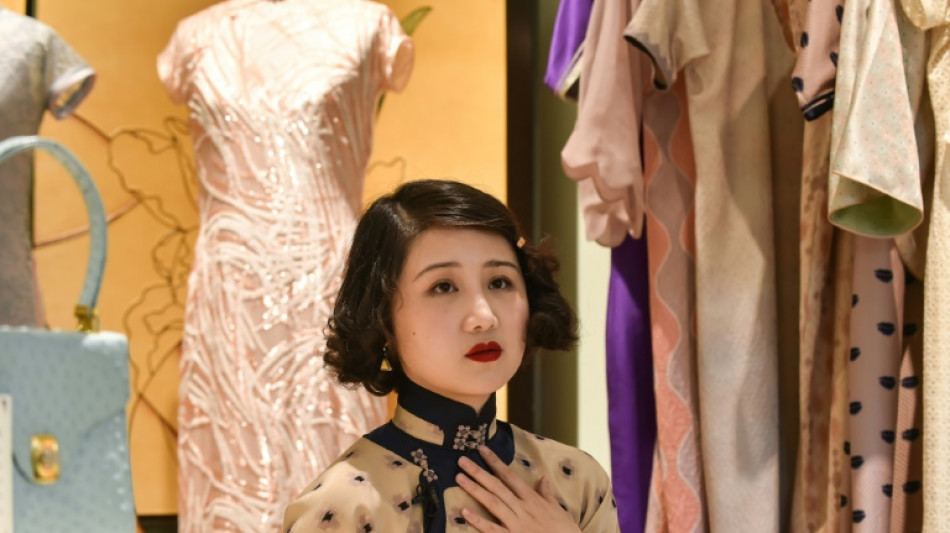
Zhou Zhuguang surveys his Shanghai workshop and rows of workers meticulously stitching high-collared Chinese dresses known as qipao, some of which sell for nearly $5,000.
"It's a highly skilled craft," said Zhou, co-founder of Hanart, one of China's most well-known qipao makers.
"Some of our tailors spend a lifetime learning to make qipao."
The price tag also reflects enduring demand for the qipao, known as a cheongsam in Hong Kong and overseas Chinese communities.
Drawing on traditional design elements, the dress was popularised in 1920s Shanghai, its form-fitting cut capturing the glamour of that free-wheeling pre-communist era and the desire of Chinese women to liberate themselves from traditionally subservient roles.
The qipao disappeared after the Communist Party -- which considered it decadent and bourgeois -- took power in 1949.
The dress's comeback is due in part to producers like Zhou.
A mass-produced qipao, sometimes seen at weddings or other formal occasions, can be bought today for as little as 100 yuan ($16).
But Zhou, 59, has found a market for higher-end designs among well-heeled Chinese fashionistas.
Zhou previously dealt in lower-priced qipao before founding Hanart in 1998 in partnership with Chu Hongsheng, a legendary qipao designer who fitted Chinese film actresses and the wives and daughters of Shanghai mafia bosses. Chu died in 2017 at the age of 99.
- Cultural value -
"(Low price) isn't the true essence of the qipao," said Zhou, who feels that such an iconic Chinese fashion staple requires more luxurious materials, bolder designs and hand-crafted precision, which inevitably push prices up.
Zhou displayed these at a Shanghai show late last year which featured "modern, altered qipao" designs combining the classic Mandarin collar and body-hugging fit with less traditional elements such as lace, fringes, velvet, sequins and rich embroidery.
"We want more young people to wear qipao," Zhou said of his design re-boot.
To Yang Zhenzhen, who owns a Shanghai qipao shop and is an online influencer of the dress style, cracking the youth market is essential to keeping the tradition alive.
Her shop targets buyers aged 25-45 with qipao starting at around $600.
"Young people bring new life and energy" to the qipao, said Yang, 28, who has been smitten with the dress since childhood and began collecting them five years ago.
"If young people don't wear them, then by the time they grow old there won't be anyone wearing them," she said.
Yang admitted that youth acceptance suffers from a stereotype that qipao are for elderly women, or the belief that pop culture uses the dress to objectify Chinese women.
"These are deep misconceptions... so I want to popularise it as best I can and let people know the real meaning of qipao," she said.
That includes the dress's role in breaking down gender norms for women during the 1920s. The sense of freedom associated with that will never go out of style, she adds.
For Zhou, selling qipao is about perpetuating an element of China's intangible cultural heritage.
"We are small, but we are carrying on a piece of culture," he said.
"That's where our biggest value is."
C.Meier--BTB